
Event information
Date & time
Links
The lecture
In 1581, the Republic of the United Netherlands was born when the seven northern Dutch provinces broke away from Spanish rule.
This marked the beginning of a profound artistic renewal that led to the development of a distinct painting style, which is today referred to as “Dutch” in German-speaking countries.
The themes of Dutch painting remained the same. However, landscapes, seascapes, and genre paintings took on characteristics typical of the region; many subjects reflected everyday life as experienced by the middle class. Thus, dune landscapes, the Dutch coast, and domestic interiors took center stage, creating a visual language with which viewers could identify—one that expressed the pursuit of political independence.
For Flemish painting, the traditional patrons—the nobility and the Church—continued to play a decisive role. This is exemplified by the work of Peter Paul Rubens, who also found many admirers in the northern Netherlands—including Rembrandt, who sought artistic rivalry in his works and introduced his own innovative ideas through this engagement.
In this online tour, examples from the Alte Pinakothek are used to highlight both the differences and the parallels in artistic approaches.
The lecturer
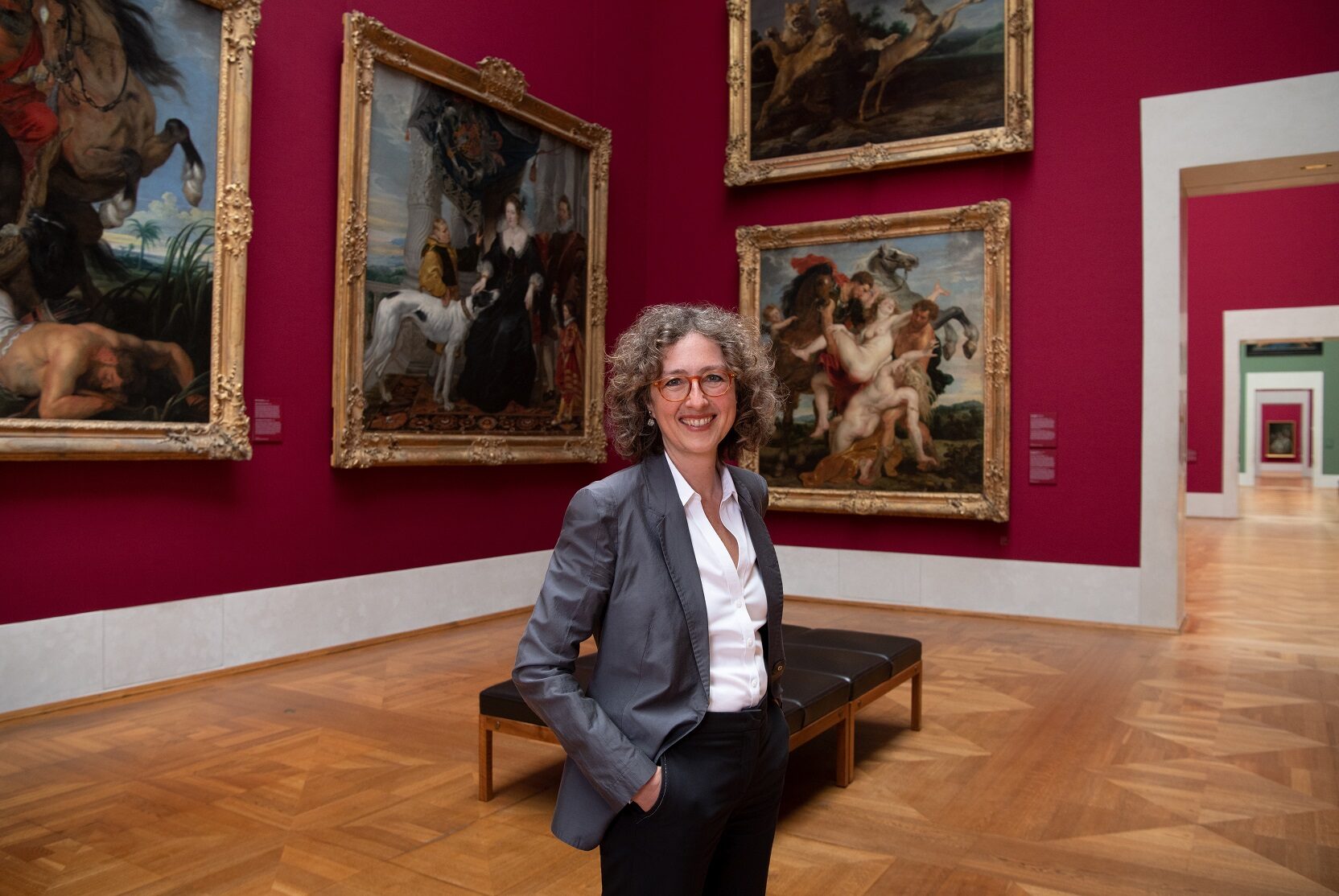
Mirjam Neumeister is the Director of Collections at the Alte Pinakothek and Head of the Flemish Baroque Painting Collection at the Bavarian State Painting Collections in Munich.
The event will be streamed live from the Alte Pinakothek in Munich.
Venue
On the website of the Volkshochschule of the city of Salzgitter.