

A ford over the Innerste and a knight's court were decisive for the creation and development of the village, which was first mentioned in a document in 1209. Farmers, agricultural workers and craftsmen lived in Hohenrode and it was not until the 19th century that the population reached more than 100 people.
Hohenrode was always closely connected to the neighboring larger village of Gitter: Going to church led to the neighboring village, as did the children's way to school. At the beginning of the 20th century, the village still only consisted of the estate and eleven other houses.
Iron ore mining in the nearby Georg shaft led to the development of the settlement on Wendhausenstraße. The highest population in Hohenrode was reached in 1960 with 282 inhabitants.
The estate was taken over in 1937 by the estate administration of the Reichswerke, which ran the estate, a market garden and an agricultural research institute here. The estate has been privately owned again since the 1960s.
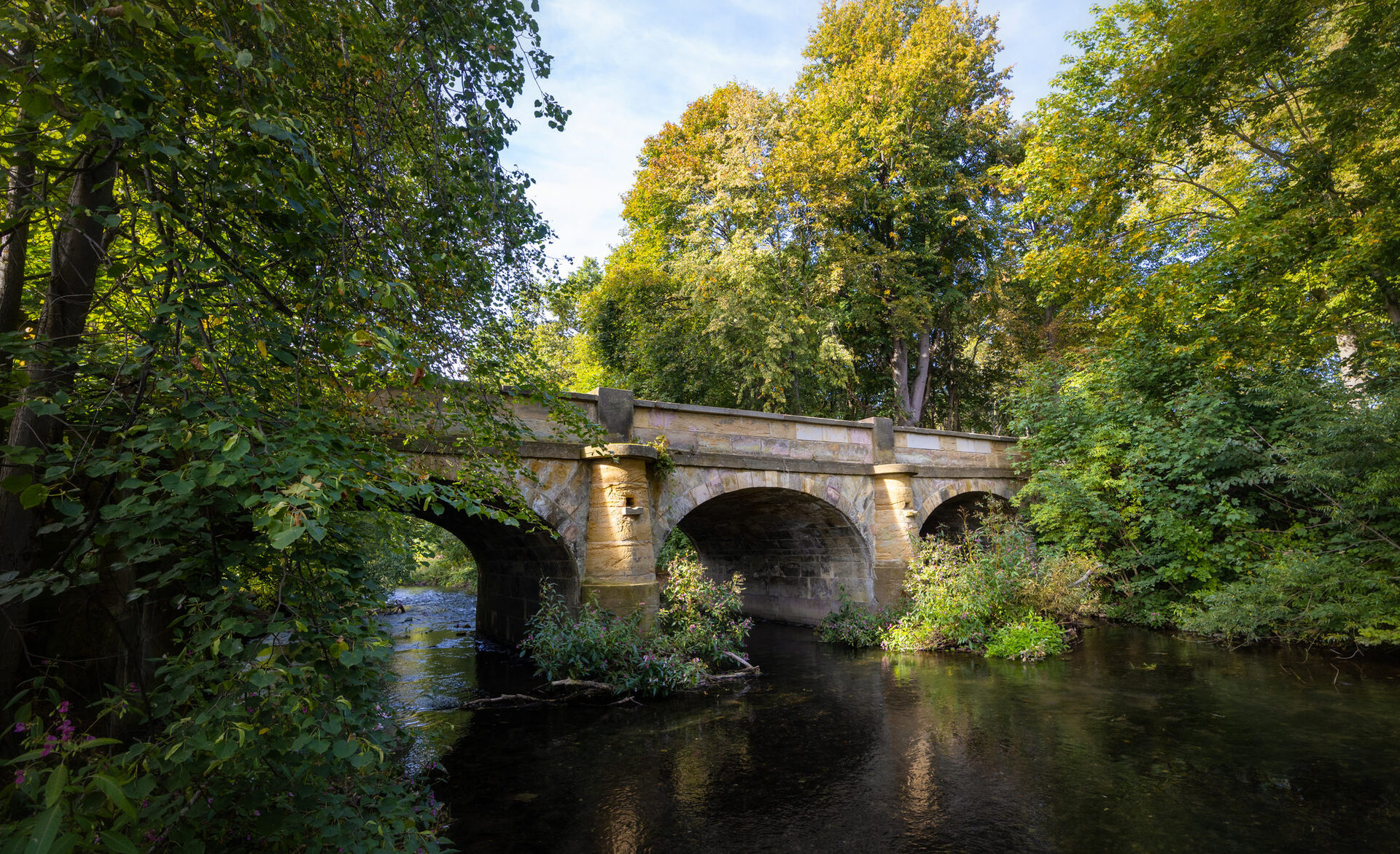
The picturesque location of the village also invites visitors from the surrounding area to take a stroll along the Innerste. It is also home to the Franzosenbrücke, Salzgitter's oldest bridge, which was built in 1775.
The members of the volunteer fire department are active and committed to the community.


