

What was done?
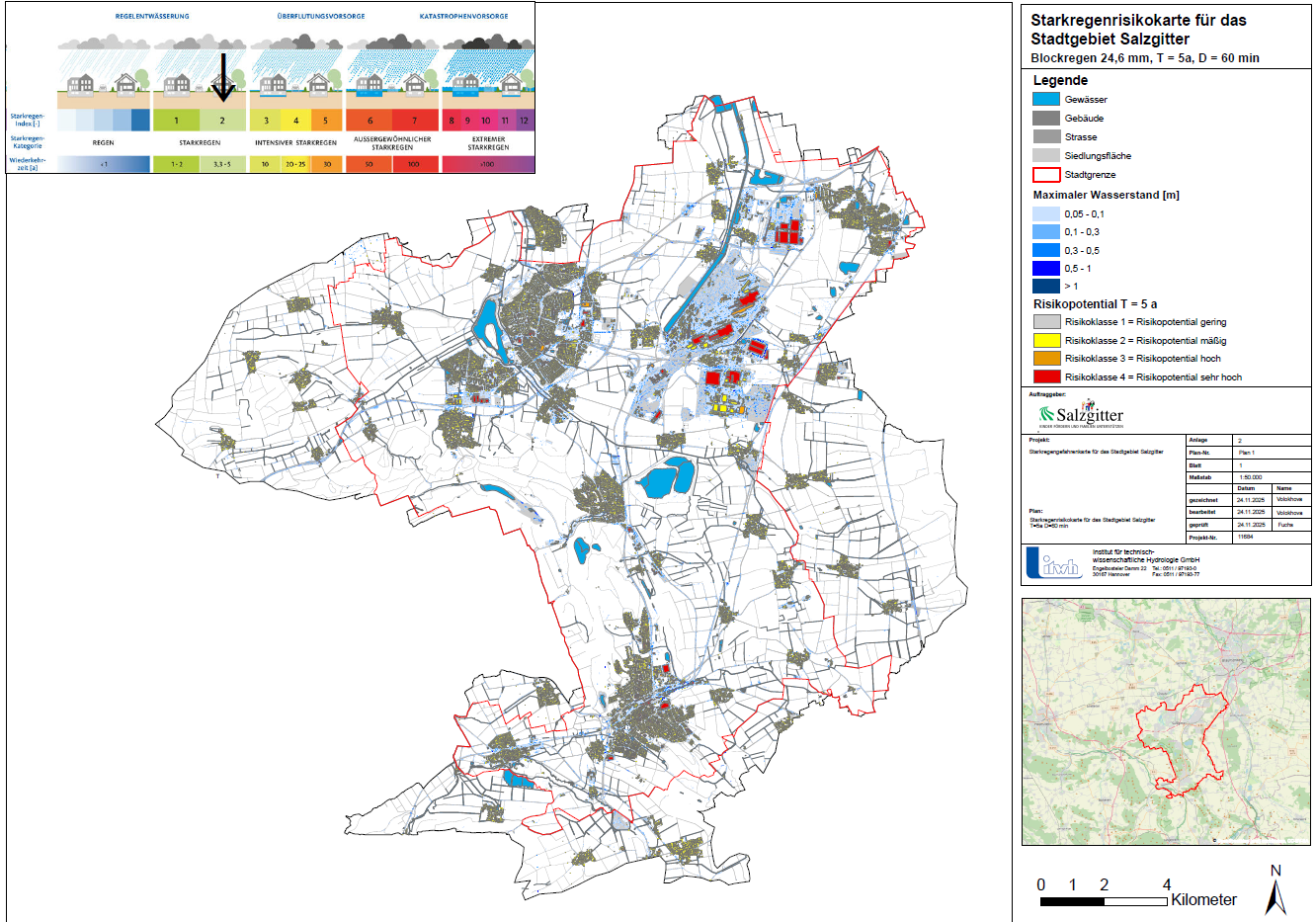
Heavy rain events are difficult to predict in terms of their frequency and intensity. Heavy rain brings more precipitation in a short period of time than existing buildings and infrastructure—such as roads and drainage systems—can handle. Very intense heavy rain events can lead to severe flooding of basements and underground parking garages, and even landslides. To prevent damage caused by a heavy rain event, it is crucial to prepare the public for such an event well in advance.
For this reason, a commissioned study created a heavy rainfall hazard map for the city of Salzgitter, identifying the critical areas in Salzgitter and outlining improved protection options for buildings in specific hot-spot areas. To this end, the engineering firm Institut für technisch-wissenschaftliche Hydrologie GmbH (itwh) used available building, precipitation, and surface data to create a model and, based on that, a runoff simulation that illustrates the flow path, flow velocities, and flow direction of the water during heavy rainfall events. Future construction projects may alter surface conditions and thereby change the results and the extent to which buildings are affected.
Heavy Rain Hazard Map for the City of Salzgitter
Below is the heavy rain hazard map for a relatively frequent and an exceptional heavy rain event. The relatively frequent heavy rainfall event is indicated by a heavy rainfall index of 2 and a return period of 5 years. The exceptional heavy rainfall event has a heavy rainfall index of 6 and occurs with a return period of 50 years.
A return period is a statistical measure. With a return period of 5 years, the event statistically occurs once every 5 years; with a return period of 50 years, the event statistically occurs once every 50 years.
 read out