

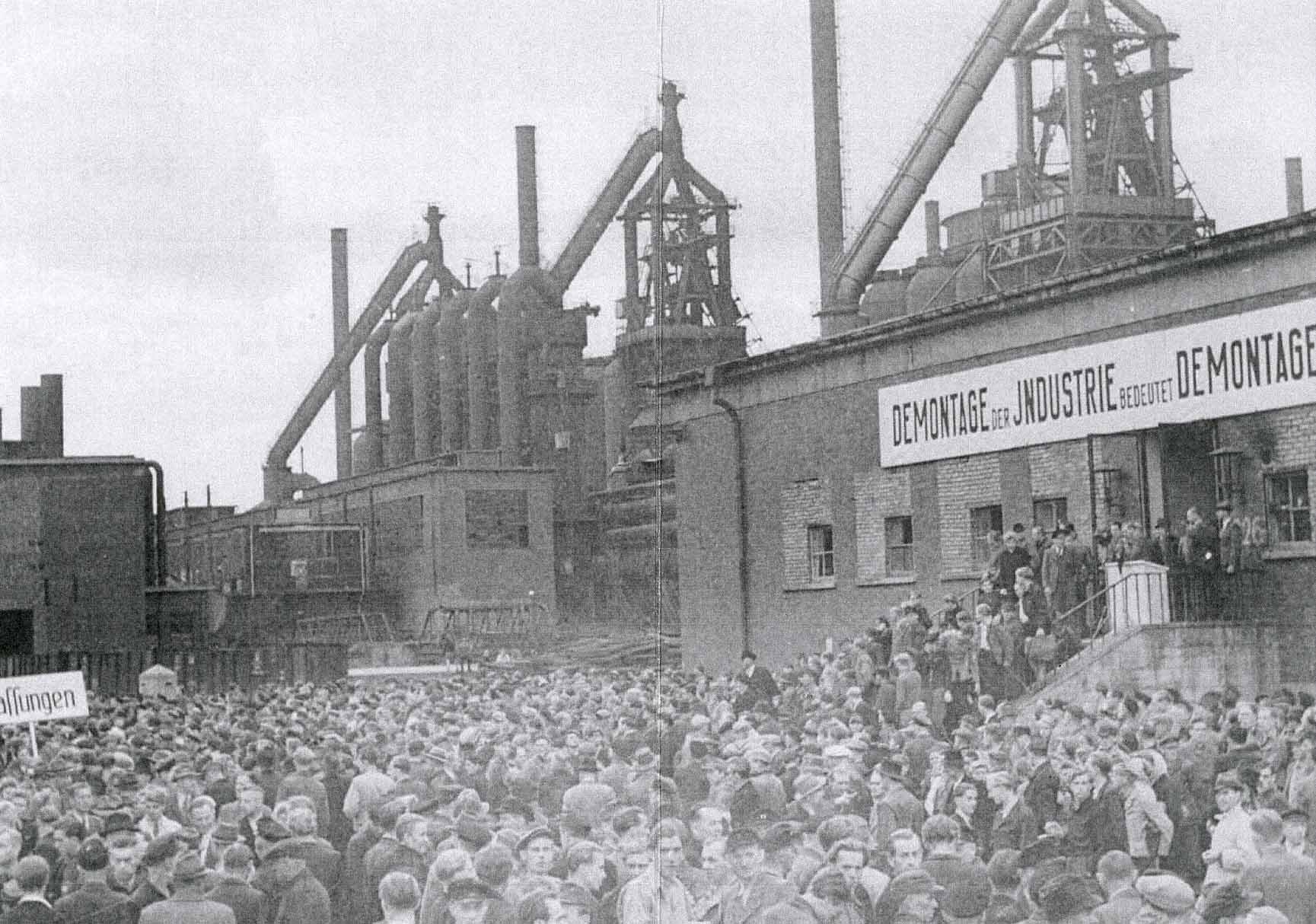
In return, around 30,000 refugees and displaced persons came to the young city. Above all, there was a lack of jobs for them.
When the British occupation decided to dismantle the plant, an alliance of employees, the works council, trade unions, political parties, churches and the population formed in 1949 to resist the dismantling. In the summer of 1951, the protest led to the dismantling of the steelworks being halted.
The spontaneous action of the workers and citizens of Salzgitter marked the beginning of the end of dismantling in Germany.
To commemorate the people who fought to preserve the steelworks at the time, a memorial in the form of two slabs will be unveiled in front of Salzgitter town hall on Wednesday, May 20, from 2 p.m. as part of a commemorative ceremony.
The two steel slabs, weighing 5.5 and 6 tons, are one meter wide and three and 2.8 meters high respectively. The Salzgitter artist Helmut Lingstädt provided the design for the work that has now been created.