In Salzgitter, the city's children, youth and family department has developed a training program together with the Workers' Welfare Association (AWO).
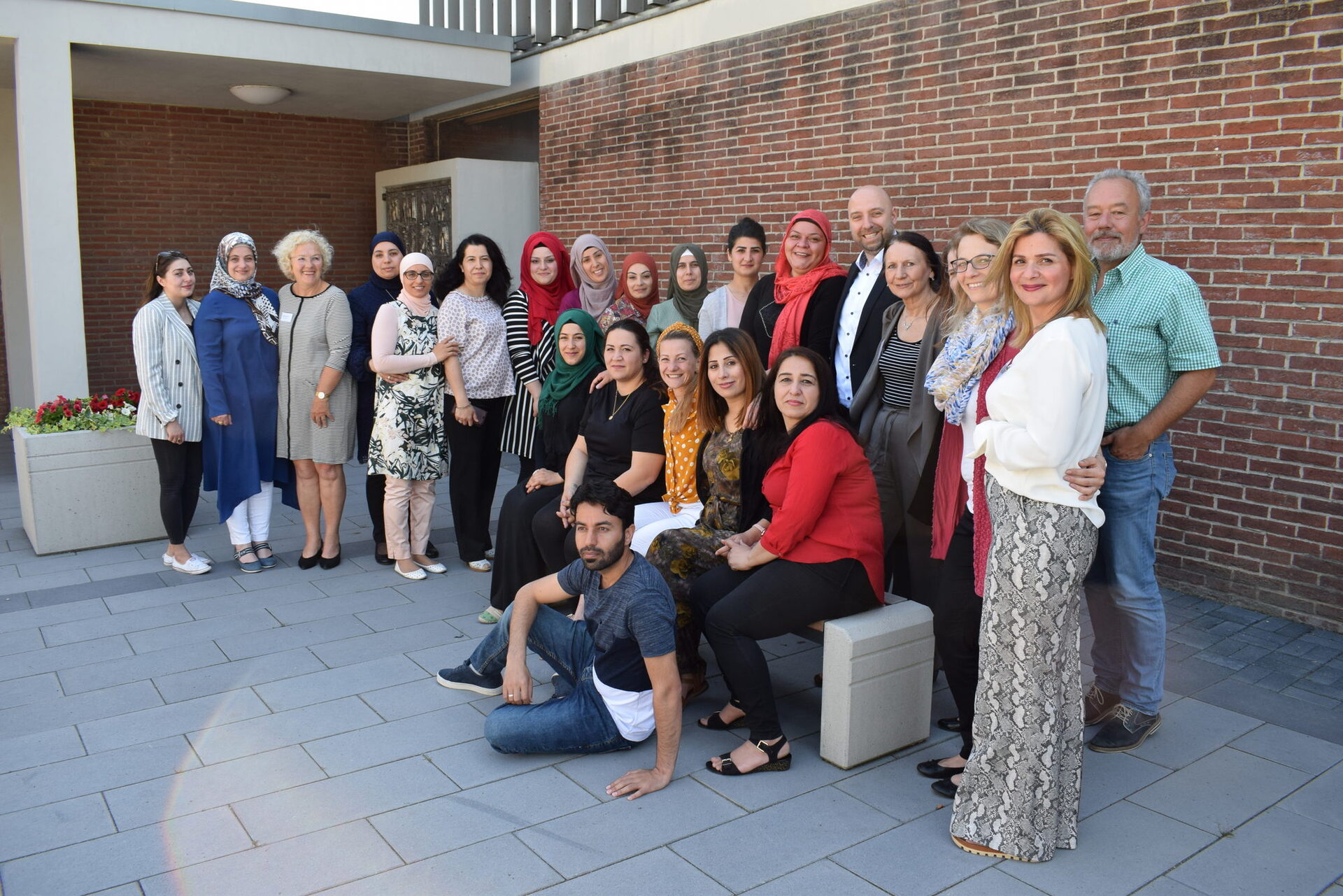
Eric Neiseke, head of the social services department, Dr. Roswitha Krum from the city of Salzgitter and Ulrich Hagedorn, managing director of the AWO district association Salzgitter-Wolfenbüttel, were therefore present at the certificate presentation in the parish hall of the Apostelgemeinde in Lebenstedt. Julia Günster, Josefine Jyß and Tobias Lewerenz from the federal service center "Kita-Einstieg" also traveled from Berlin.
This form of training was developed for people with a migration background or experience of flight who speak at least two languages and have sufficient German language skills. The participants on this course have roots in countries such as Syria, Turkey, Germany and Iraq. The certified specialists are deployed in playgroups and backpack groups. Another aim of the course is to give the participants better prospects on the job market in the future.
Many of the graduates are women who have already completed a degree or training in the field of education but have not worked for a long time due to bringing up their own children. Four of them have gained the courage to continue their education as a result of the training and are starting their training as social assistants in the fall or are on the waiting list.
People who speak several languages are currently in particularly high demand in the education sector. They can act as an intermediary to families with a different cultural background in early childhood education facilities. This is all the more important as the participants are needed in times of a shortage of skilled workers, which is also affecting childcare facilities in particular.