

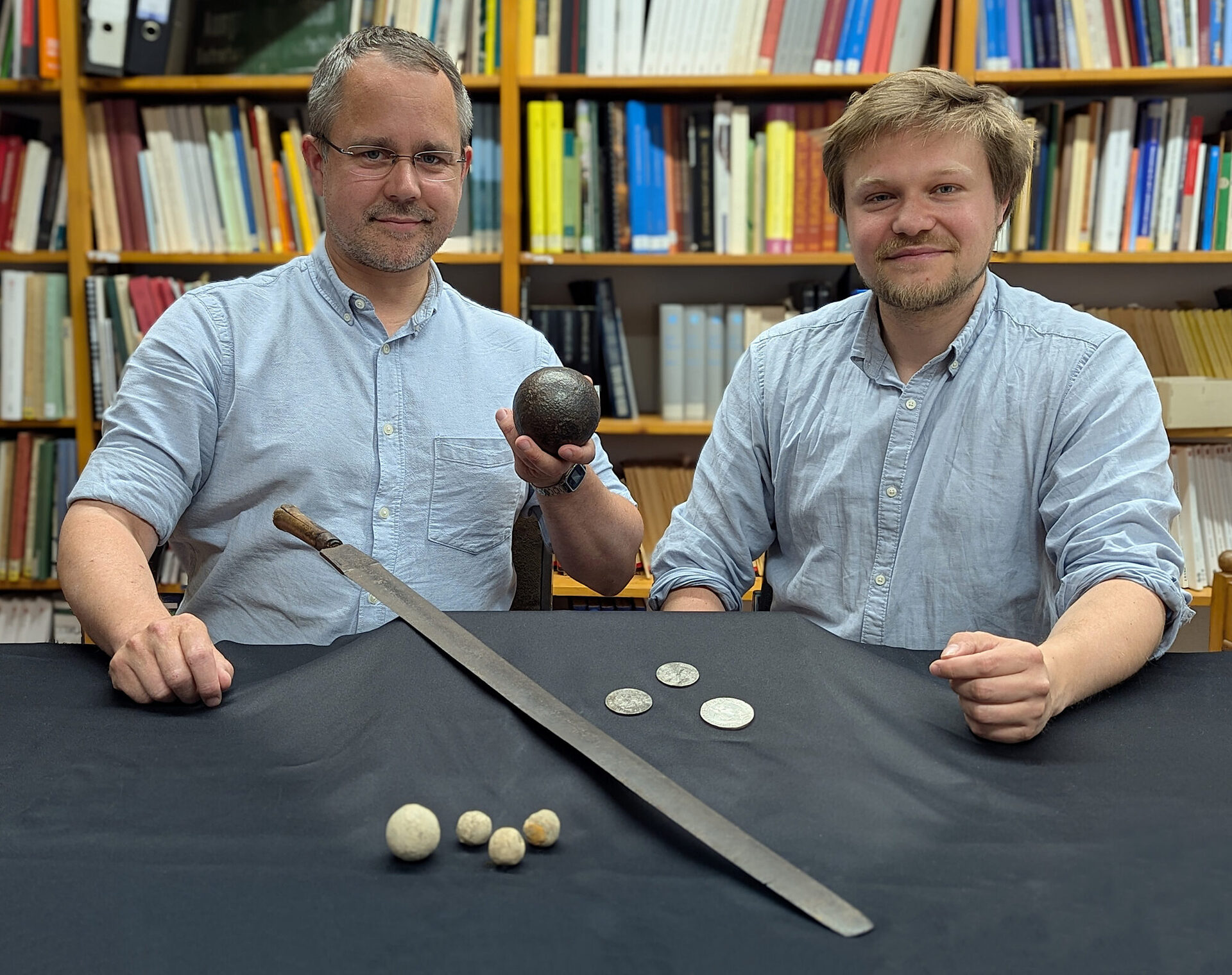
Hardship, suffering, death - almost 400 years ago, a long and difficult time began for the people of what is now Lower Saxony. On August 27, 1626, the army of the Protestant Danish King Christian IV and his North German allies were defeated by Catholic imperial troops at Lutter am Barenberge. The immediate consequence was that the "Thirty Years' War" (1618-1648), which had been raging since 1618, now also reached northern Germany. Huge armies marched through and devastated large areas, whole regions were laid waste and people fled to the cities. Violence was the order of the day and in many places the old order collapsed completely at times.
Exhibition 2026 in the Tilly House
In addition to historical records, this era has also left behind material evidence that lies hidden in the ground. In some cases, they can provide completely new insights into the events of 1626 and the period that followed. Museum director Arne Homann from the Salder Castle Municipal Museum and district archaeologist Tobias Uhlig (Braunschweig) are already in full planning mode. Selected parts of the historical battlefield near Lutter am Barenberge are to be further investigated using modern methods in order to consolidate the existing archaeological picture. The results will also be presented in an exhibition planned for late summer 2026 in the Tilly House in Salzgitter-Bad. In addition to the battle, the exhibition will focus on the consequences of the war for our region.
Objects from private collections wanted
Objects from private collections are also on display. So if you still have an old cannonball or a rusty sword at home, or if you have something from 400 years ago to tell from family tradition, you are welcome to contact the Museum Schloss Salder.
The best way to do this is by e-mail to museumstadt.salzgitterde - or by telephone on 05341 / 839-4619.
