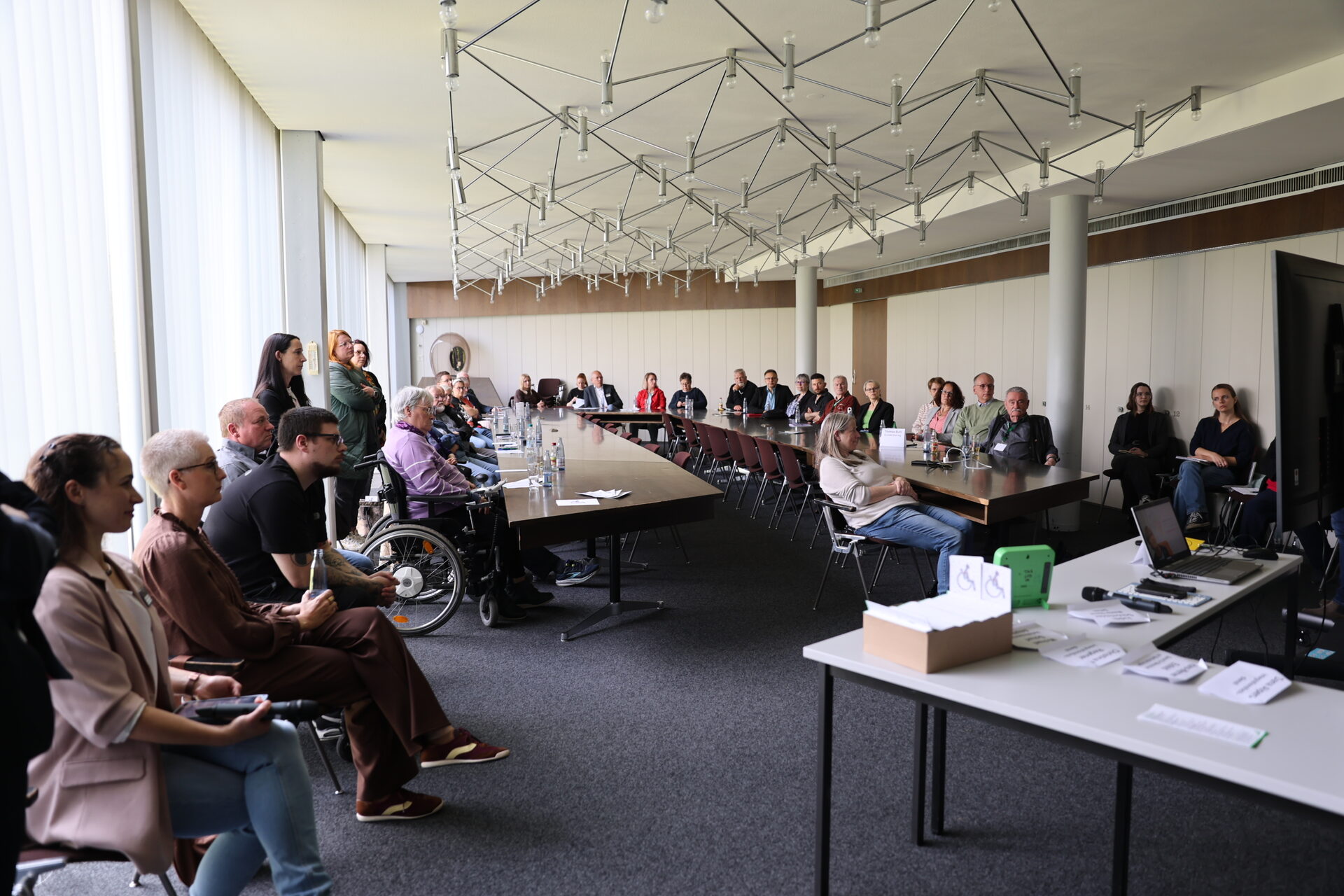
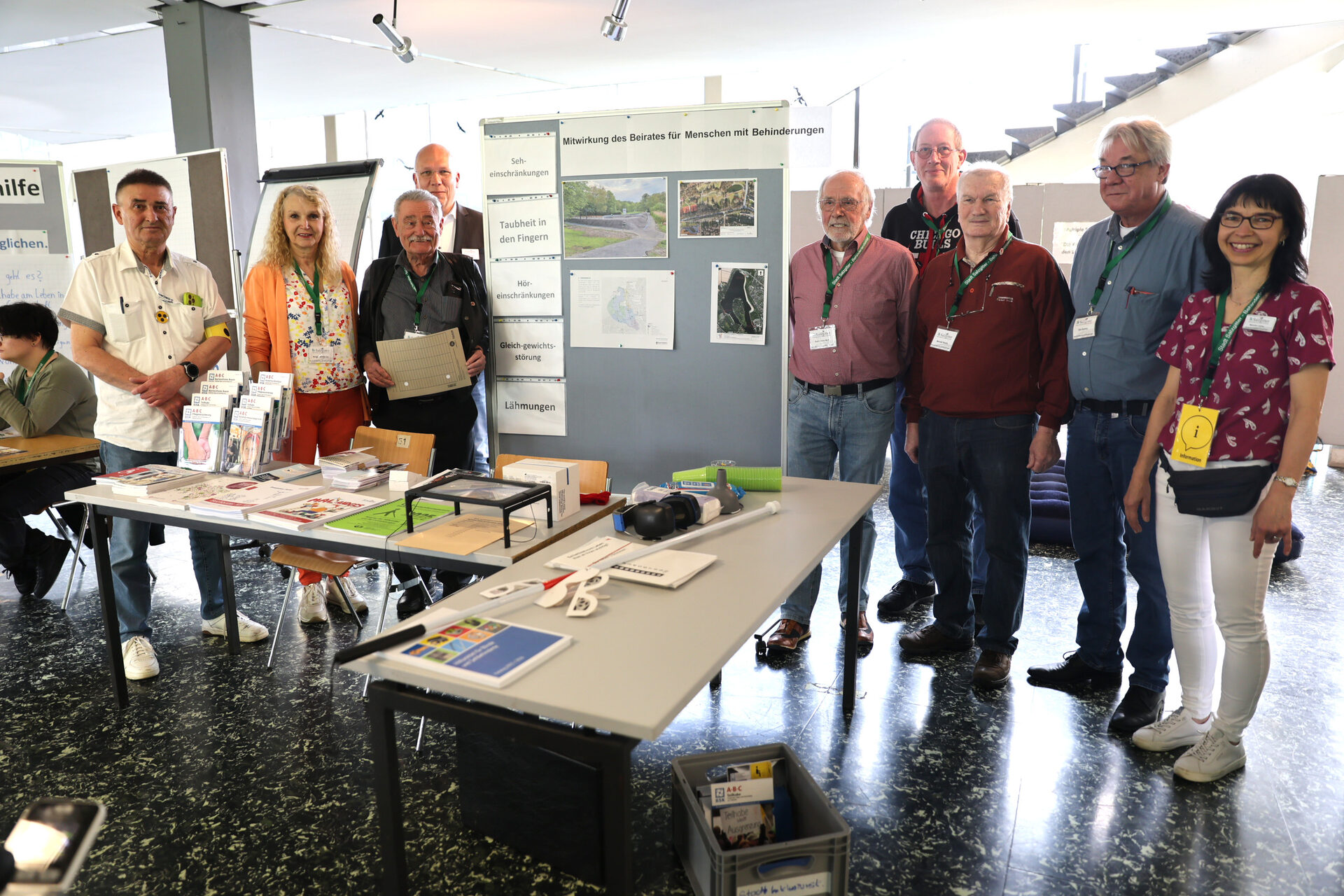
Numerous visitors came to the town hall in Lebenstedt to find out about existing services, projects and perspectives on inclusion and accessibility.
The event made it clear how different barriers can be in everyday life - from a lack of ramps to difficult access to information and services to a lack of orientation for people with visual impairments. The aim of the event was therefore to raise awareness, make existing measures visible, look at where urban society stands when it comes to inclusion and what challenges still lie ahead.
The well-attended event was opened by First Mayor Stefan Klein. The State Commissioner for People with Disabilities, Annetraud Grote, addressed all participants with a video message. A varied program of specialist presentations, information stands and hands-on activities offered guests numerous insights into the topic of inclusion. Presentations included barrier-free urban planning, technical aids for people with hearing and visual impairments and advice on housing and care. Interactive stations such as the wheelchair obstacle course and the tactile street, which made various everyday obstacles tangible, were particularly popular.
Participation as the key to greater inclusion
Hans-Werner Eisfeld, Chairman of the Advisory Board for People with Disabilities, emphasized the importance of shared responsibility: "More than 90 percent of all disabilities arise in the course of life. That's why accessibility ultimately affects us all. Participation and exchange are crucial, because people with disabilities know the challenges of everyday life best. It is important to involve us right from the planning stage of new projects." He referred to the guiding principle of the advisory board: "Nothing about us without us." Ultimately, the whole of society benefits from inclusive measures. For example, a parent with a baby carriage is just as happy about barrier-free access as an elderly person with a rollator or a person in a wheelchair.
Positive results after first inclusion conference
Olaf Kleint, Head of the City of Salzgitter's Senior Citizens and Social Services Department, drew a positive conclusion from the first inclusion conference: "The event showed how important the exchange between administration, associations, initiatives and citizens is. Accessibility is not an individual measure, but a permanent task that affects all areas of our city. Our goal must be to make mobility and participation in social and public life accessible to all people step by step - with everyone involved. Because inclusion can only succeed together."