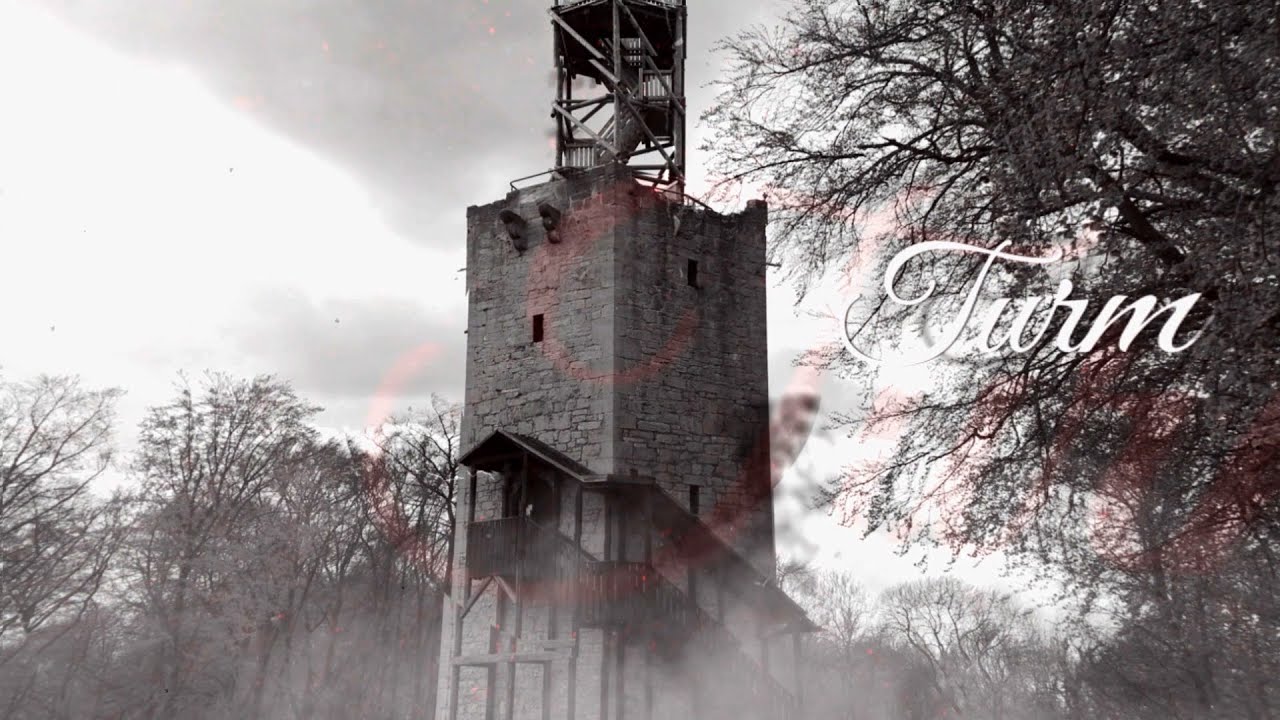
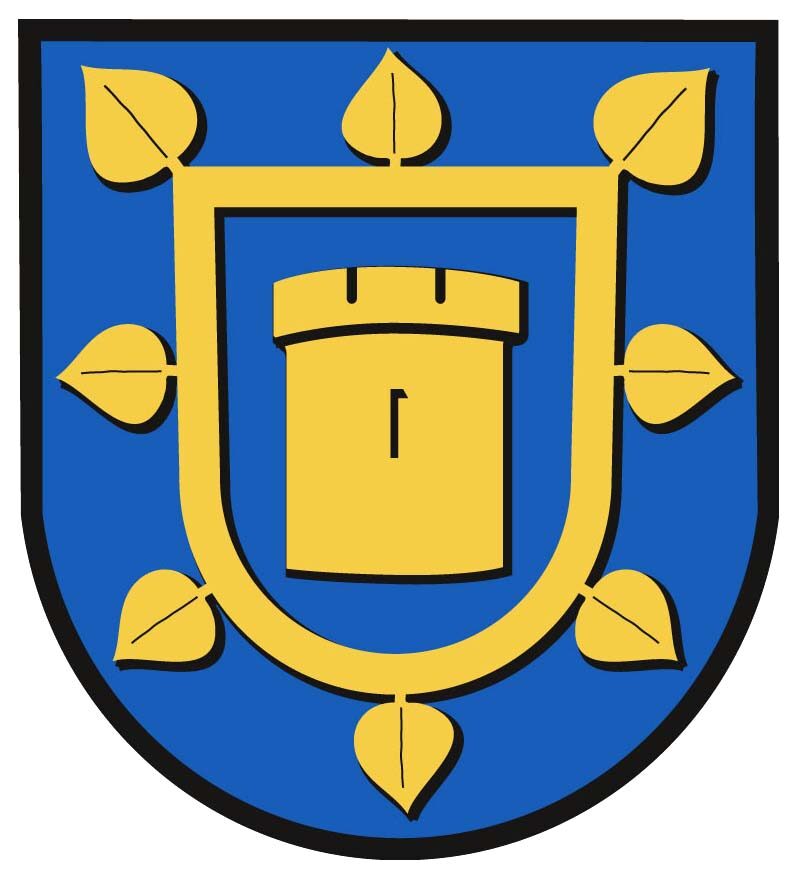
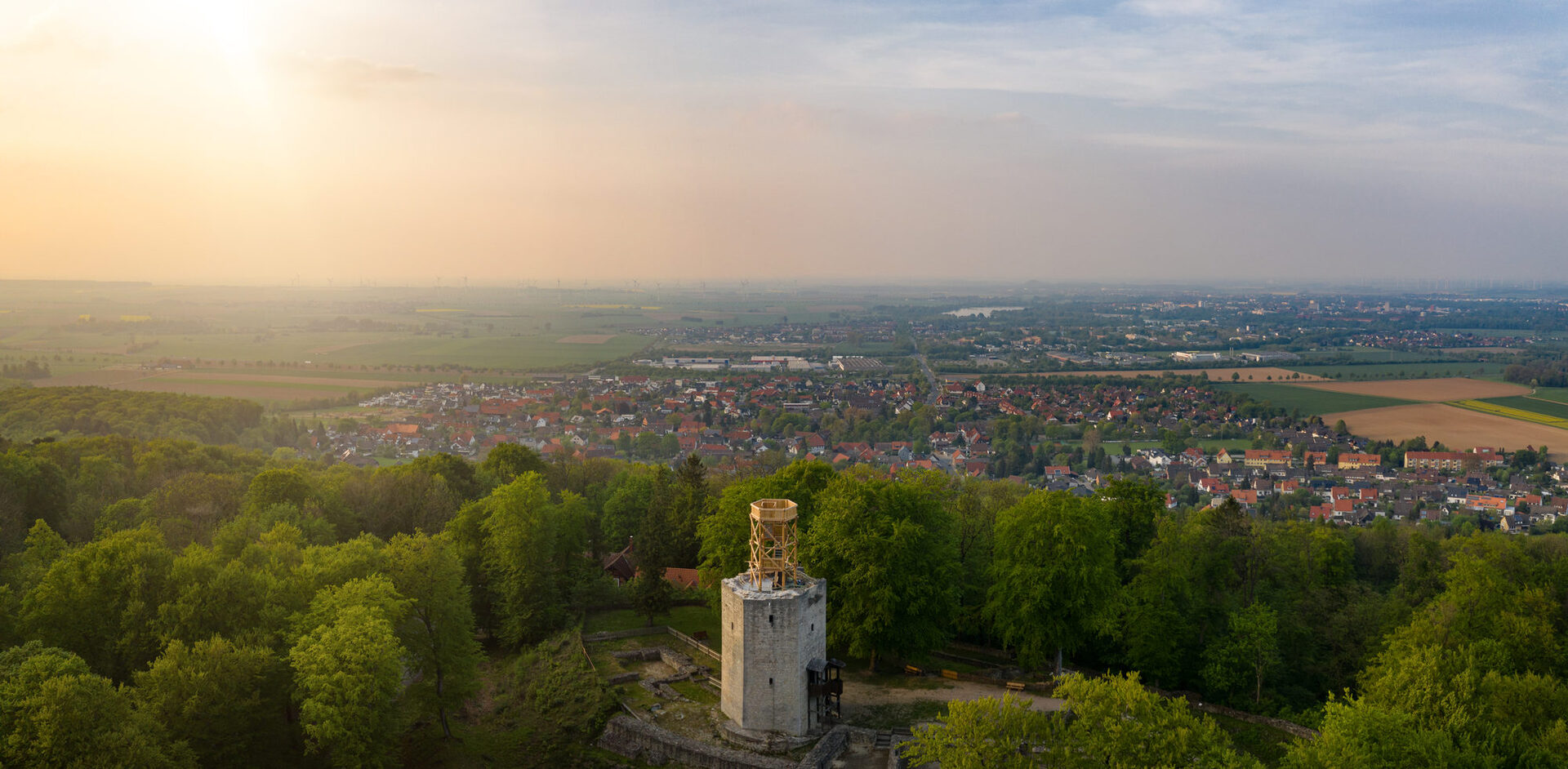
The place name Lichtenberg has only been on the map since January 1, 1857. Duke Wilhelm von Braunschweig had ordered that the two villages of Oberfreden and Niederfreden, located below Lichtenberg Castle, which was built in the 12th century, should be merged under this name. Until they were merged with the Amt Salder under Duke Karl I in 1774, the two villages belonged to the Amt Lichtenberg, whose administrative seat was moved to the domain after the castle was destroyed in 1552.
It is thanks to the engraver Matthäus Merian that a view of Lichtenberg from the 17th century has survived to this day. In the copperplate engraving of the Lichtenberg office building, first published in the "Topographia und eigentliche Beschreibung der Herzogthumer Braunschweig und Lüneburg" in 1654, the town, which is secured by an enclosure, is picturesquely situated at the foot of the mountains. In the accompanying description, the official residence is described as not particularly comfortable, but at the same time it is emphasized that it is a zimlich healthy place.
The opening of the railroad line between Braunschweig and Derneburg via Lichtenberg on July 16, 1886 brought tourism to Lichtenberg. Numerous guests from the region traveled comfortably and quickly to Lichtenberg Castle and the Salzgitter mountain range on Sundays thanks to the excursion trains running between Brunswick and Lichtenberg. At the end of the 19th century, there were no fewer than five inns - the Zollhaus, the Amtskrug, the Gasthaus zur Linde, the Kurhaus and the Waldschenke on the castle hill - which offered summer visitors and hikers the opportunity to stop for refreshments.
After the founding of the Reichswerke Hermann Göring in 1937, the slopes of the Lichtenberge were one of three alternative locations for the planned large housing estate. It was not until the fall of 1938 that the decision was made to build the new settlement near Lebenstedt. The construction of a hospital for the new town was planned in Lichtenberg, as detailed plans show. The wartime economy prevented construction under National Socialism, and in 1951 the decision was made to build the central hospital for the city in Lebenstedt.
Today, the good infrastructure, doctors, elementary school, nursery and shopping facilities make Lichtenberg attractive for its 3,000 inhabitants. With the mountain range and Salzgittersee lake, leisure activities close to nature are right on the doorstep.