This aid campaign, which was started in 1981 by members of the then DBV (now Nabu), has been carried out since 1990 with the active support of the Environmental Agency (now the Environment Department) and employees from other city departments. In the meantime, the green "toad fences", which are visible from afar and have become familiar to many, have been erected along eight hiking routes throughout the city over a length of more than three kilometers. Nine further hiking routes are also provided with the familiar "Attention toad migration" signs in spring, which can also be found along all collection routes.
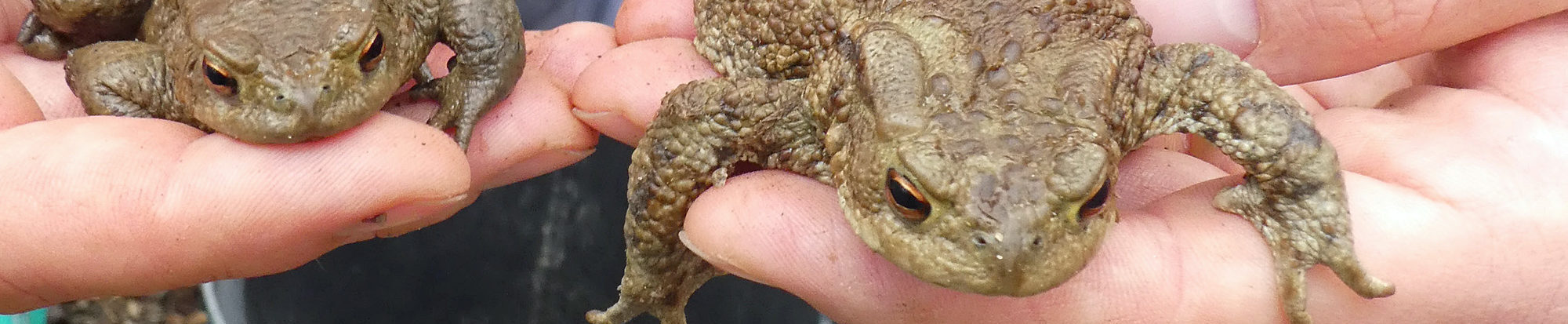
To ensure that the many toads, frogs and newts stopped by the fences - currently around 12,000 animals in Salzgitter - reach their spawning waters safely, the protective fences are checked and collected from February to May in the mornings and evenings by representatives of the environmental department, volunteers from nature conservation associations and other interested citizens. The data collected is regularly forwarded to the Lower Saxony State Agency for Water Management, Coastal Defence and Nature Conservation (NLWKN), where it provides important information on the population development of the individual species.
The Lower Nature Conservation Authority is still looking for volunteers to support the existing collection teams by collecting the fences in the evening hours (after dark).
Anyone interested can call 05341/839 -3695 or -4098. You will then receive further information on the collection routes and, if necessary, contacts to simply "get a taste of it".
As a further protective measure, a longer section of road in the Oelbertal area will be closed to all road traffic together with the neighboring district of Wolfenbüttel on the main migration nights.
In preparation for future protective measures, regular checks are also carried out on previously unprotected hiking routes.
Joint collection campaigns with school classes and other children's groups also promote an understanding of the importance and way of life of these endangered species groups and ensure that there are "new recruits" at an early stage.



 read out