

Event information
Date & time
Links
The lecture
Biology defines the cell as the smallest unit of life. But even the simplest cells on Earth are incredibly complex, making it practically impossible to understand them in their entirety.
Furthermore, science still has no idea how the first cell could have come into existence in the first place.
For this reason, attempts are being made to recreate essential life processes using simple biological building blocks in order to gain an understanding of the physical and chemical conditions necessary for a chemical system to become a biological system.
To this end, the approach of synthetic biology is used, which breaks down cellular systems into individual functional modules that can be studied independently of one another. Of particular interest to us is the function of cell division.
Currently, scientists are attempting to construct a molecular system that is as simple as possible and capable of autonomously dividing so-called membrane vesicles—the simplest models of cell membranes—into two daughter cells. To this end, scientists are using several protein systems derived from E. coli bacteria.
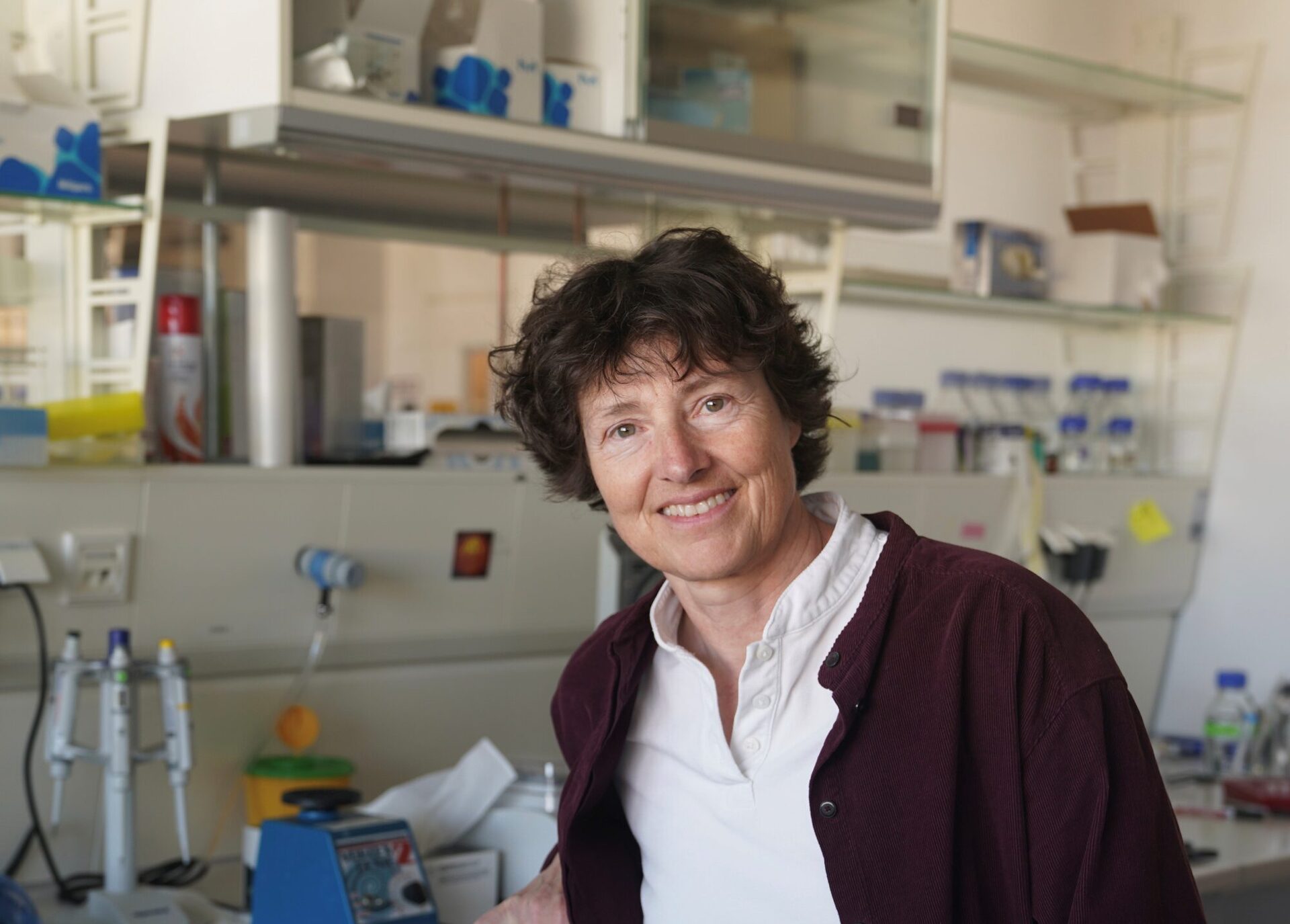
The lecturer
Petra Schwille studied physics and philosophy and earned her doctorate in 1996 from the Technical University of Braunschweig with a dissertation completed at the Max Planck Institute for Biophysical Chemistry in Göttingen under Nobel laureate Manfred Eigen. In 2002, she accepted a professorship in biophysics at the newly founded BIOTEC Center at the Technical University of Dresden. Since 2012, she has been head of the Department of Cellular and Molecular Biophysics at the Max Planck Institute for Biochemistry and an honorary professor of physics at LMU Munich. Among other things, she is a member of the German Academy of Science and Engineering (acatech).
The event is being held in cooperation with the German Academy of Science and Engineering (acatech).
Venue
On the website of the Volkshochschule of the city of Salzgitter.