The hard physical labor and inadequate living conditions led to a steadily increasing mortality rate. Initially, the dead were laid to rest in the municipal and church cemeteries.
In February 1940, the district administrator of Wolfenbüttel ordered the closure of the Hallendorf community cemetery: the area was needed by the Reichswerke "Hermann Göring". In return, they provided a site in the Westerholz forest. The first burials took place there in January 1941.
In April of the same year, the cemetery had to be extended; the new area was named "Westerholz". Forced laborers and later also prisoners of the Drütte concentration camp now found their final resting place here; the majority were deceased from the nearby work education camp (Camp 21). From the summer of 1943, the newly established Jammertal cemetery took over this function as a central "foreigners' cemetery".
The cemetery was closed in 1955 because the groundwater level was too high. The current name "Westerholz Cemetery" refers to the entire cemetery grounds.
Not all of the graves are still there today. A few years after the end of the war, Nazi victims of various nationalities were reburied in their home countries or in Ehrenfeld in other cities.
The place of remembrance
Shortly after their liberation, Ukrainian survivors erected a memorial stone at the cemetery. Together with a wooden cross erected in 1947, the memorial stone was the first sign of remembrance at this site.
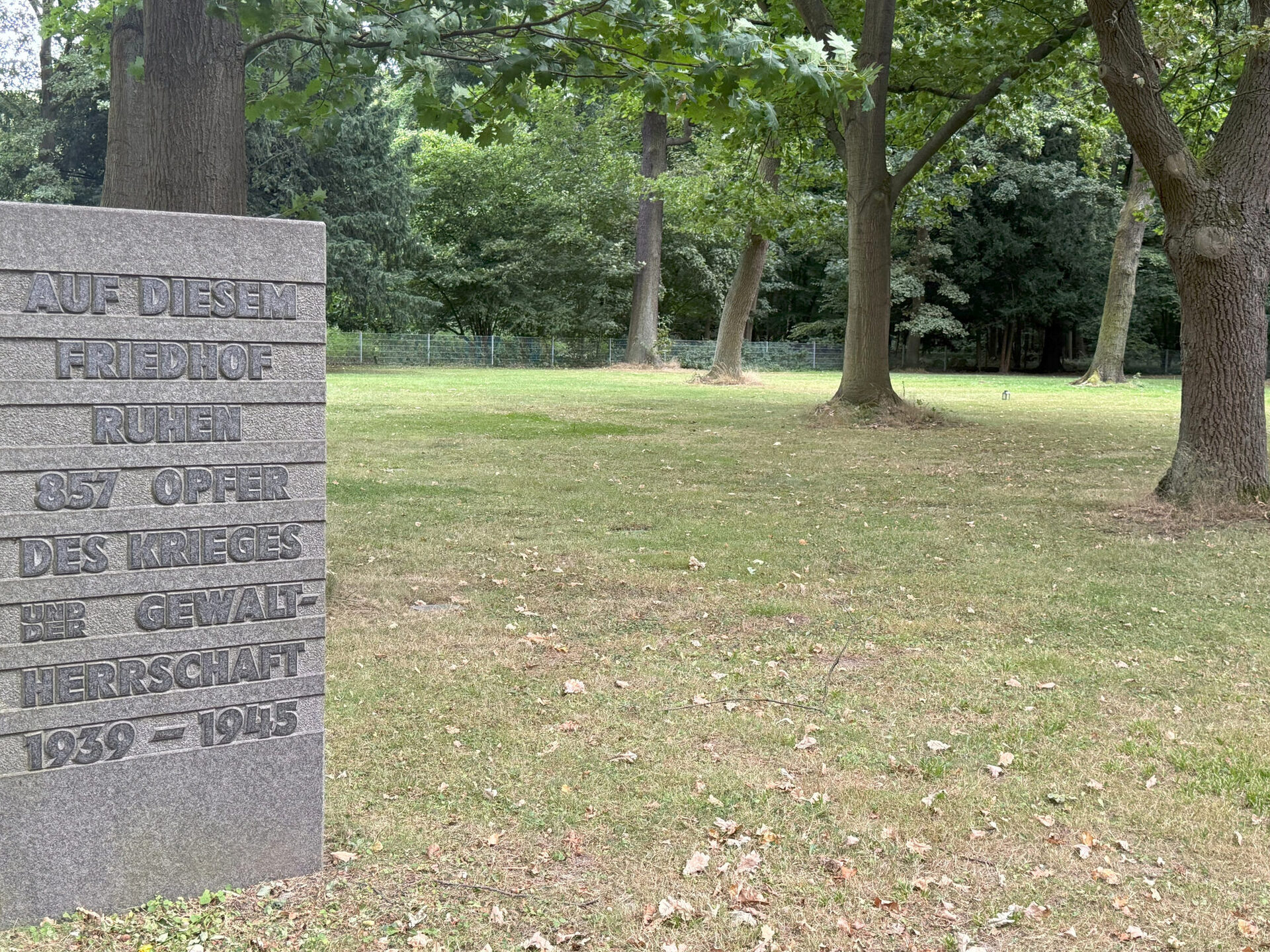
In the mid-1950s, the city had the cemetery repaired for the first time. The current design dates back to the 1970s: the Ukrainian memorial stone was moved to the entrance. Since then, metal plaques with the known names, dates of birth and death have marked the gravesites. At the same time, a memorial stone was erected between the two parts of the cemetery. A plaque from 1983 refers to the prisoners of the labor education camp (Camp 21) who were buried here.
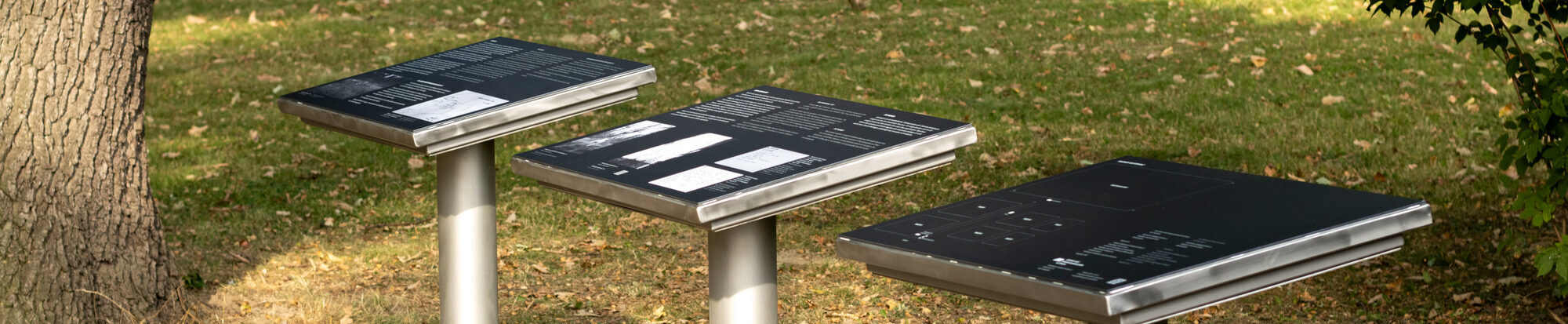
In August 2025, three information panels were inaugurated at the Westerholz cemetery, giving visitors an understanding of the history of the cemetery and providing a map for orientation.
Guided tours of the city history working group:
The Arbeitskreis Stadtgeschichte e.V. offers a guided tour:
Title: The first "foreigners' cemetery" in Salzgitter
Duration: 1.5 hours
Meeting point: Westerholz cemetery, Pappenstieg, 38229 Salzgitter-Hallendorf
Only limited parking at the cemetery.