Refurbishment of the pirate playground at Salzgittersee
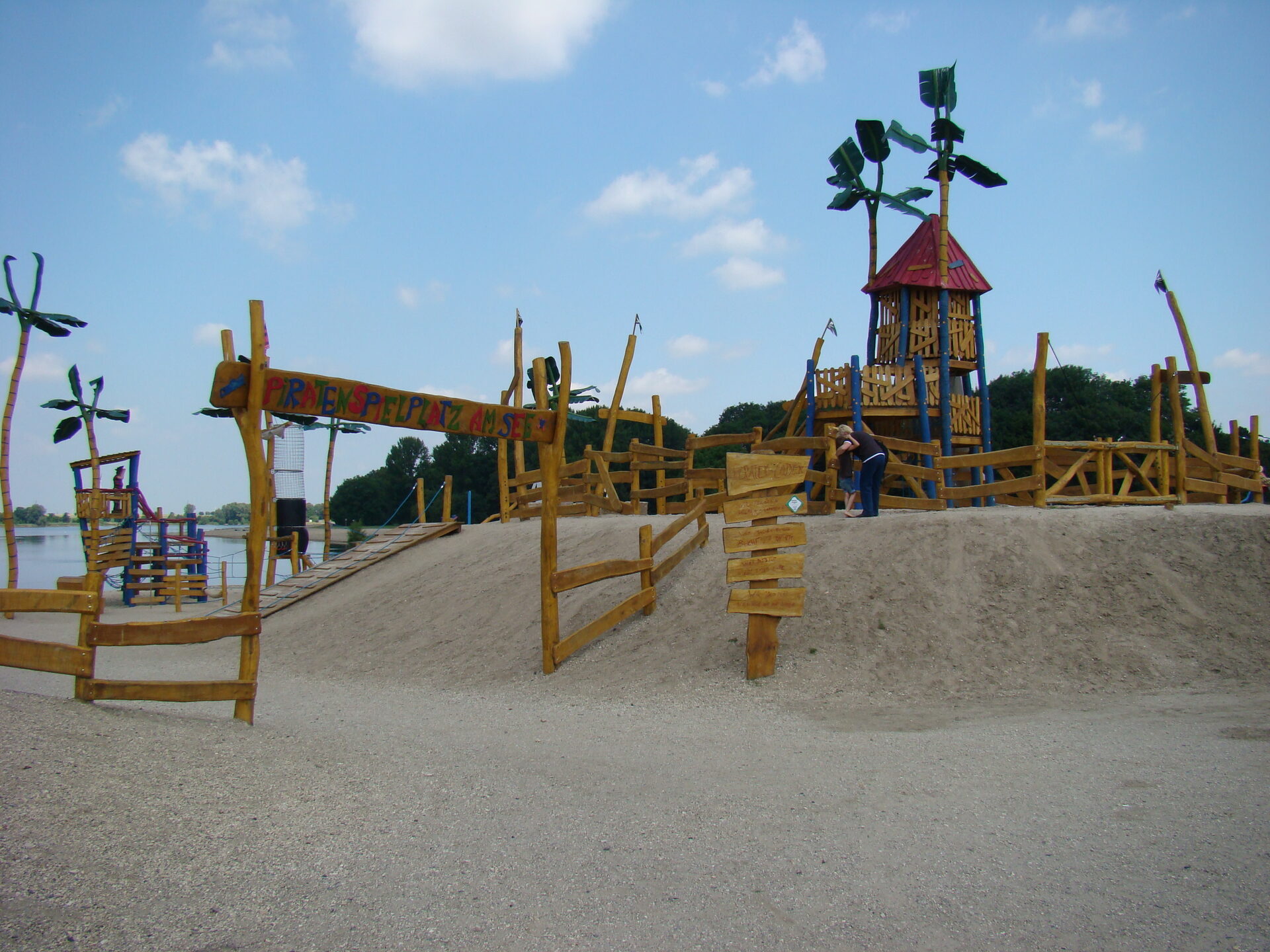
The Salzgitter SRB has announced that parts of the pirate playground at Salzgittersee will be renovated from 18.05.2026.
The large wooden palm trees need to be replaced for reasons of stability. The ageing timbers on the climbing ladder to the slide tower will be removed. The small pirate ship on the east side of the playground will be replaced by a new ship and a climbing sculpture will also be erected.
Parts of the playground will not be playable for the duration of the renovation and renewal work and until the foundations have hardened.
The closure of the sections is expected to be lifted from 30.06.26.
The municipal management asks for your understanding for the restrictions.
Renovation of Ritterburg playground in Gebhardshagen
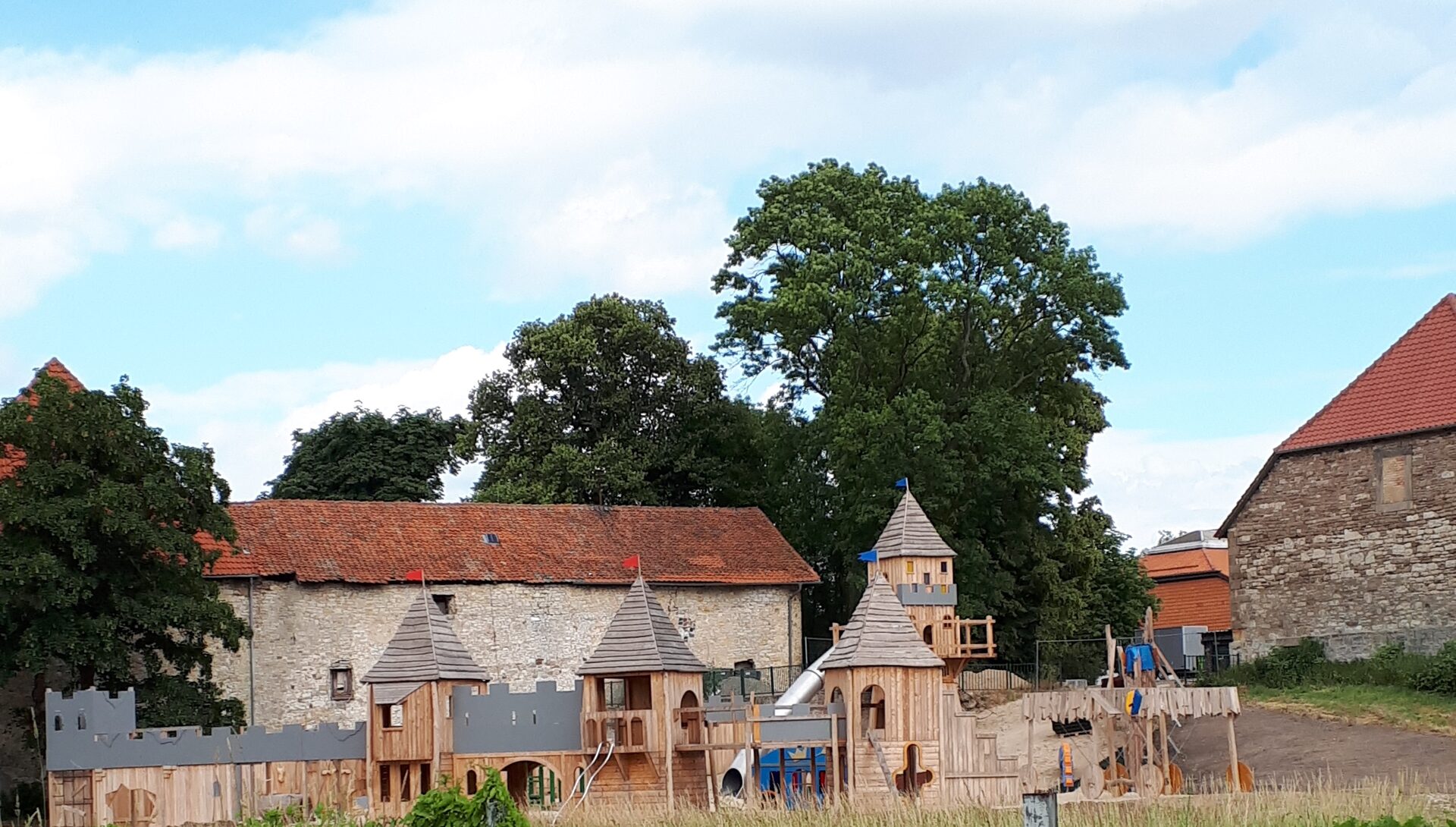
Parts of the Ritterburg playground in Gebhardshagen need to be renovated.
read out
Load-bearing components of the wooden structure are affected by fungal decay, meaning that the facility is no longer safe to use in the long term.
The construction work for the renovation of the Ritterburg playground will begin on May 12. Construction fences will be erected around the entire construction site to ensure safety. The playground cannot be used during the construction phase. Access for pedestrians and cyclists will be restricted.
The work is weather-dependent and is expected to last until the beginning of July 2026. The city of Salzgitter asks for your understanding.
Barbecue area renovation at Salzgittersee
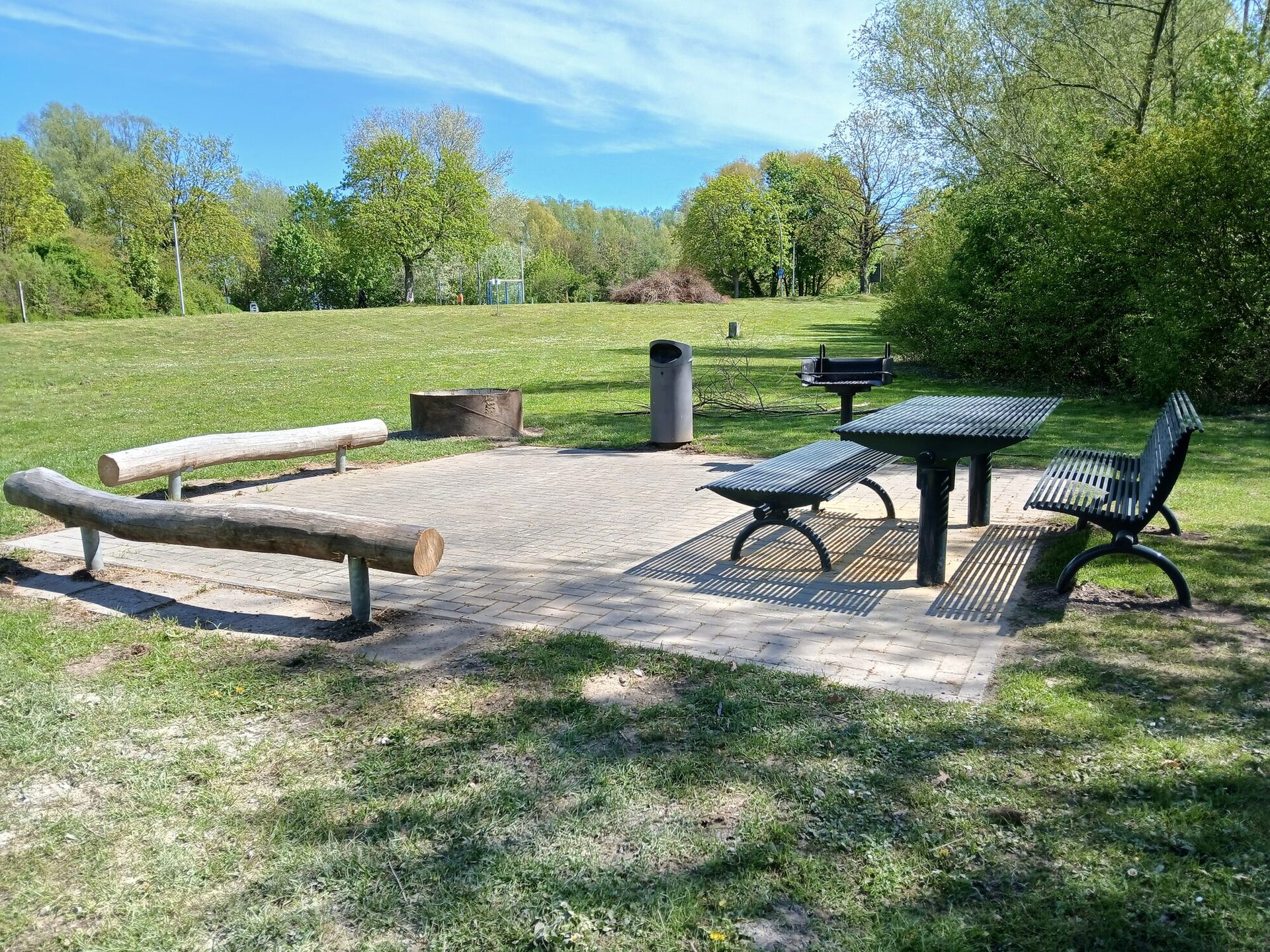
This spring, the City of Salzgitter's municipal management company (SRB) extensively renovated the four somewhat outdated barbecue areas on Salzgittersee. The paved areas on the meadow at the pirate playground, on the eastern shore towards Café del Lago, at Reppnersche Bucht and on Humboldtallee near the Sepia diving club were provided with additional equipment.
Benches and tables were set up at all barbecue areas and a rotating steel barbecue was installed in each case. The existing robinia wood seats were replaced. In addition, the old concrete ash containers were removed and replaced with robust steel rings. The concrete cubes in the middle of the barbecue areas are still available for use with your own barbecues.
The SRB asks that the new equipment is treated with care so that many more users can enjoy it. The barbecue areas are available to all citizens free of charge and without registration.
The 2025 waste balance sheet

Tree felling work in Hagenholz in Thiede due to traffic safety obligation
The SRB (Städtische Regiebetrieb) has announced that trees will once again have to be removed from the Hagenholz forest area in Thiede this winter. The basis for this is the City of Salzgitter's statutory duty to ensure public safety.
The trees, which have already been marked, currently pose a danger to visitors to the forest and the neighboring buildings. Due to dead treetops or unstable crown sections, there is a risk of branches breaking off or entire trees falling over uncontrollably. In order to continue to ensure safety in this important recreational forest - especially in the area of the paved circular paths - these felling operations are unavoidable. In this context, the city administration would like to point out that typical forest hazards are always to be expected away from the paved paths.
Period and restrictions
The necessary work is scheduled to take place in the fifth or sixth calendar week of 2026. It will be carried out by a specialist company and is expected to take several days. During this time, access to the forest will be restricted. Visitors are urgently requested to observe the barriers set up in the affected parts of the forest and not to endanger their own safety.
Sustainable management and certification
The Hagenholz is managed in accordance with the legal requirements of the Federal and State Forest Act. The primary objective is to maintain the forest in a healthy and stable condition as a habitat for a species-rich flora and fauna in the long term. This is ensured by close cooperation between the "Niedersächsische Landesforsten" (Liebenburg Forestry Office) and the SRB. In addition, the entire municipal forest has been certified in accordance with the international forest certification system PEFC since 2023. This means that management is subject to independent monitoring, which ensures compliance with high ecological, economic and social sustainability standards.
Further information is available here:
Important: A 2026 waste calendar will no longer be distributed!
For reasons of sustainability and resource conservation, the municipal waste management company (SRB) has no longer been printing waste calendars since the turn of the year 2025 / 2026, thereby making a contribution to climate protection.
Most of the printed waste calendars were distributed together with the distribution of yellow bags, which will also no longer be distributed with the introduction of the yellow garbage can.
How can citizens find out about collection times?
For years, the SRB has offered citizens a comprehensive and well-functioning waste app. This provides the collection dates on the smartphone and can be reminded of the collection dates one day in advance and receive push notifications if unforeseen events postpone the collection rounds.
MyMüll.de reliably reminds you of every disposal date. The free app is quick and easy to set up: Enter the street, select the type of waste or recyclables, set the reminder time. And that's it.
The app also reliably navigates you to the nearest recycling container. The app can be downloaded at the following link: https://www.salzgitter.de/leben/srb/abfallkalender-online.php (opens in a new tab)
The collection dates can also be found on the Salzgitter city website with individual street selection at the following link: https://www.salzgitter.de/leben/srb/abfallkalender-online.php (opens in a new tab)
By entering the collection location, a weekly calendar can be created with all disposal dates for this address. It is also possible to display and print all dates as an annual list.
If you don't have a smartphone or computer, you can ask for help from others or ask the SRB.
The SRB's waste advisory service will be happy to help on 05341/ 839 3741.
 read out
Yellow garbage can to be introduced on 01.01.2026

If you realize after receiving the yellow garbage can that you need a different size or more containers:
BUND Lower Saxony's farm training in the "More species in the garden" project

Clearing of expired graves
In accordance with the cemetery statutes, the Municipal Management Company (SRB) of the City of Salzgitter announces that the following graves in the municipal cemeteries will be leveled: Graves of the year 1995 and children's graves of the year 2005 as well as the urn graves of the year 2005.
The parts of the cemetery affected by the clearing will be marked with signs. Some of the designated graves will be marked with signs.
Elective graves of the above-mentioned years are also affected by the intended removal, provided that the resting periods of the graves have expired. All those entitled to use elective burial plots are advised to check the limited term in the certificate of acquisition with regard to a possible extension.

Biowaste without impurities
From May 1, 2025, the requirements for the permitted amount of contaminants in biowaste will be tightened.
In future, the Salzgitter municipal waste management company will therefore place particular emphasis on clean separation of organic waste in order to reduce the amount of contaminants such as plastics and residual waste to three percent of organic waste. Those who do not comply with this risk a fine of up to 5,000 euros.
Around 1,200 composting and fermentation plants in Germany produce around 2.5 million tons of nutrient-rich compost for agriculture and horticulture from around 5 million tons of potato, banana and egg shells and many other kitchen and garden waste from organic waste garbage cans. This is enough to fertilize an agricultural area almost half the size of Saarland. This saves large quantities of energy-intensive artificial fertilizer.
Biowaste is closer to nature than any other household waste, as the compost produced is used as a soil conditioner in fields, parks or gardens - where plastic shreds or broken glass, for example, are absolutely taboo. The biggest enemy of the organic waste garbage can is therefore waste made of plastic, glass and metal. Some people think that a plastic bag, a jam jar or a quark pot will simply be taken out again by the waste collection service. This is completely wrong: the technical effort and costs involved are enormous.
Kitchen and garden waste such as fruit and vegetable scraps, leftovers, lawn and shrub cuttings and flowers are mainly disposed of in the organic waste garbage cans. Unfortunately, inspections of the organic waste garbage cans have revealed that they contain a lot of contaminants. The organic waste garbage cans that were incorrectly filled (e.g. with plastic bags or bioplastic bags) were not emptied on the collection day. Property owners have the following options:
To re-sort the organic waste garbage cans and only put out properly filled bins on the next organic waste garbage can emptying day,
or
to order a chargeable special emptying as residual waste for organic waste garbage cans that have not been re-sorted at the following e-mail address srbdispostadt.salzgitterde.
Plastic bags in particular do not belong in the organic waste. Plastic bags or bioplastic bags made of biodegradable plastics are excluded from disposal via the organic waste garbage can in the city of Salzgitter. This also applies to bioplastic bags certified in accordance with DIN EN 14995 or EN 13432. So-called bioplastics or biodegradable plastics do not decompose quickly enough in the standard composting times in the plants and the smallest plastic particles are released into the environment as microplastics via the compost.
The SRB therefore asks all users of organic waste garbage cans to observe a few instructions regarding the filling of the bins. Only newspaper or uncoated paper bags may be used for the disposal of organic waste. Please dispose of spoiled food in the organic waste garbage can without packaging.
Odors and maggot formation can be avoided if a few tips from the waste advisory service are followed when handling the organic waste garbage can. Line the base of the organic waste garbage can with coarse material, e.g. egg carton, wrapping paper, shrub cuttings, and also place coarse material around the edge to prevent organic waste from sticking. Do not compact the biowaste, as a lack of oxygen will cause fermentation. Allow particularly moist biowaste to drain well beforehand. Fresh grass cuttings in the organic waste garbage can quickly clump together and cause odors, so allow the grass cuttings to dry out beforehand and fill them loosely into the organic waste garbage can. The organic waste garbage can should be placed in a cool, shady place with the lid closed to avoid additional heat build-up and thus odors. After emptying the organic waste garbage can, allow it to dry out well and clean the rim and lid in particular. If maggots appear despite all measures, they can be controlled by sprinkling algae lime or rock flour on top.
Questions about waste disposal can be answered by calling 05341 / 839-3741.
Further information on the organic waste disposal website (opens in a new tab)
The 2025 waste balance sheet has been drawn up for the city of Salzgitter.
It can be viewed here below or requested in writing from the SRB municipal management company at Korbmacherweg 5 in Lebenstedt.
New type of burial from 2025
Urn burial under trees at the Salzgitter-Bad forest cemetery
From January 2025, the city of Salzgitter will be offering a new form of burial at the forest cemetery in Salzgitter-Bad. Urn burials can then take place not only in individual graves and urn communal facilities, but also under existing older trees.
In 2022, the city council commissioned the administration to develop a corresponding concept for tree burials at the forest cemetery in order to meet the wishes of many citizens.
The SRB now offers the option of urn burial sites under free-standing trees in the northern area of the forest cemetery in Salzgitter-Bad. Depending on the location of the tree, up to 12 urn burials can take place at the selected trees, which stand on lawns. A plaque will be erected at each burial tree, on which a separate plaque will be placed for each person buried, if desired. The name, year of birth and year of death should be engraved on the plaque.
As with other urn burials, the resting period for tree burials is at least 20 years. They are designed as so-called elective graves. This makes it possible to extend the resting period of the grave. This arrangement serves in particular to enable the joint burial of family members.
If you have any questions, please contact Ms. Sobol-Uhlig at the SRB on 05341/839-3952 or Mr. Könneker on 05341/839-3995.
Further information on the Cemeteries website (opens in a new tab)
Waste management concept
Dispose of all used batteries and rechargeable batteries correctly
All used batteries and rechargeable batteries (including button cells) must not be disposed of in residual waste, but at appropriate collection points (e.g. in used battery collection boxes in shops). Small electrical appliances and small lithium-ion batteries can also be disposed of at the mobile hazardous waste collection point or the hazardous waste collection point at the Diebesstieg landfill.
Particular attention must be paid to the proper disposal of used batteries and accumulators containing lithium, as there is a high risk of fire. Incorrect disposal can lead to internal and external short circuits due to thermal effects or mechanical damage. A short circuit can lead to fire or explosion and have serious consequences for people and the environment.
Further information can be found at
Deposit rings in a pilot project

Dispose of waste paper correctly
The SRB has noticed an increase in the volume of waste paper and cardboard at the public container sites and would like to point out that it is prohibited to place cardboard and other waste next to the containers. For this reason, cardboard boxes in particular should be carefully torn or folded before being placed in the waste paper containers so that no volume is wasted.
Nowadays, many people order goods online that are delivered in cardboard packaging. This often large packaging is causing increasing problems for the SRB in the container collection of waste paper on the recycling islands.
"The actual weight in the collection bins is falling and the amount of waste paper collected in Salzgitter has been steadily decreasing in recent years. However, the collection effort is increasing as paper containers on the recycling islands have to be emptied more frequently because they become clogged with large cardboard boxes," reports Dietrich Leptien, Operations Manager of the SRB.
Operations Manager Dietrich Leptien explains: "Cardboard is often dumped unshredded at the recycling container sites. Soaked or mixed with other waste, it can no longer be recycled and is lost as an important raw material for paper recycling. In rain and wind, the waste paper softens and becomes unusable or flies around, polluting the environment. This cannot be the aim of sustainable waste management."
Where possible, the SRB has installed additional paper containers on the recycling islands in recent months and shortened the emptying and cleaning intervals. "However, we will reach the limits of our possibilities at some point," Leptien points out.
The SRB also offers household paper collection in the blue paper garbage cans. The household waste paper garbage can is available in 120 liter and 240 liter container sizes. The storage of paper, cardboard and cardboard packaging is hygienically safe. The blue paper garbage cans, which are provided to households in Salzgitter free of charge, are emptied every month as scheduled. The application is made in writing to the SRB by the property owner.
If you have any questions about paper disposal, please contact the SRB's waste advisory service by telephone on 05341/839 3741 or by e-mail: abfallberatungstadt.salzgitterde (opens in a new tab).