
- Taster courses, trial lessons, free places for all age groups
Taster courses
"The popular "taster courses" with three lessons take place regularly on request.
Courses in double bass, electric bass, flute, percussion, trombone and tuba can be booked without waiting times.
The music school offers another flexible model for lessons with adults in the form of the 10-lesson card. However, it does not replace regular weekly lessons and can therefore only be purchased once for the first intensive introduction.
Trial lessons
Free trial lessons are available on request for all instruments.
Free places:
Some subjects can be booked without waiting times. Please contact the administration if you are interested
- Basic level
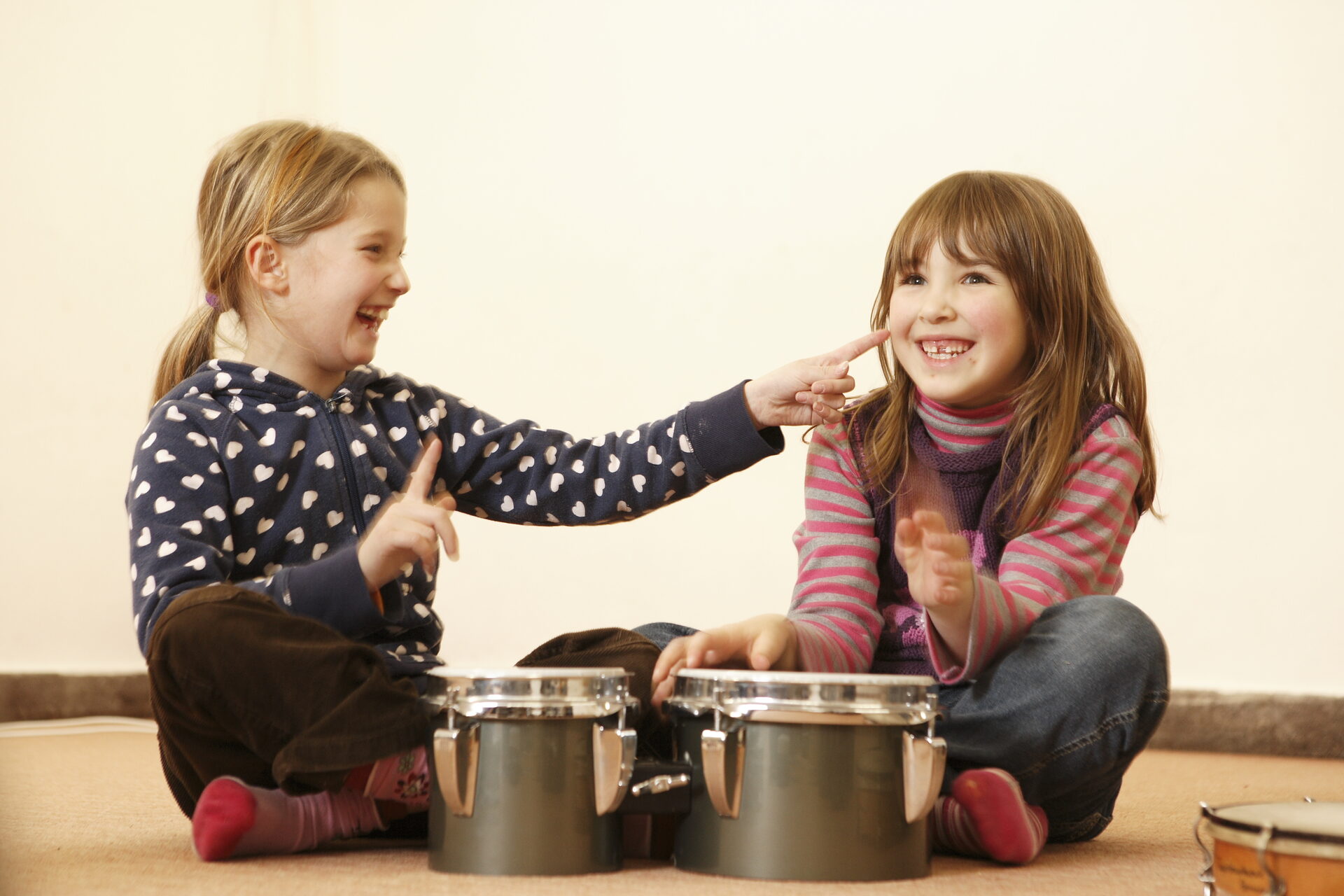
Basic musical level - elementary level
The basic courses offered by the music school are the so-called basic subjects.
They can be attended without any special prerequisites.
The courses lay the foundations for a variety of musical developments and promote individual musical skills.
The music school's standard offer in the basic level includes courses that build on each other.
The courses focus on encounters with the first musical experiences and forms of expression:
Sensitization of perception - especially of the ear,
- Experiencing and getting to know a variety of pieces of music and instruments
- Singing and using the voice
- Experiencing music and movement
- Playing with instruments for the first time,
- Discovering musical contexts and
- Basic elements of music theory.
Attendance at the basic musical level is desirable and a good prerequisite for subsequent instrumental or vocal lessons.
The teachers at the basic music level can provide you with expert pedagogical support and advice and help you find the right instrument.
Sing, baby! - A course for expectant mothers
All over the world, mothers sing lullabies to their children to soothe them to sleep. There is a wealth of rituals and customs from all over the world for rocking babies to sleep.
The Salzgitter Music School offers a singing taster course to show expectant mothers the positive effect their own singing can have on them and their pregnancy.
This special offer takes place as individual lessons or as group lessons. The dates can be planned individually with the course instructor Stefanie Wipprecht.
| Offer as: | Group and individual lessons |
| Class location: | SZ-Lebenstedt, SZ-Thiede |
| Dates: | Monday, Tuesday and Wednesday |
| Costs: |
74,- € once for 3x individual lessons of 30 minutes each, one-off € 53 for 3x group lessons for two or three people |
|
Instructor: |
Stefanie Wipprecht |
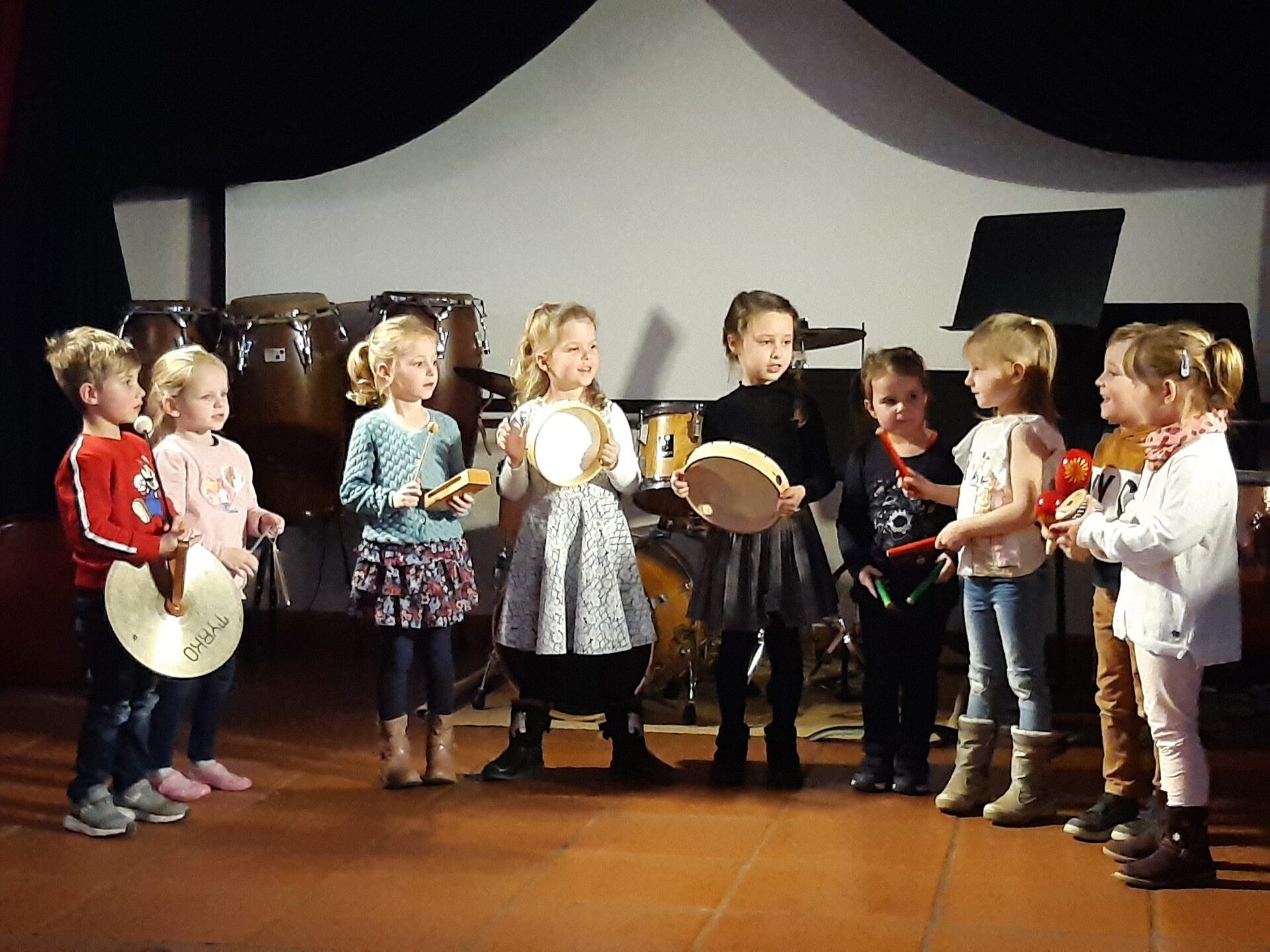
Music for the youngest - Rhythmics for toddlers
You are invited to make music together with your child. You and your child will have fun and enjoy sound, rhythm and movement. The aim is to make music a daily part of family life, just as it has been for many generations.
In the lessons, for example, you will learn how to play songs, spoken verses, movement and finger games, little dances and circle games with your children at home. Simple instruments such as sound sticks, rattles, tonewoods and bells accompany the lessons.
| For children: | from 2 - 3 years |
| Number of participants: | 8 children with a parent |
| Class location: | SZ-Lebenstedt |
| Class day: | Tuesday, Wednesday, Thursday |
| Head teacher: | Alina Ludwig, Stefanie Wipprecht |
| Costs: | 21,- € |
| Duration: | 12 months |
Early musical education for children between 4 and 6 years old
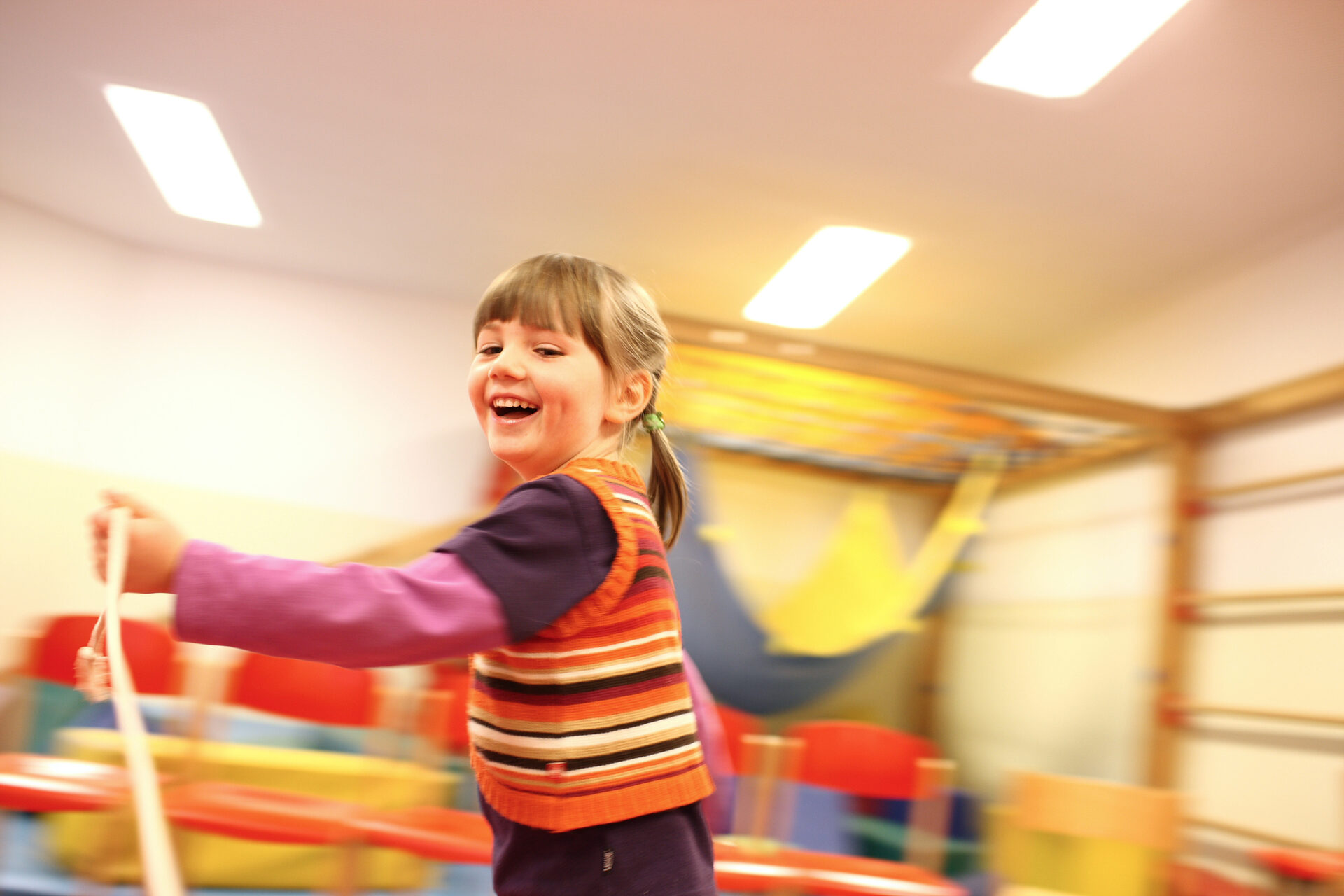
Music is in the air here! Discover the world of music together, listen to music of different styles and other cultures, make music with Orff instruments, paint, do handicrafts, learn about music theory and instruments, move to music and sing songs - children can experience all of this in early musical education.
| Number of participants: | currently max. 6 children |
| Location: | SZ-Lebenstedt, SZ-Thiede, SZ-Bad |
| Lesson days: | Tuesday, Wednesday, Thursday, Friday |
| Teachers: | Alina Ludwig, Stefanie Wipprecht |
| Costs: | 21,- € |
Additional offers at the music school:
Music therapy for the following target groups, also preventive, in the run-up to illnesses
In music therapy, you can give your own child, its feelings and needs space.
Listen, find time, silence and peace. Allow the sound to be and let it out. Space for action and sounds, time for security, retreat and relaxation.
Children with physical or mental disabilities can find all of this here, which is often neglected in everyday family life.
Music therapist Barbara Rother often accompanies the children for years as part of the music therapy. Here the children find the space to be allowed to be who they are, can let go of their fears and give voice and expression to difficult issues. Here they are allowed to be light, without pressure, expectations or constraints, with everything that goes with it: the loud and the quiet, the active and the passive. The questions and the answers. And the music.
| Target group: |
|
| Appointments: | By appointment |
| Teacher: | Barbara Rother |
Sounds for childminders and their children
Would you like to make music an integral part of your work?
Come to the music school with your children and experience a versatile, varied music lesson. We provide suggestions for songs as well as movement, finger and language games. Elementary instruments (e.g. tonewoods, bells, drums) accompany us and provide a variety of sound experiences. We sing with you and the children and experience the joy of music and movement together.
| Number of participants: | 1 childminder and max. 5 children |
| Location: | SZ-Lebenstedt, SZ-Bad |
| Costs: | 27,- € once per child |
| Dates: | 4 dates by arrangement |
All courses can also be offered in kindergartens, schools or other institutions. Please contact:
| Alina Ludwig (Primary School Coordinator) |
| Phone: 05341.8394099 |
| E-mail: alina.ludwigstadt.salzgitterde |
Offers for elementary school:
Music carousel for children aged 6 to 9 at all-day schools
The music carousel forms the transition to instrumental lessons. And it turns at your school!
Groups of up to 4 children are taught an instrument for five weeks at a time, in alternating subjects: For example, recorder, violin, percussion, piano and accordion. The carousel serves as an orientation guide for further musical careers. An important part of the lessons is making music and singing together. Here the children come together as a large group, play the pieces they have learned together, sing and get to know important musical building blocks.
| Teaching locations: | SZ-Lebenstedt SZ-Salder |
| Number of participants: | 20 - 30 children per carousel |
| Costs: | 20,- € |
- Orientation offers
The orientation offers include
- Instrument carousel
- Children's choir
- Beginner drumming course
- Beginner drumming course in the group for adults
- Singing with children -from 2024-
Singing with children - folk and children's songs, rhymes and canons
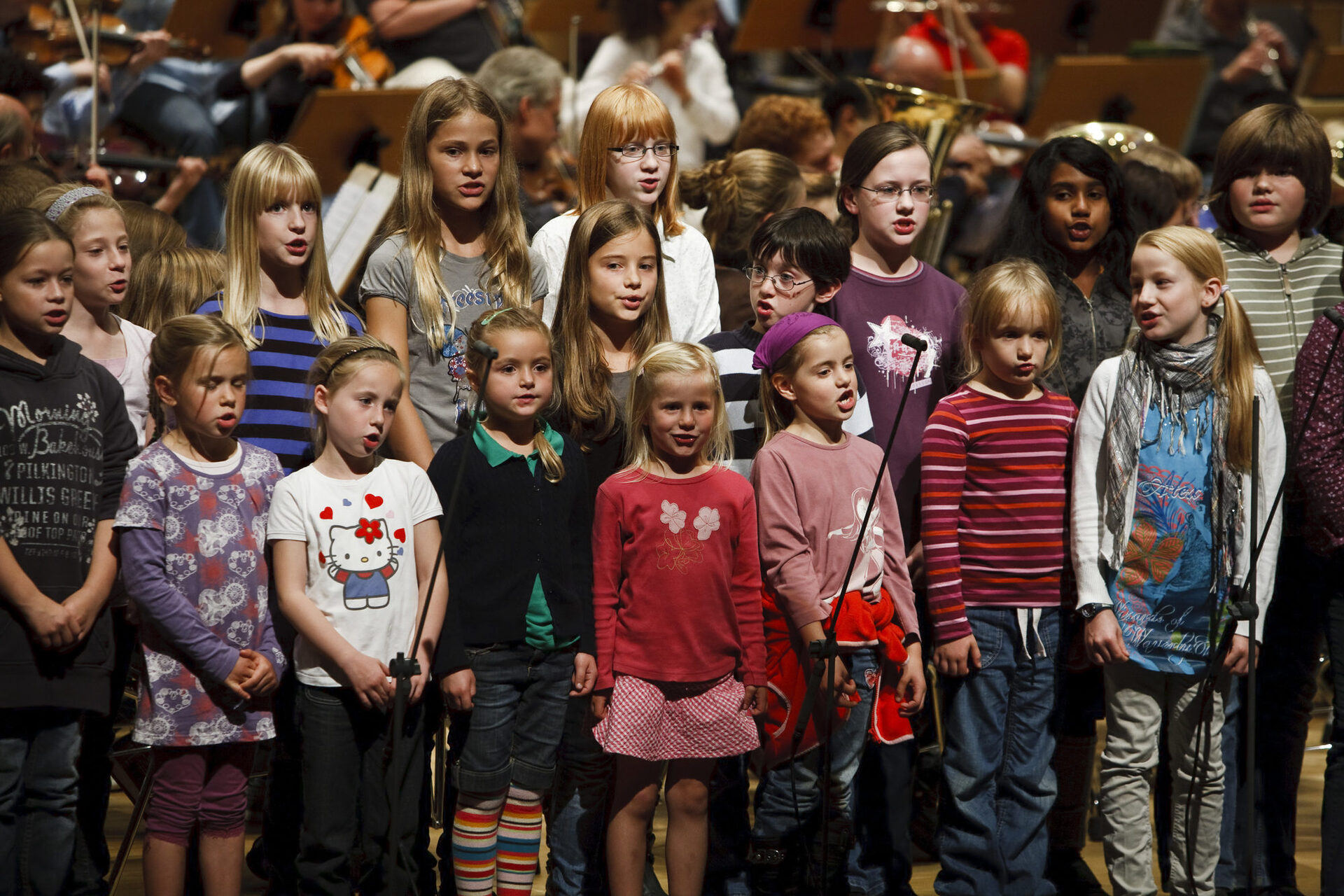
Singing is fun, especially together. Playfully explore the voice and discover all the things we can do with our voices: snapping, imitating sounds and singing. The children are introduced to choral singing through fun and games, with movement and rhythm games adding to the atmosphere.
The focus is on
- Singing familiar and new children's and folk songs together
- Playing with rhythmic-motoric elements
- children's voice training
- Simple polyphony, e.g. canons or first two-part movements
| For children: | from 5 - 6 years |
| Number of participants: | 6 - 10 children |
| Location: | SZ-Thiede |
| Date: | Tuesday afternoon |
| Starting date: | Anytime |
| Costs: | 16,00 € per month |
| Leader: | Stefanie Wipprecht |
Instrument carousel for children of primary school age
Get in, hold on tight, it's about to start!" - At the Salzgitter Music School, an instrument carousel turns every year. This popular orientation program offers children between the ages of seven and ten the opportunity to get to know various instruments in small groups. They can even take the instruments home with them and try them out to their heart's content. In this way, the children may even find their favorite instrument. In this varied course, they experience what instrumental lessons will look like later on. The instrument is changed every five weeks. The instruments are chosen anew each year. In 2026 it will be: Accordion, violin, guitar percussion/drums and piano. In the group phases, all the children come together to sing, dance, get to know rhythms and notes and explore musical phenomena such as tempo, volume, pitch and much more.
| Venue: | SZ-Lebenstedt |
| Date: | Tuesday early afternoon |
| Course duration: | approx. 10 months |
| Costs: | 32,00 € per month |
| Date: |
Simply drumming
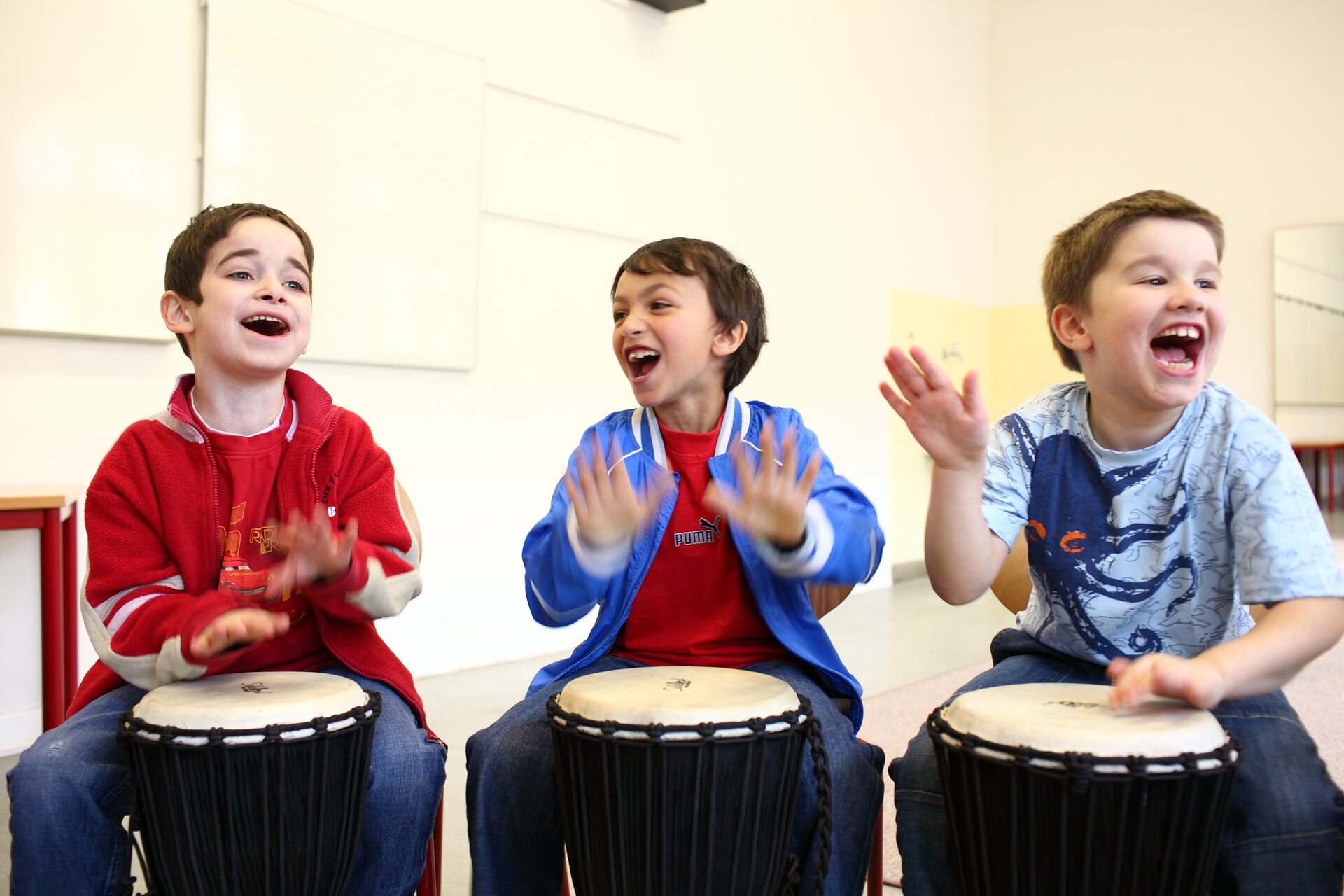
"Einfach Trommeln" is lessons for children who don't yet know exactly which instrument they want to learn.
Making music with rhythms is fun and prepares children for drum lessons, which they can only attend at the age of 8.
The course can be taken for 6 to 12 months.
| Offered as: | Orientation course |
| Location: | SZ-Lebenstedt |
| Dates: | Mondays or Fridays by arrangement |
| Costs: | 32,00 € per month |
| Leader: | Ralf Heuer |
| Contact: | ralfheuerfreenetde |
- Instrumental and vocal lessons / specialist areas
Below we present our specialist areas:
- Family of string instruments
- Family of plucked instruments
- Family of percussion and staff instruments, percussion
- Family of wind instruments
- Keyboard instruments
- Vocals
Streichinstrumente
For centuries, string instruments have played an important role in classical music, but also in dance music and folk tunes.
They also have their place in entertainment and film music.
Anyone who plays a string instrument has the opportunity to play in an ensemble or orchestra at any time.
The foundation is laid in individual and group lessons. Preparation for playing in an orchestra is an integral part of the lessons.
If you would like to make music together, then a string instrument is just the thing for you.
Good prerequisites are a fine ear, well-developed fine motor skills, an understanding of rhythm and musicality.
All string instruments can be borrowed for a small fee.
The violin / The violin
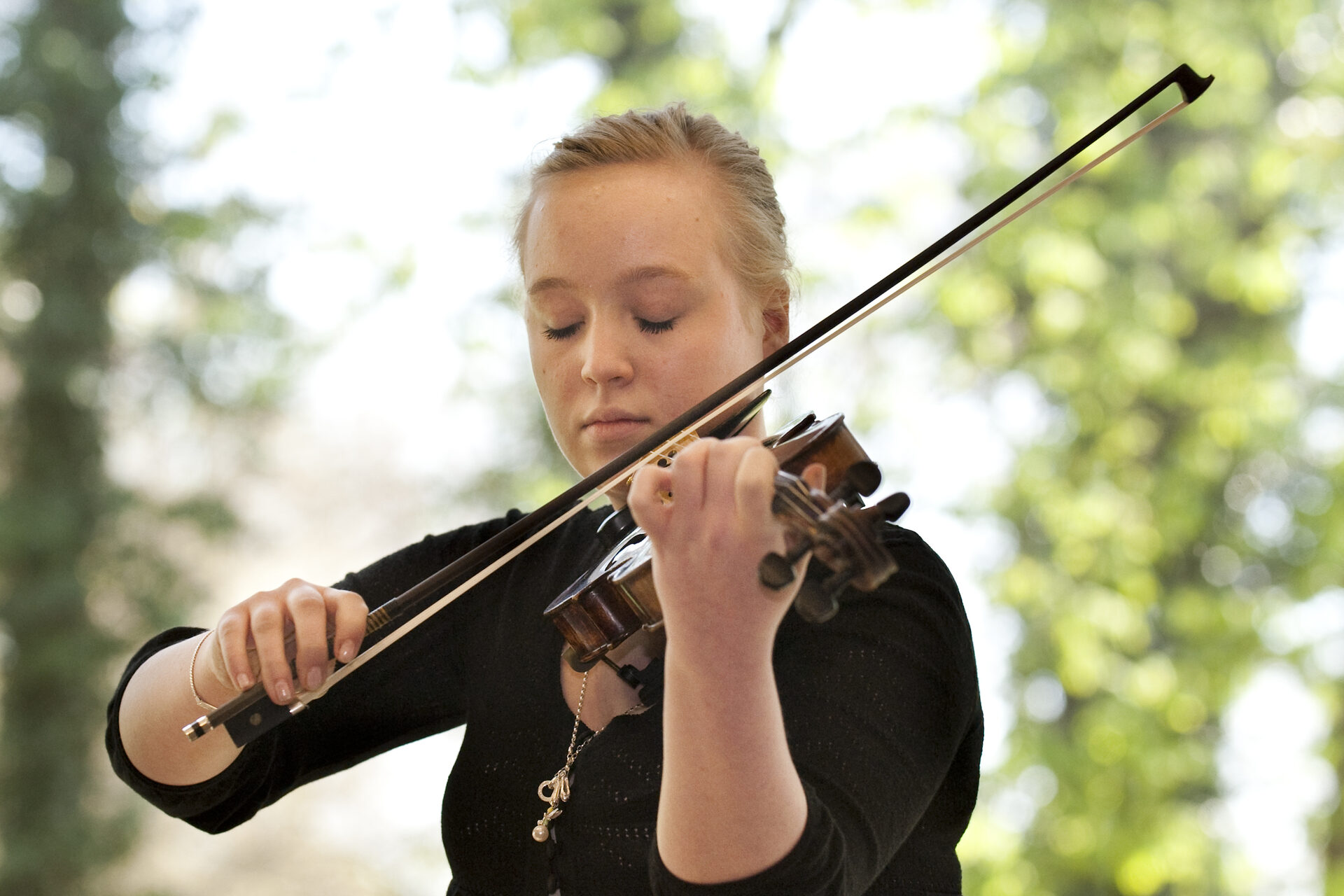
Amadeus Mozart, Albert Einstein, Sherlock Holmes... many geniuses played and still play the violin! The violin is a versatile instrument on which you can not only play classical music, but also pop songs, Irish folk, klezmer, jazz and much more.
It is also the smallest instrument in the violin family and has a bright, high-pitched sound.
In an orchestra or ensemble, you can actually play the "first violin". But there is always a second violin part. First and second violins alternate in melody and accompaniment, so each part is equally important and beautiful.
Lessons can be started at the age of 5 - 6. It is also possible to start as an adult or to return after a longer break.
Playing possibilities:
- String orchestra
- Chamber orchestra
- Chamber music in various instrumentations
| Offer as: | Individual or partner lessons |
| Location: | SZ-Lebenstedt, SZ Bad |
| Appointment | regularly once a week by arrangement |
| Teachers: | Anna Godesberg, Sabine Petter |
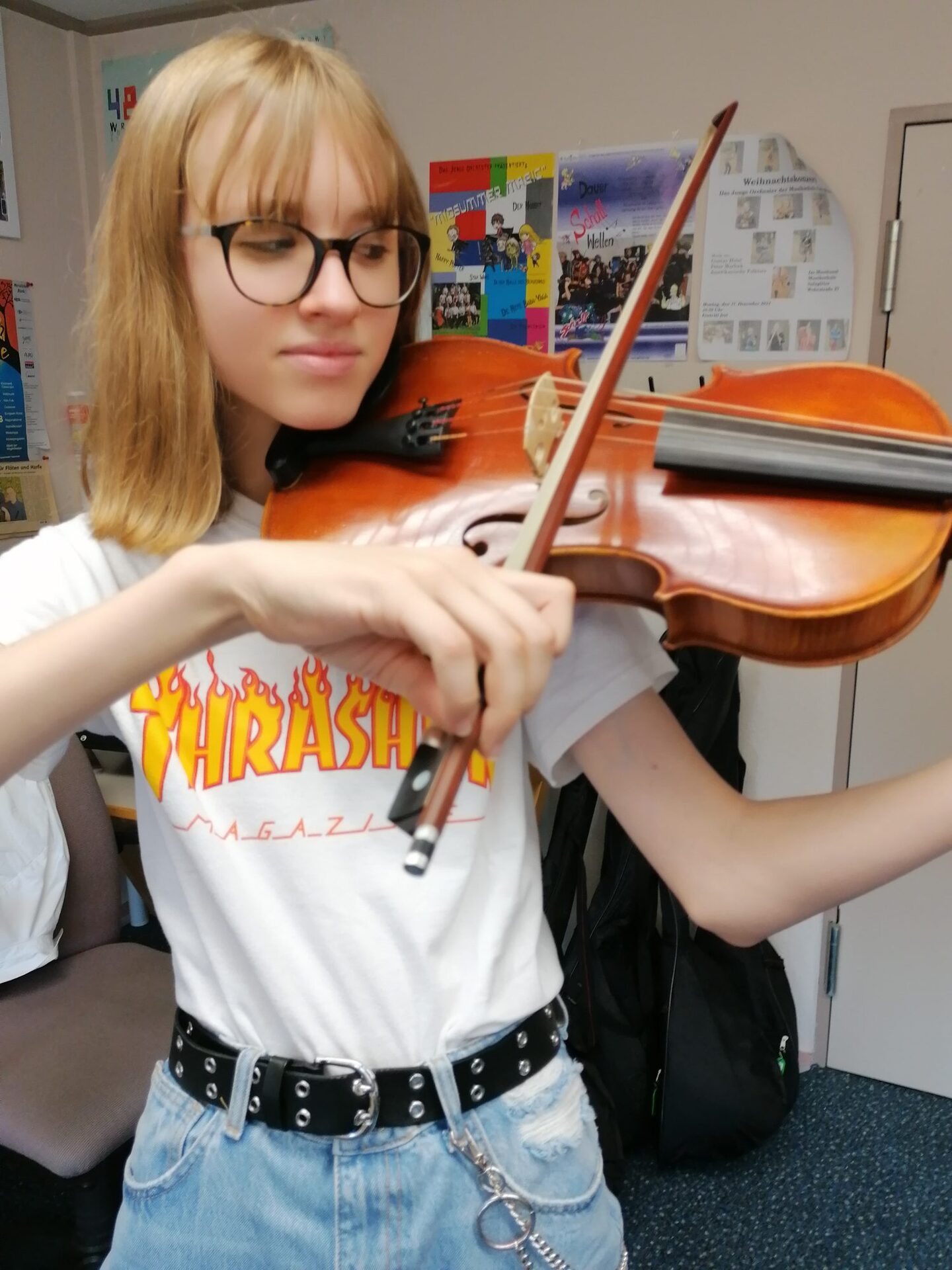
The viola / The viola
The viola has a warm, deep sound. It is slightly larger than the violin and sounds a fifth lower. No string orchestra or string quartet can exist without the viola. It plays the tenor part and you can't do without it!
The notes are notated in alto or treble clef. In the low register, the sound is close to that of the cello, while in the high register the sound is more similar to that of the violin.
Lessons can be started at around 6 years of age. The first lessons can be taken on the violin. Later, if desired, a change to the viola will work well.
Playing opportunities:
- String orchestra
- Young orchestra
- Chamber music in various instrumentations
| Offer as: | Individual or partner lessons |
| Location: | SZ-Lebenstedt, SZ-Bad |
| Date: | regularly once a week by arrangement |
| Teachers: | Anna Godesberg, Sabine Petter |
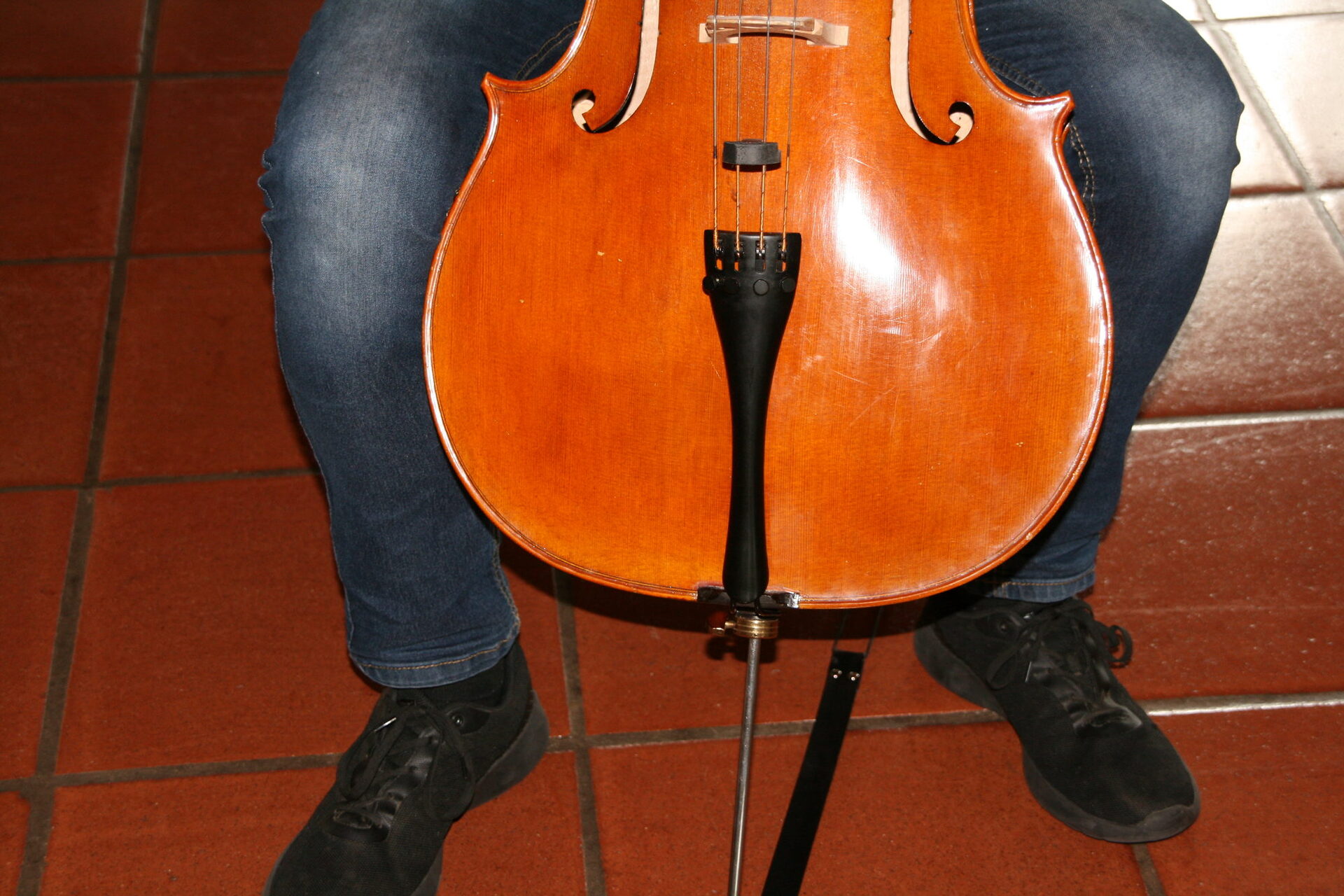
The violoncello / The cello
The cello is the bass instrument of the violin family. Together with the double bass, it is responsible for the lower voices in the orchestra.
The special feature of this string instrument is its soft and varied sound as well as its wide range of around five octaves. Its construction is very similar to that of the violin, except that the cello is much larger and is always played sitting down, held by both a metal spike and the player's legs.
The cello has a firm place in the orchestra and in chamber music. You can play much lower on the cello than on the violin or viola. However, it also has a warm, beautiful sound in the high register.
Whether at home or on stage, anyone between the ages of six and 66 is welcome to take cello lessons at the music school
Lessons can be started at the age of 6.
Instruments suitable for children can be borrowed.
Participation in a cello group or orchestra is possible after about a year.
| Offered as: | Individual or partner lessons |
| Location: | SZ-Lebenstedt, SZ-Bad |
| Date: | regularly once a week by arrangement |
| Teachers: | Wilhelm Lyra, Chun Yin Pang |
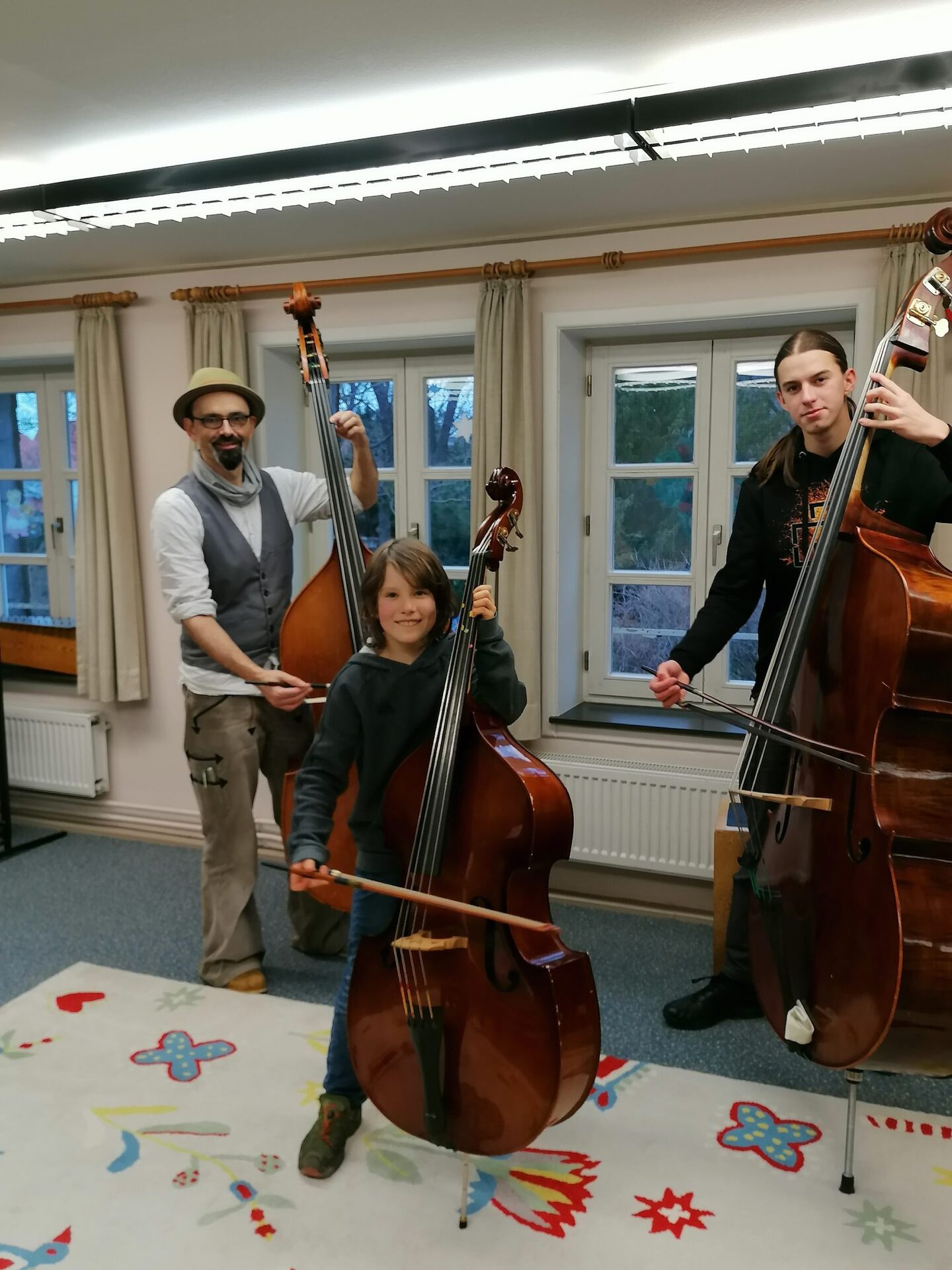
The double bass / The bass
The double bass is the deepest and largest string instrument in the violin family. However, it is not actually a "real" member of the family if you look at its development. The first forerunners of today's double bass emerged in the 16th century from the viol family. Even in today's modern double bass, which only established itself as the standard in its final form at the beginning of the last century, there are still some features of the viola da gamba, such as the sloping shoulders or the tuning of the empty strings.
As the bass instrument of the string instrument family, the double bass forms the harmonic and tonal basis in orchestral and chamber music. The double bass is also becoming increasingly important as a solo instrument, as it has made great progress in its construction over the course of the last century and has accordingly attracted more attention.
Mostly plucked, the double bass is also indispensable in jazz as a rhythm section and as a solo instrument.
Lessons can be started at around 10 years of age.
If possible, the music school also provides rental instruments for beginners.
A good beginner's instrument is available from around € 1600.
After about a year of lessons, what you have learned can be used in various ensembles at the music school.
Playing opportunities:
- String orchestra
- Young orchestra
- Chamber music in various formations.
| Offered as: | Private lessons |
| Location: | SZ-Lebenstedt |
| Date: | regularly once a week by arrangement |
| Teacher: | Stefan Bolte |
For further information, please contact:
| Sabine Petter | sabine.petterstadt.salzgitterde |
| Stefan Bolte | stefanboltegmxde |
Zupfinstrumente
The guitar
The guitar is a quiet musical instrument. More than 20,000 years ago, people were already depicted with bows and arrows. When a person first had the idea of amplifying the sound of the rebounding bowstring with a resonating body (...perhaps with a dried pumpkin...), the original form of all stringed instruments was discovered.
However, it would take thousands of years before the guitar developed from the art of lute making in the East and West. It was not until less than 150 years ago that the Spaniard Antonio de Torres built the first concert guitar in the shape and size we know today.
All musical epochs from the Renaissance to contemporary music are represented in the literature for the guitar. This extremely extensive foray through the history of music is supplemented by highly interesting "non-classical" areas such as jazz and blues, flamenco, Latin American guitar music, international folklore and pop music. Various possibilities for song accompaniment are also possible with the guitar.
Synthesizer guitars", a combination of digital technology and traditional concert guitar technology, have also opened up completely new worlds of sound and application possibilities.
Good-sounding guitars are now available from around €250.
Lessons can be started at around 6 - 7 years of age. It is also possible to start as an adult or to return after a longer break.
If possible, the music school provides rental instruments for beginners.
Playing opportunities:
- Guitar ensembles in various formations
| Offer as: | Individual or partner lessons |
| Location: | SZ-Lebenstedt |
| Date: | regularly once a week by arrangement |
| Teachers: | Stefanie Hiller, Markus Ruggera |
The electric guitar
The electric guitar is one of the most exciting and versatile instruments in the rock, pop, jazz, metal etc. genres. But be warned, if you want to explore the secrets of the electric guitar: in addition to the high fun factor, learning this versatile instrument requires a great deal of discipline, diligence and perseverance.
Anyone who chooses the electric guitar as an entry-level instrument should, if possible, already be able to read and write, i.e. be around seven to eight years old. For very young electric guitarists, there are suitable instruments of an appropriate size. There are no prerequisites for "adult" beginners, although previous musical knowledge is of course an advantage.
The many technical possibilities in combination with amplifier sounds and effects offer a small universe of sound variations to explore and invite experimentation.
The starting age is 7 - 8 years.
Play along possibilities:
- Ensembles
- bands
| Offered as: | Individual or partner lessons |
| Location: | SZ-Lebenstedt |
| Date: | regularly once a week by arrangement |
| Teacher: | Markus Ruggera |
The electric bass
The electric bass or electric bass guitar is one of the most important instruments in bands and ensembles of popular music from jazz to rock. Since its development in 1951, it has usually been an indispensable part of the rhythm section. One of the most important tasks of the electric bass is to interact with the drums and play the basic accompaniments. No band can do without an electric bass player.
In addition to the basics, which every bassist should learn, there are various advanced playing techniques (e.g. slapping or tapping), with which there are virtually no limits to the expressive possibilities on the electric bass.
To learn to play the electric bass, it is not necessary to learn another instrument such as the guitar beforehand.
Lessons can be started at the age of 14. There are suitable sizes for younger pupils. It is also possible to start as an adult.
Playing opportunities:
- Ensembles
- bands
| Offered as: | Individual lessons |
| Location: | SZ-Lebenstedt |
| Appointment: | regularly once a week by arrangement |
| Teacher: | Stefan Bolte |
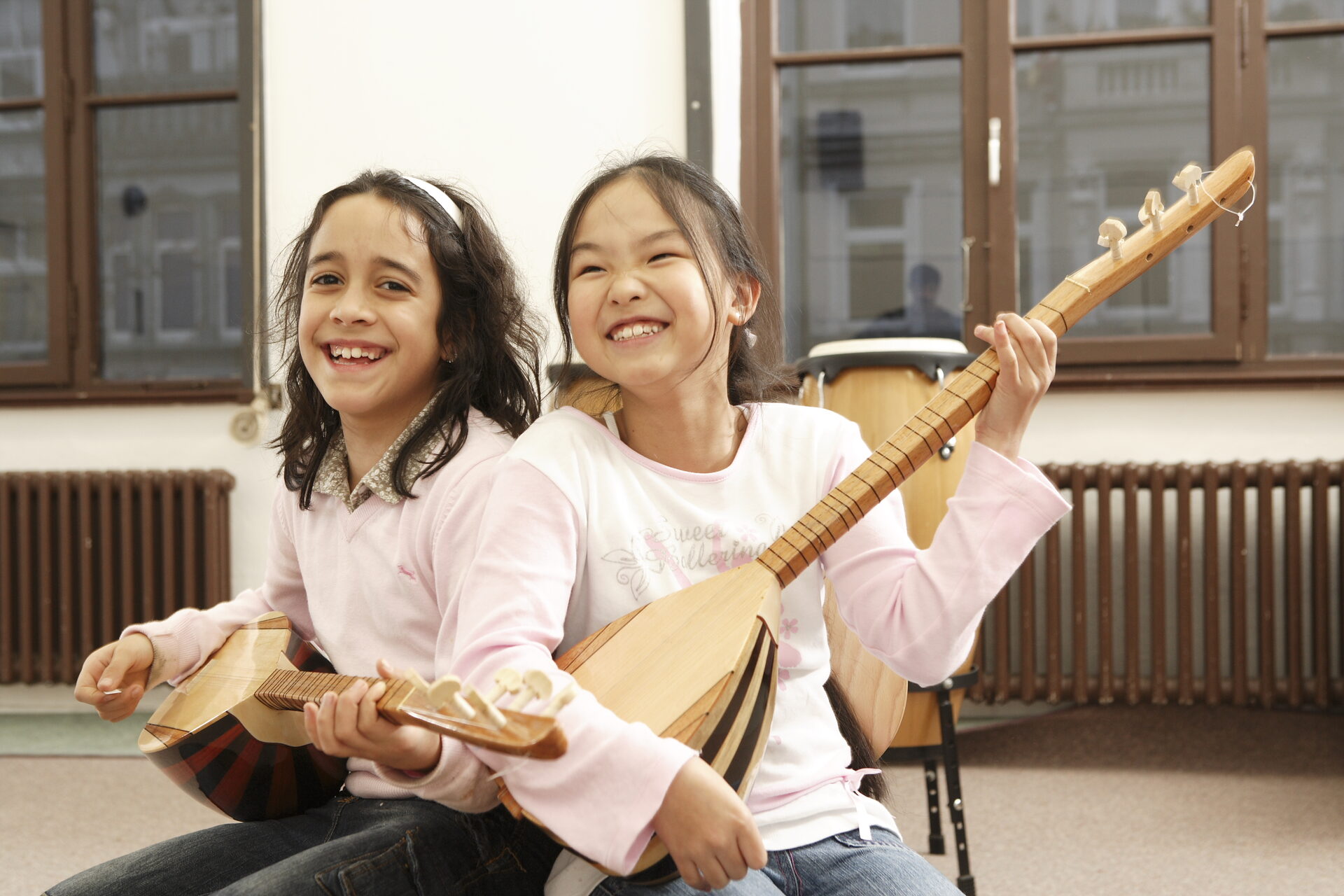
The Baglama / The Saz
The baglama is a traditional plucked instrument from Anatolia. It comes in various forms, including both short-necked and long-necked baglama. The baglama is also known synonymously as the "saz". "Saz" comes from the Persian and actually means "musical instrument".
The baglama is a plucked instrument on which world and folk music from Turkey, Kurdish, Iranian, Armenian, Azerbaijani and Afghan countries is played. It is often accompanied by singing.
Lessons can be started at the age of 7. It is also possible to start as an adult.
Individual lessons or partner lessons are recommended for children; group lessons are possible for teenagers.
It is advisable to buy your own instruments that are adapted to the height of the pupils. Our instructor will advise you on the purchase of an instrument.
Playing possibilities:
- Baglama groups
- Intercultural ensembles
| Offered as: | Individual, partner or group lessons |
| Location: | SZ-Lebenstedt |
| Date: | regularly once a week by arrangement |
| Teacher: | N.N. |
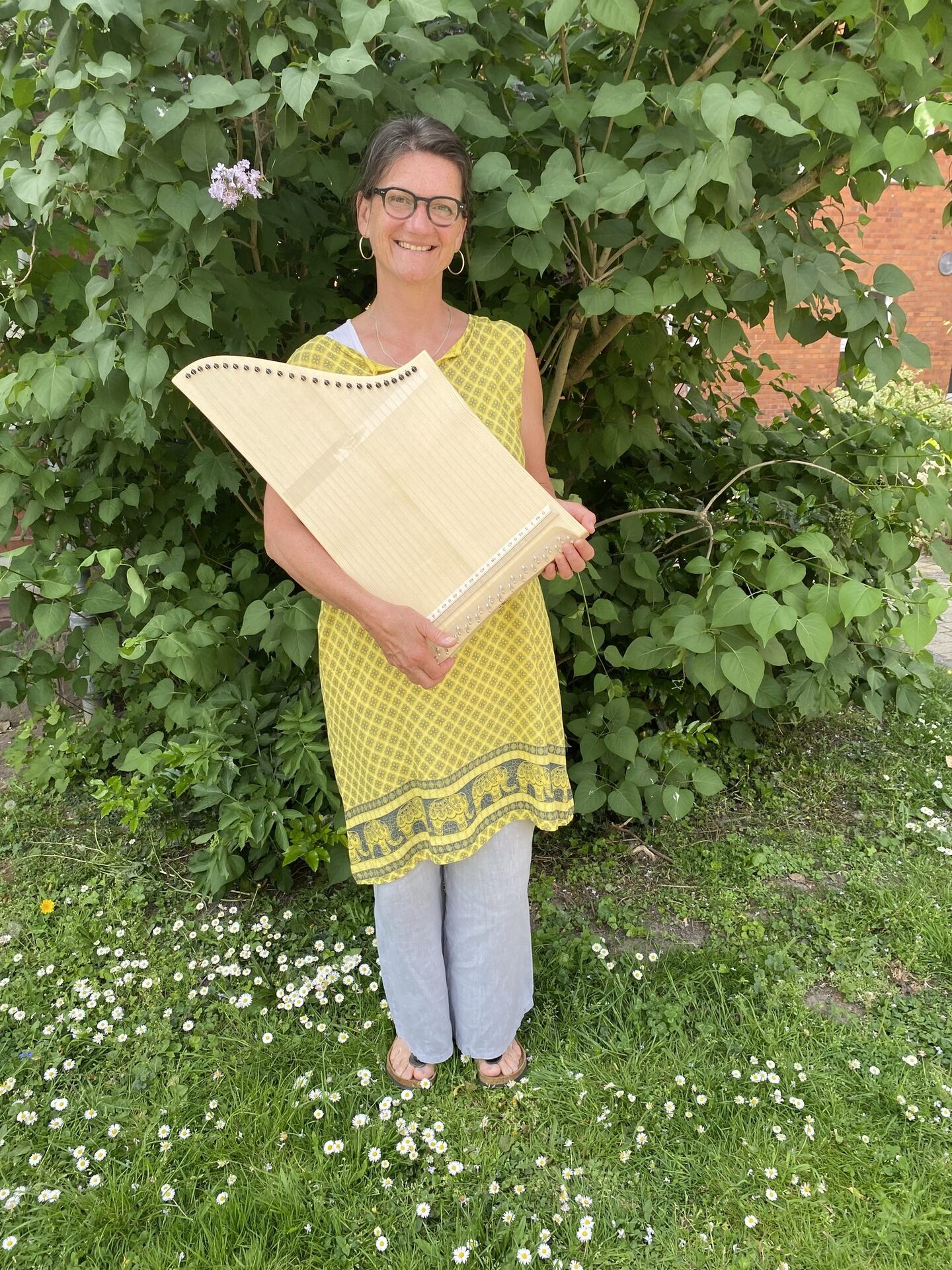
The table harp
The table harp is an instrument for which you do not need any knowledge of music, which is easy to play and on which you can make music together with other people right from the start.
A simple, symbolic musical notation was developed especially for this instrument, which is reduced to the essentials. The sheet music is placed under the strings on the resonating body of the instrument and allows you to play "from the page". The notes become comprehensible and enable even non-musicians to learn songs and pieces of music quickly. Success comes with just a little practice.
Lessons take place in small groups. The focus is on making music together and enjoying music. The table harp is very suitable for adults who enjoy music and want to play beautiful pieces with little practice.
Lessons can also be started at an advanced age.
If possible, the music school provides rental instruments for beginners.
Playing opportunities:
- Table harp ensemble
| Offered as: | Group lessons in courses |
| Location: | SZ-Bad, SZ-Lebenstedt |
| Date: | by arrangement |
| Teachers: | Annette Boenkendorf, Sabine Petter |
Schlag and staff instruments, percussion
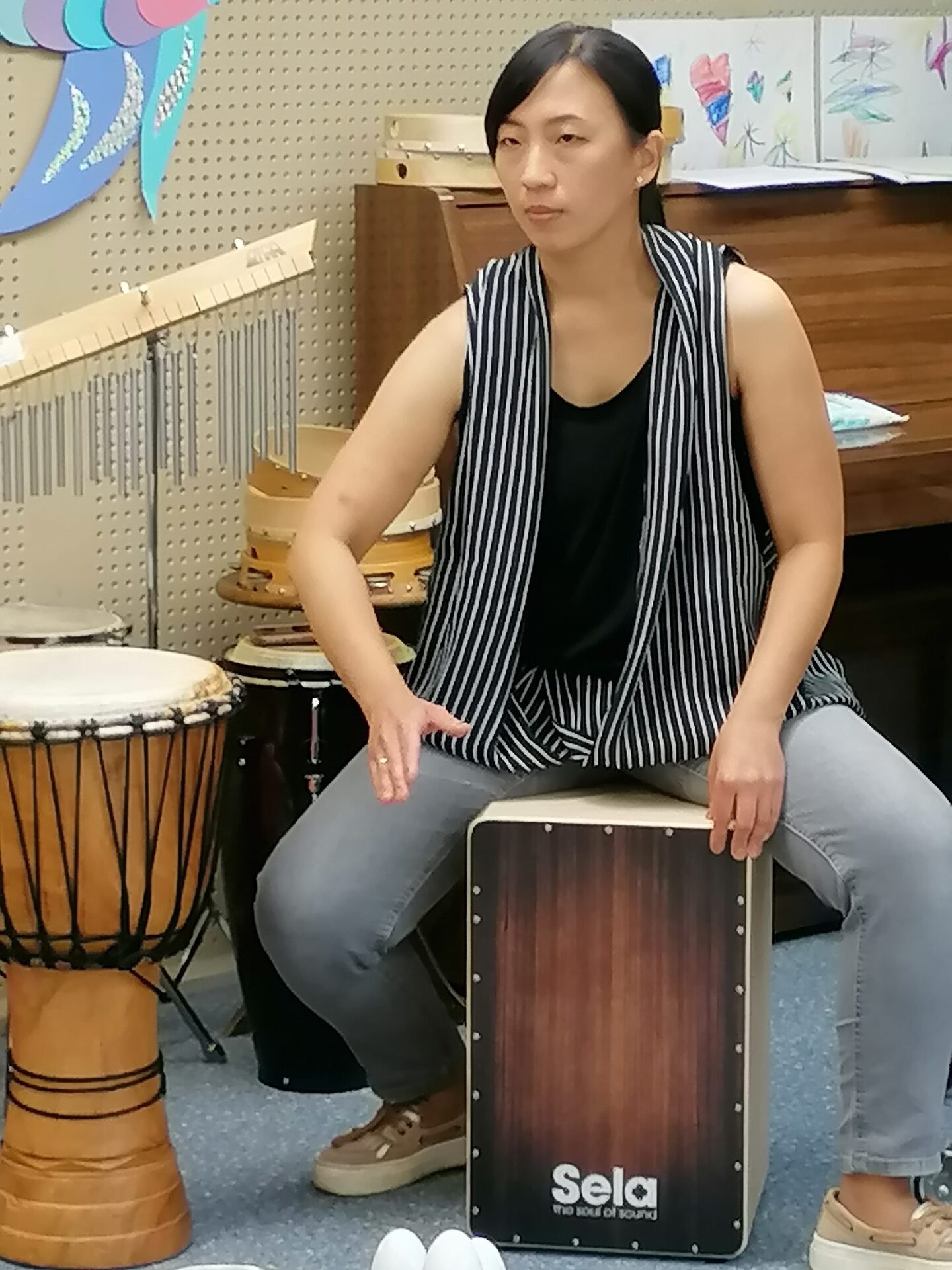
Drums, percussion
Percussion instruments are among the oldest instruments known to mankind and also comprise the largest number of different instruments within one family. They can be assigned to two different groups:
On the one hand, there are instruments with a specific pitch on which melodies can be played (these include mallets, xylophones and marimbas);
and on the other hand there are instruments with an indefinite pitch on which different sounds and rhythms can be produced (these include the drumset or djembé).
The percussion instruments drums, mallets and all kinds of percussion instruments and various African drums are taught at the Salzgitter Music School.
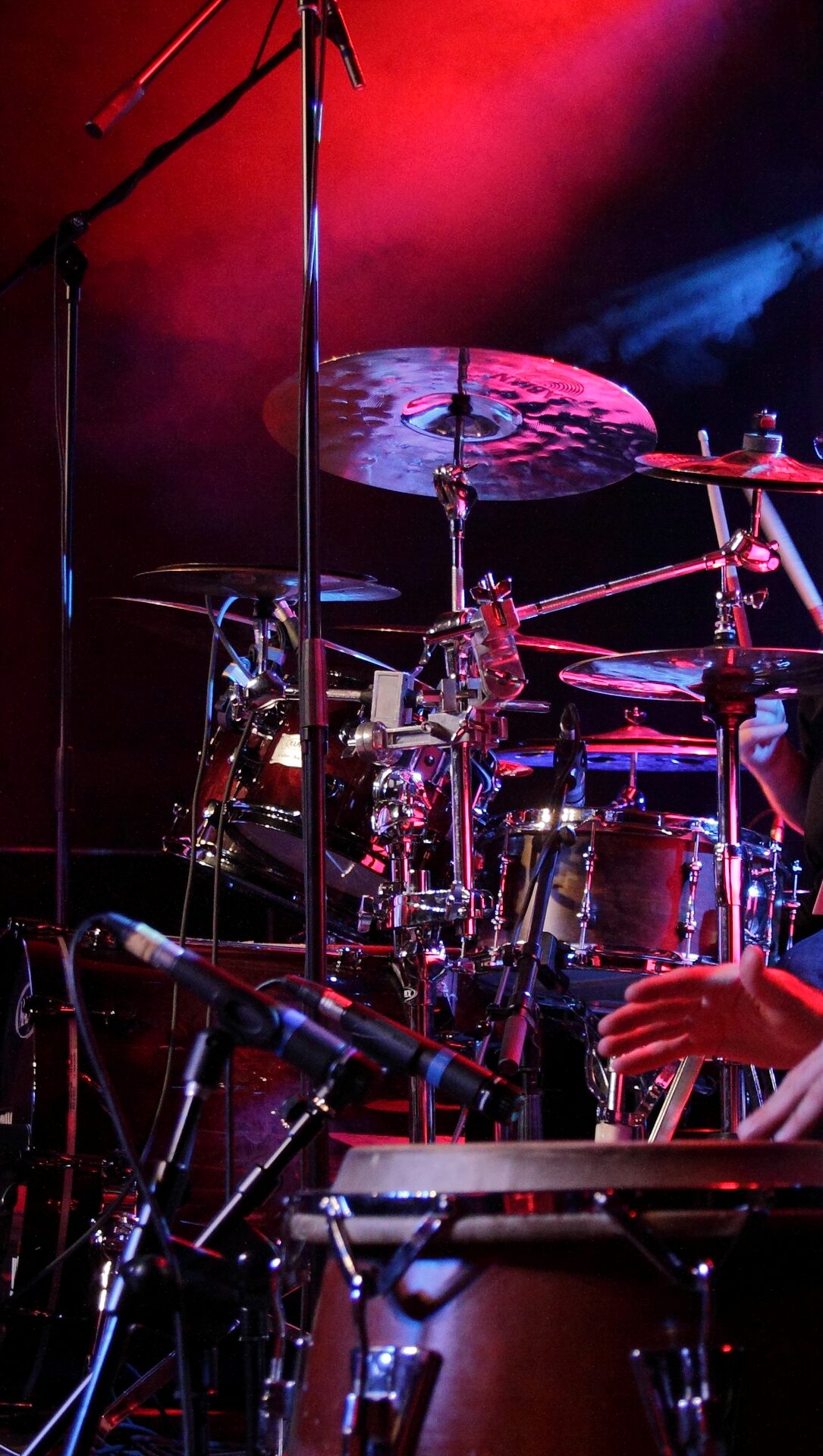
The drumset
The development of today's drums began at the beginning of the 20th century and is closely linked to the development of jazz. The drum set, as we know it today, is one of the most important instruments in popular music and is an almost indispensable part of the rhythm section. Due to the variety of musical styles that have developed, there are also many different drum sets with different numbers of drums and shell sizes.
However, the playing technique is the same for all drummers. Both hands handle the drumsticks and both feet operate the foot pedals for the bass drum and hi-hat.
At the beginning of the lesson, the first steps are taken with the snare drum and then the whole set is quickly learned.
Getting to know and play different styles of music is just as much a part of the lessons as accompanying famous pop and rock songs and learning grooves and drum solos.
No special previous knowledge is required.
Drum lessons can begin at the age of around eight.
If you want, you can also groove and have fun in one of the various music school bands after a few lessons.
Playing opportunities:
- Drum groups for children
- Drum groups for adults
- Small ensembles
- Bands
| Offer as: | Individual or partner lessons |
| Location: | SZ-Lebenstedt |
| Date: | regularly once a week by arrangement |
| Teachers: |
Sonja Lee, percussion Ralf Heuer, drums |
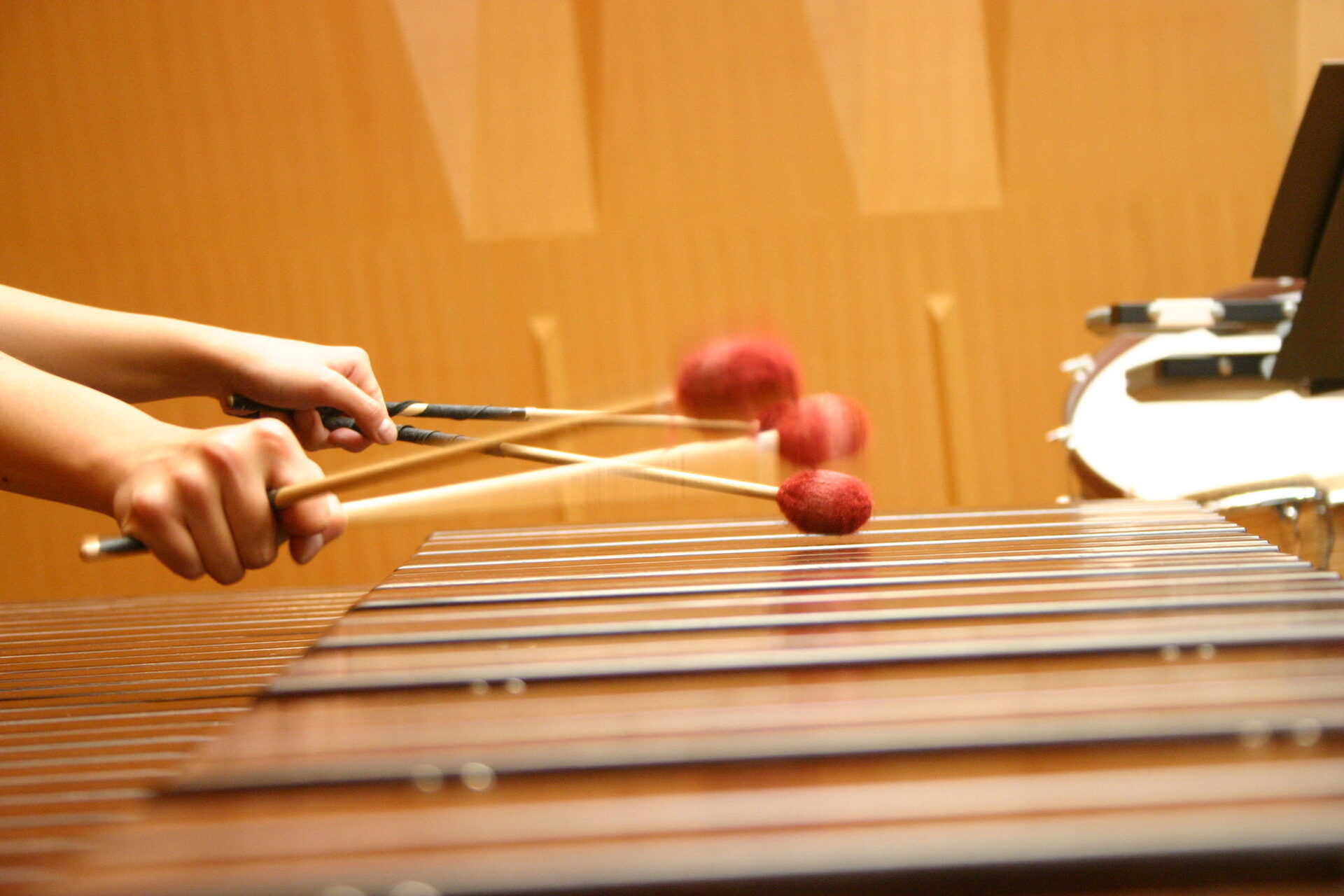
The mallet instruments
The xylophone and the marimba with wooden bars are among the best-known and most important representatives of the mallet instruments. There is also the glockenspiel and the vibraphone with metal bars.
The instruments are struck with up to four mallets - one or two per hand.
The bars are arranged like a keyboard; the range of some of the larger instruments is very close to that of the piano.
Mallet instruments are melody instruments that are played solo; however, they are also often part of many jazz ensembles and are also used in the orchestra as a solo or accompanying part.
Children start with the xylophone, the marimba is learned at an advanced age.
Playing opportunities:
- Percussion groups
- Various instrumentations
- Bands
| Offered as: | Individual and partner lessons and group lessons |
| Location: | SZ-Lebenstedt |
| Date: | regularly once a week by arrangement |
| Teacher: | Sonja Lee |
Blasinstrumente
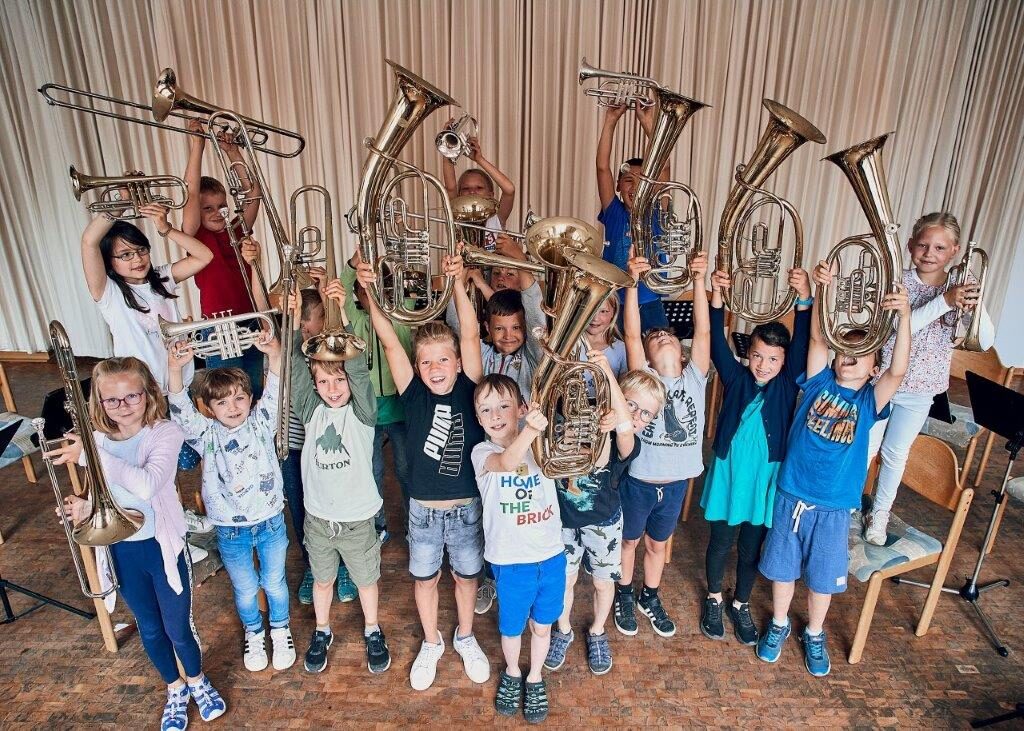
With wind instruments, the sound is produced with the breath, which can be done in many different ways. You can learn to play a wide variety of instruments:
Recorder and flute, chalumeau and clarinet, saxophone, bassoon, oboe, trumpet, trombone, horn, euphonium and tuba.
Wind players are "team players" and feel at home in classical symphony orchestras, symphonic wind orchestras, jazz bands, chamber music and many different formations.
The starting age depends on the size and weight of the instrument and, in the case of children, on the development of their teeth. Depending on availability, special children's instruments can be borrowed.
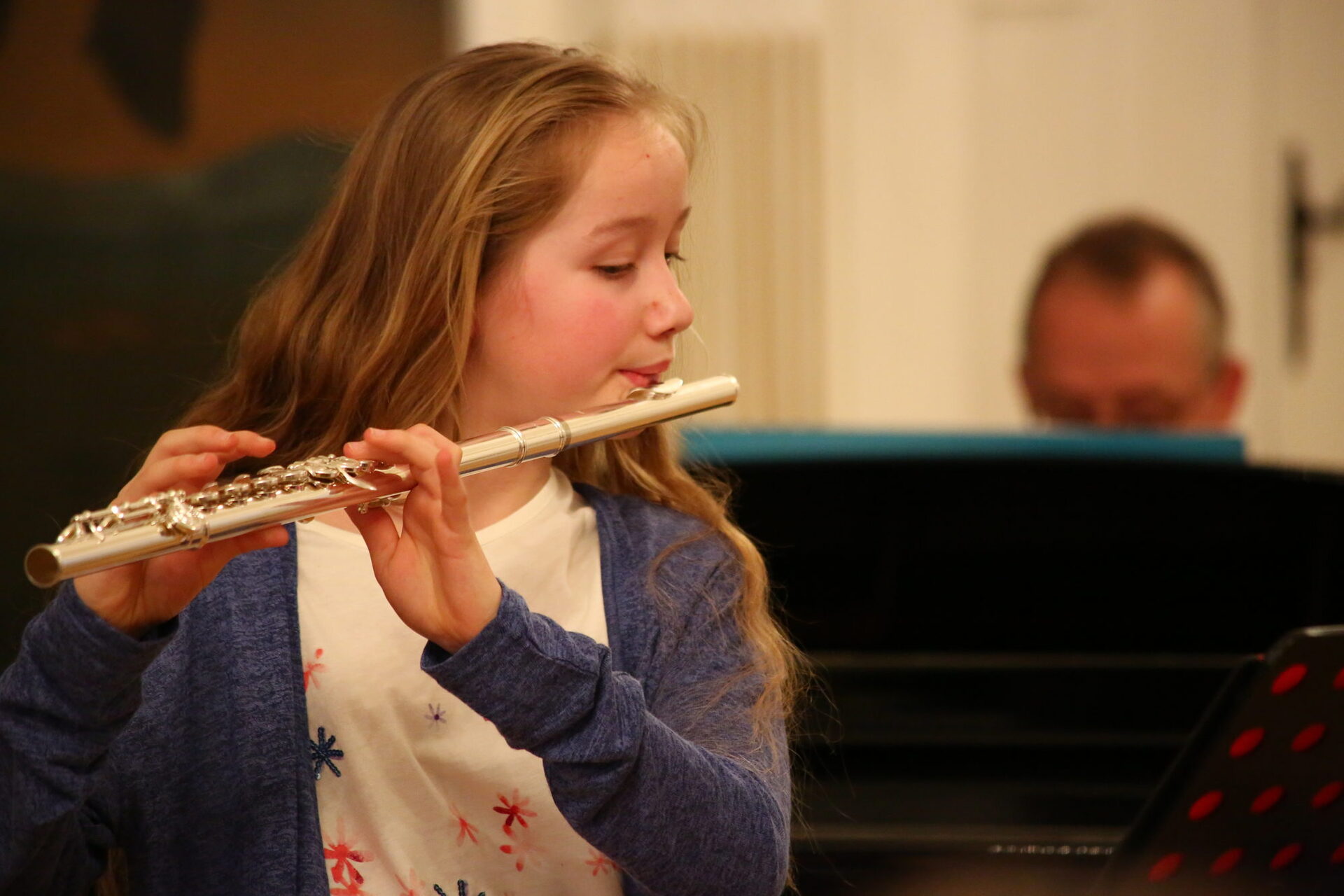
The transverse flute
The transverse flute is one of the most popular and well-known woodwind instruments, which today is mostly made of metal. It is used in many different types of music. Whether classical, jazz, rock, pop or folk - the transverse flute is highly valued and frequently used because of its sound. Many say it sounds like a bird and can be heard as a high instrument in the orchestra.
Lessons can be started from the age of ten.
The music school has some instruments for hire, including so-called "junior flutes" with a curved headjoint, which make it easier for slightly smaller hands to grasp. For advanced students, we recommend buying your own flute, a decent instrument costs around €700.
At the music school, flutists can play in the mixed wind ensemble as well as in the music school orchestra or in various bands. However, polyphonic flute pieces are also an integral part of individual or partner lessons.
The flute can be learned in group or individual lessons. Beginners and advanced players of all ages are welcome.
Playing possibilities:
- Transverse flute ensemble
- Chamber orchestra
- Chamber music in various formations
- Bands
| Offer as: | Individual and partner lessons |
| Location: | SZ-Lebenstedt |
| Appointment | regularly once a week by arrangement |
| Teacher: | Grit Dietrich |
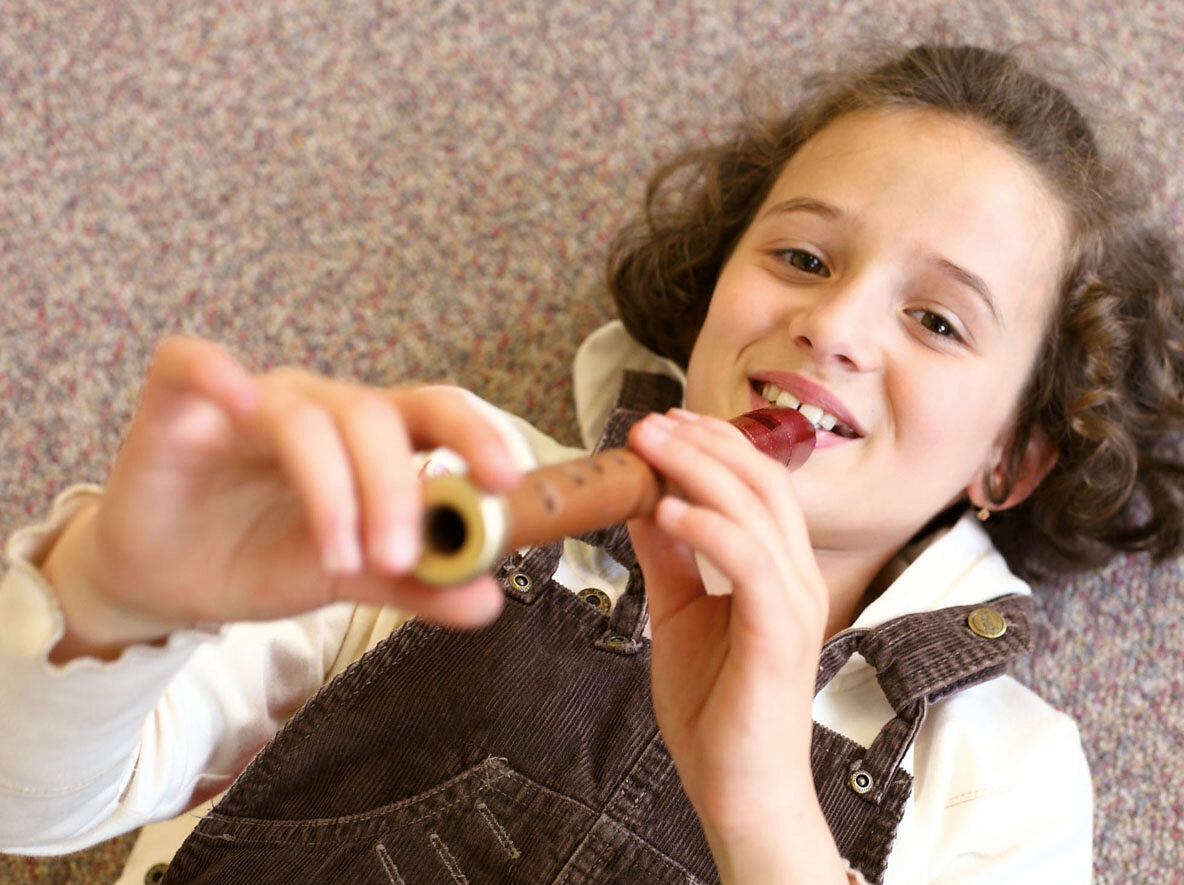
The recorder
The recorder is a popular entry-level instrument, it is easy to handle and can be learned at school age, in some cases even earlier. Adults can also start or refresh their skills at any age.
Lessons in small groups or individual lessons are particularly recommended.
The recorder is an ensemble instrument and is available in different sizes and tunings. Depending on body size, level of musical training or desire, all instruments of the recorder family can be learned.
In addition to the Middle Ages and Renaissance, the recorder had its heyday in the High Baroque period. It was characterized by a particularly overtone-rich, bright sound.
The popularity of the recorder today is reflected in a large number of new contemporary compositions.
In general, you can play anything you like on the recorder.
Anyone interested is cordially invited to join the music school's recorder ensemble.
Playing opportunities:
- Recorder ensembles
- Chamber music in various formations
| Offered as: | Individual and partner lessons |
| Location: | SZ-Lebenstedt, SZ-Bad |
| Date: | regularly once a week by arrangement |
| Teacher: | Annette Boenkendorf |
The clarinet
The clarinet is characterized by a warm, soft sound. It belongs to the family of woodwind instruments and requires a reed which is attached to the mouthpiece.
The clarinet is used in chamber music and in the symphony orchestra. It can be used in many musical styles. In addition to numerous classical and romantic works, it is characterized by its special role in both jazz and klezmer music.
For children of primary school age, starting with a specially developed student instrument, the "clarineau", is a good way of practicing sound production until the child's physique and size allow a transition to the clarinet.
Clarinets are also available in different sizes. The most common is the clarinet in B flat.
The purchase price for a new clarinet is around €1000. When buying an instrument, it is important to consult with the teacher. Depending on availability, instruments can be borrowed from the music school for €10 per month on request.
It is also possible to start playing the clarinet as an adult.
Playing opportunities:
- Clarinet ensembles
- orchestra
- chamber music
- bands
| Offered as: | Individual and partner lessons |
| Location: | SZ-Lebenstedt, SZ-Bad |
| Appointment: | Regularly once a week by arrangement |
| Teacher: | Klaus Händel |
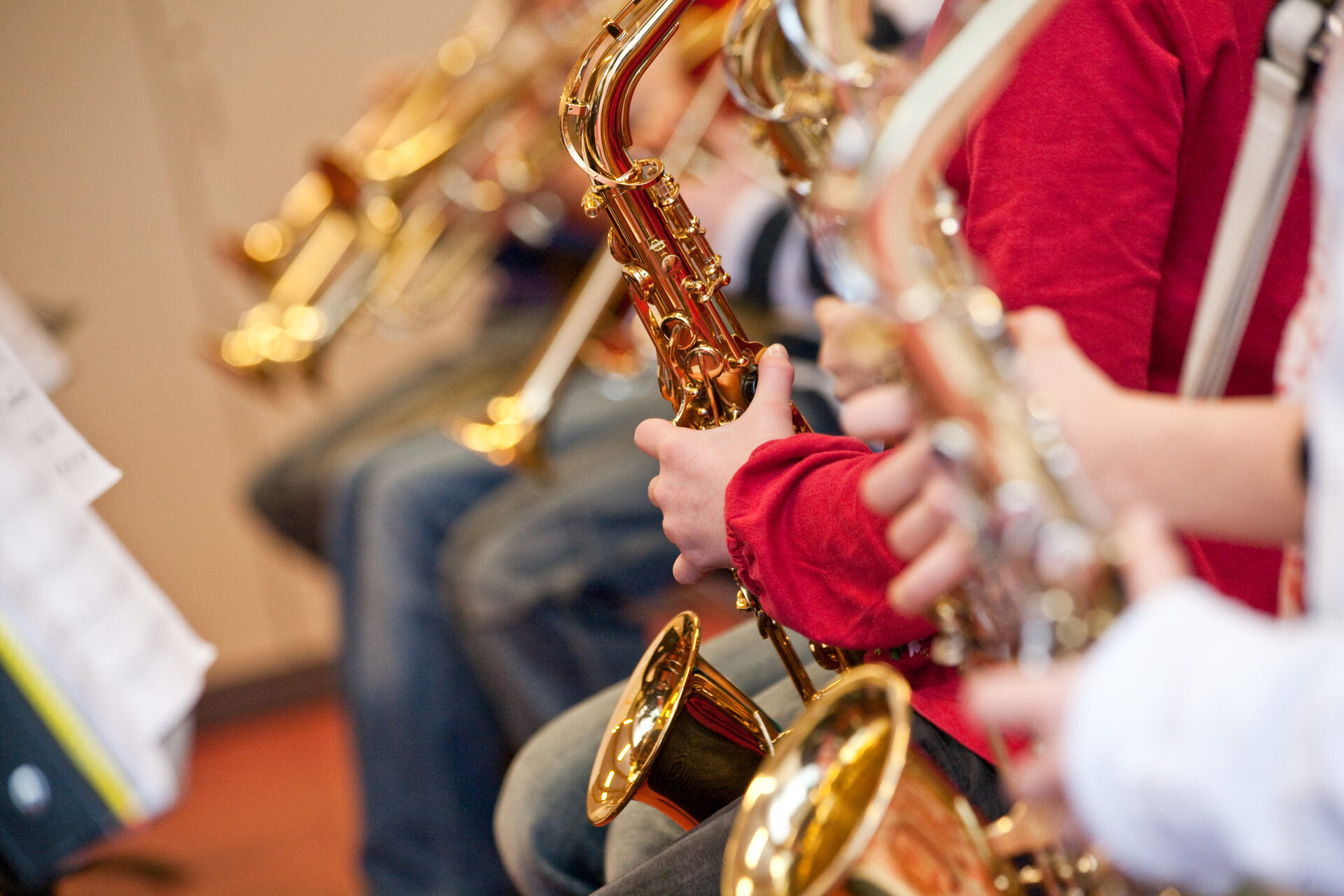
The saxophone
The saxophone was invented in the early 1940s by the famous instrument maker Adolphe Sax. Since then, it has been the preferred wind instrument in jazz. It is also used in certain works of classical music. It is represented in almost every musical genre, but has no fixed place in the orchestra. Although the saxophone is made of metal, it is classified as a woodwind instrument because the sound is produced by a reed.
Playing a saxophone requires strong support, while the embouchure should be loose. Different mouthpieces can be selected depending on the desired sound character. This makes the palette of timbres rich and colorful.
There are different sizes of saxophone, each of which is fingered in the same way. Soprano, alto, tenor and baritone saxophones are the most commonly used.
Beginning: from 10 years
Playing possibilities:
- Mixed wind ensembles
- Bands
| Offered as: | Individual and partner lessons |
| Location: | SZ-Lebenstedt |
| Appointment | regularly once a week by arrangement |
| Teacher: | Klaus Händel |
The trombone
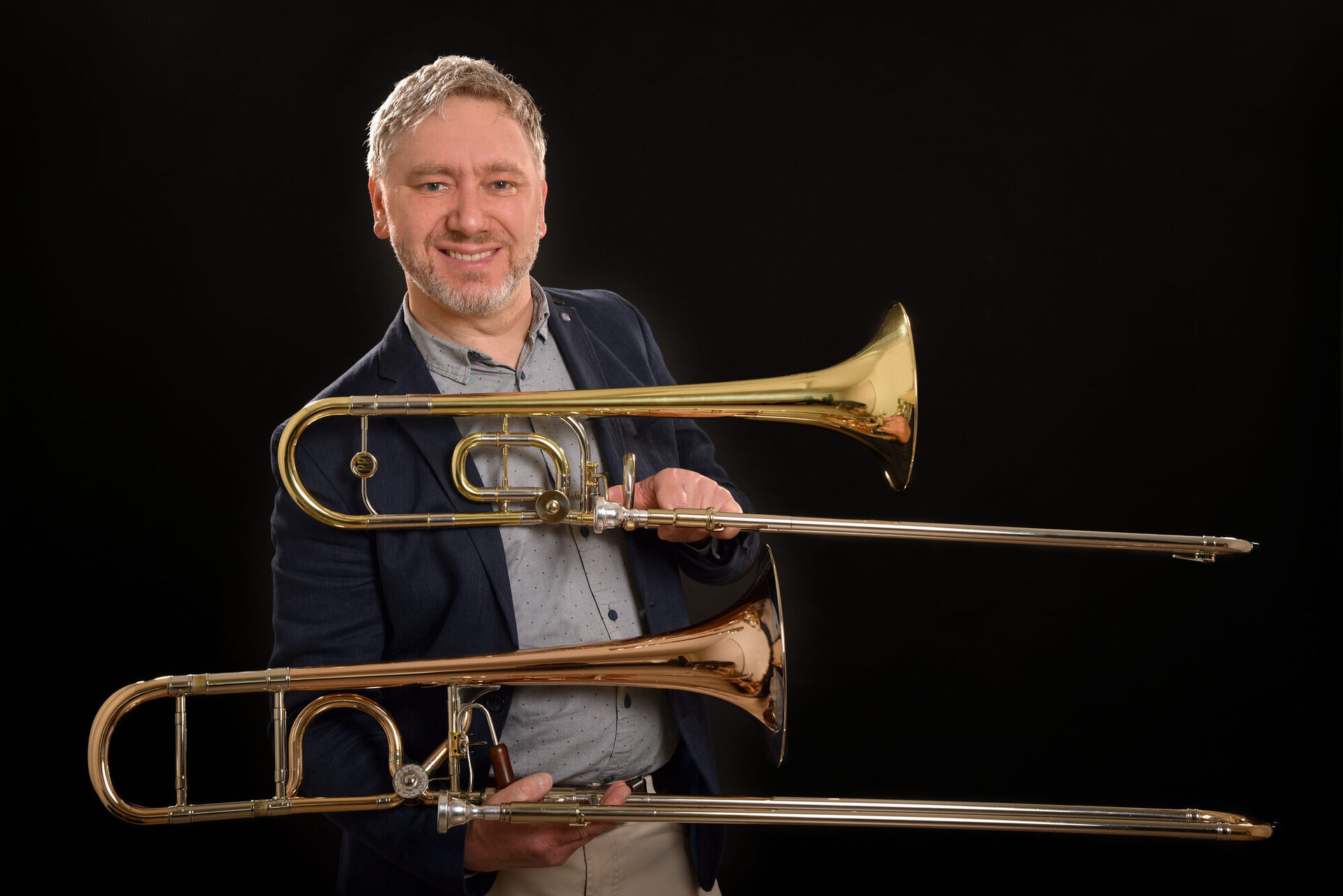
A trombone is a wind instrument from the family of low brass instruments, which also includes the euphonium, tenor horn, baritone and tubas. It is built in an S-shape and is usually made of shiny gold brass. A striking feature is the U-shaped movable tube, which can be used to change the notes chromatically when playing the instrument. The back and forth movement of the so-called slide also gives the instrument its exact name - slide trombone.
The trombone family consists of soprano (very rarely used), alto, tenor and bass trombones. An exceptional representative is the valve trombone, which has no movable slide. For young players, there is a compact C trombone specially developed for children, which makes it easier to get started in the exciting world of music as a trombonist.
The trombone has been used in many compositions from the Renaissance to the present day. Alongside the string instruments, it is the instrument that can be played chromatically (with the smallest intermediate steps) from the very beginning of its existence.
A trombone can appear as a soloist in a concert, but feels most at home as an orchestral instrument in ensembles and has its place in everyday music in a wide variety of formations. Whether in small ensembles, bands, symphony orchestras, wind orchestras or big bands - the trombone, with its unique timbre and some special playing techniques (e.g. glissando), is a popular instrument in almost all styles.
A tone is produced on this instrument by air in combination with the appropriate lip tension. When the trombone is played, the air flowing through the taut lips creates a vibration which is fed into the instrument via the mouthpiece and amplified. At the other end of the instrument, through the bell, the vibration then emerges in its altered form and in most cases reaches the listener's ear as a well-formed trombone sound.
The trombone can be learned in individual or group lessons from young to old. Beginners and advanced players are very welcome.
The most important requirements for young people are permanent incisors and a certain level of physical development to be able to hold and play the instrument, which is not very easy.
A trial lesson with a qualified teacher allows anyone interested in music to discover what it feels like to play the trombone and whether they have the necessary aptitude.
| Offered as: | Individual and partner lessons |
| Location: | SZ-Lebenstedt |
| Date: | regularly once a week by arrangement |
| Teacher: | Volkmar Dietrich |
Tasteninstrumente
The piano
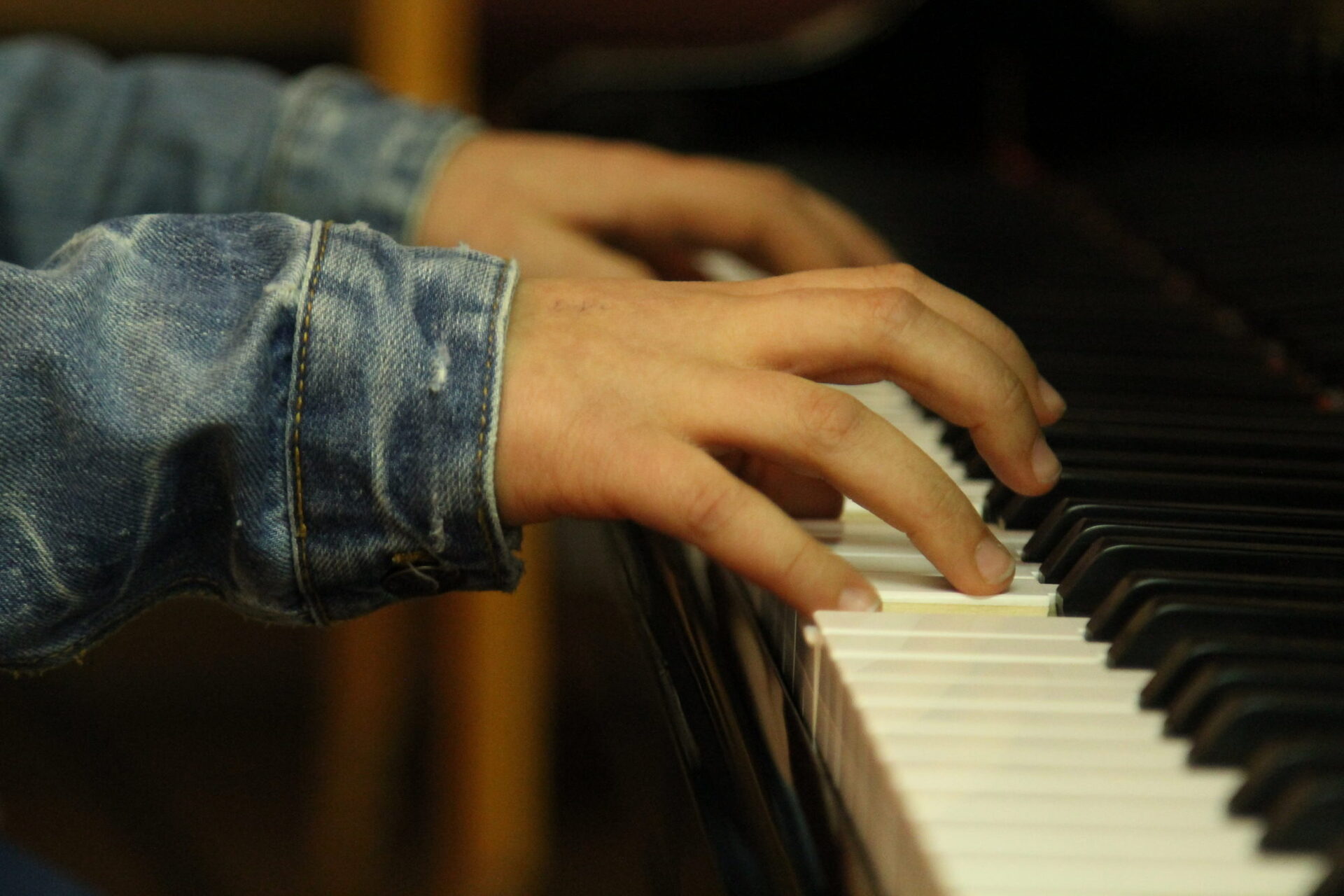
Upright and grand pianos belong to the group of keyboard instruments. They have 88 keys and two, sometimes three pedals. The strings of an upright or grand piano are made to vibrate via a key by hammers striking it and bouncing it back. The first keyboard instrument with a hammer mechanism was designed in the 15th century. An earlier common name for the piano was "pianoforte". In the 17th/18th century, piano players were able to change the volume from piano (soft) to forte (strong) for the first time.
There is extensive solo literature for the piano in almost all musical genres. But the literature for ensemble playing also covers the various musical genres and styles. It ranges from baroque and classical to jazz and rock-pop. In addition to solo literature, our pupils also learn to play four-handed and piano accompaniment and are introduced to ensemble playing at an early age.
Please note: In our experience, an electric piano is not suitable for beginners. Further information can be obtained from the specialist teachers.
Tips on purchasing:
- It is not necessary to buy a new piano, second-hand pianos are also available from specialist dealers.
- Many piano dealers offer installment plan. Ask about the conditions. This option is particularly useful if you are unsure whether your child will really enjoy playing the piano.
- You should only buy a piano privately if a piano maker has seen and appreciated it.
- Very old and very cheap instruments in particular can have defects.
- Ask your piano teacher for advice when it comes to choosing an instrument.
- When making your choice, bear in mind that the piano will be with you for many years and that a beautiful sound contributes greatly to the player's motivation. After all, practicing at home should be a joyful way of making music!
In addition to private lessons, which are also available for adults and are becoming increasingly
which is also offered for adults and is becoming increasingly popular
also suitable for starting in pairs in partner lessons.
| Offered as: | Individual and partner lessons |
| Location: | SZ-Lebenstedt, SZ Bad |
| Date: | regularly once a week by arrangement |
| Teachers: |
Donny Lobisch-Ehlert, Natalia Gamper, Damian Galinski, Marlene Blumberg |
The accordion
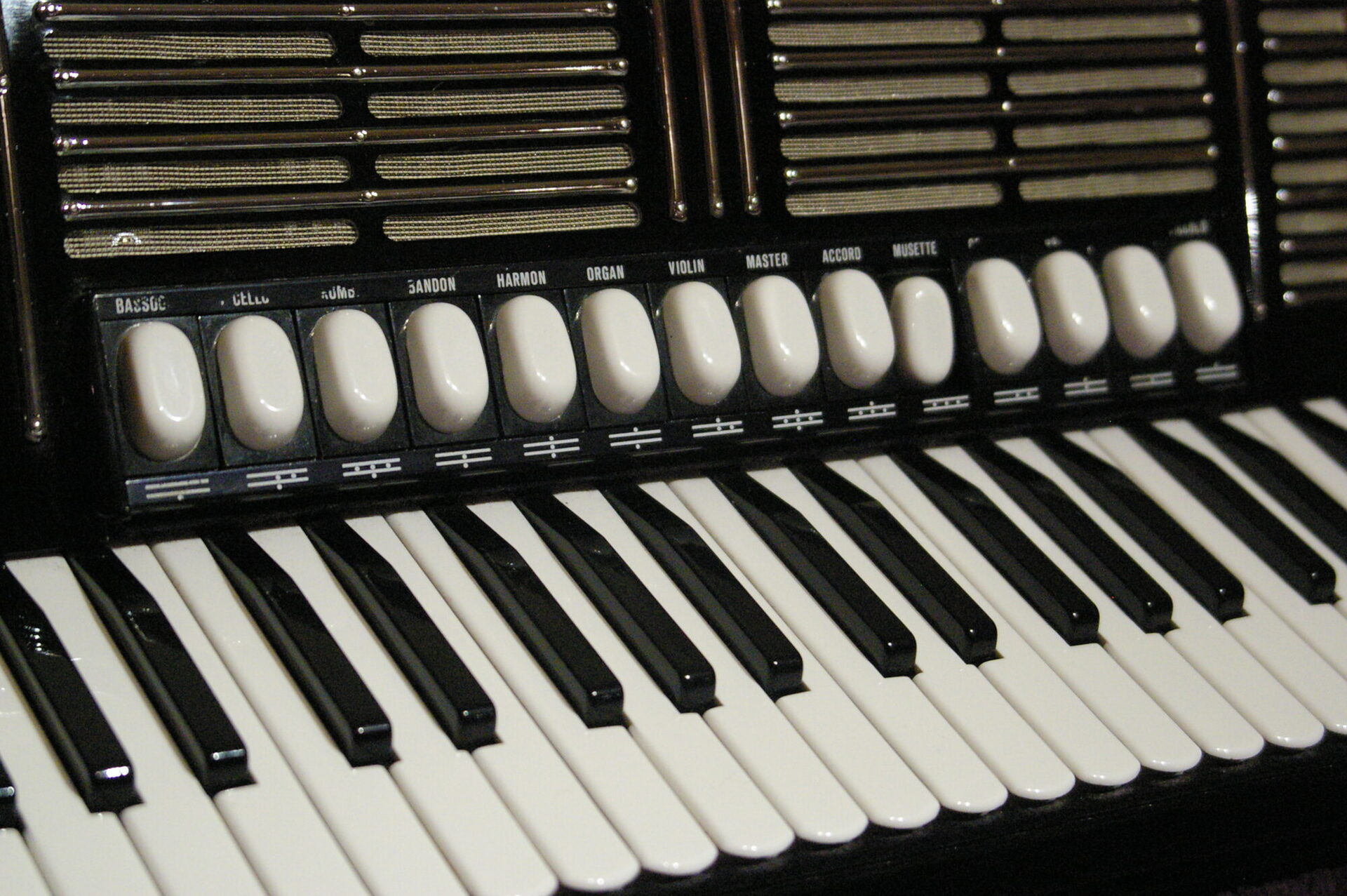
The accordion is a popular keyboard instrument with the sound of a wind instrument. In the development of instruments, it stands at the end of the era of mechanical instruments, similar to the saxophone. The so-called "bellows" are used to generate a current of air which sets the reeds inside the accordion in motion and thus makes it sound.
Unlike the piano, the accordion has two playing manuals. The bass manual (left hand) always has a keyboard with buttons. There are two different systems:
1. the single-note system (also called melody bass, allows extensive playing possibilities)
2. the standard bass system (traditionally mainly suitable for simple accompaniment).
Ideally, an accordion has both systems integrated, the so-called convertor system.
The traditional piano accordion (right hand piano keys) is taught at our music school.
The spectrum of literature ranges from folk songs to folklore, musette, jazz and tango, from the Renaissance to Baroque, Classical and Romantic music. Since the middle of the 20th century, many original compositions have also been written for the accordion - and more and more are being written. The accordion is not only suitable as a solo instrument but also as a chamber music instrument in various formations.
Lessons usually begin at the age of 6-8, but teenagers and adults can also start lessons at any time.
With increasing playing experience, there are opportunities to make music together with several accordions or chamber music ensembles.
Note: The accordion is one of the five instruments that can be learned in the instrument carousel.
Depending on availability, accordions for children aged 6 and over and adult instruments can be borrowed from the music school.
| Offered as: | Individual and group lessons |
| Location: | Salzgitter-Lebenstedt |
Gesang
Singing
Singing makes you happy!
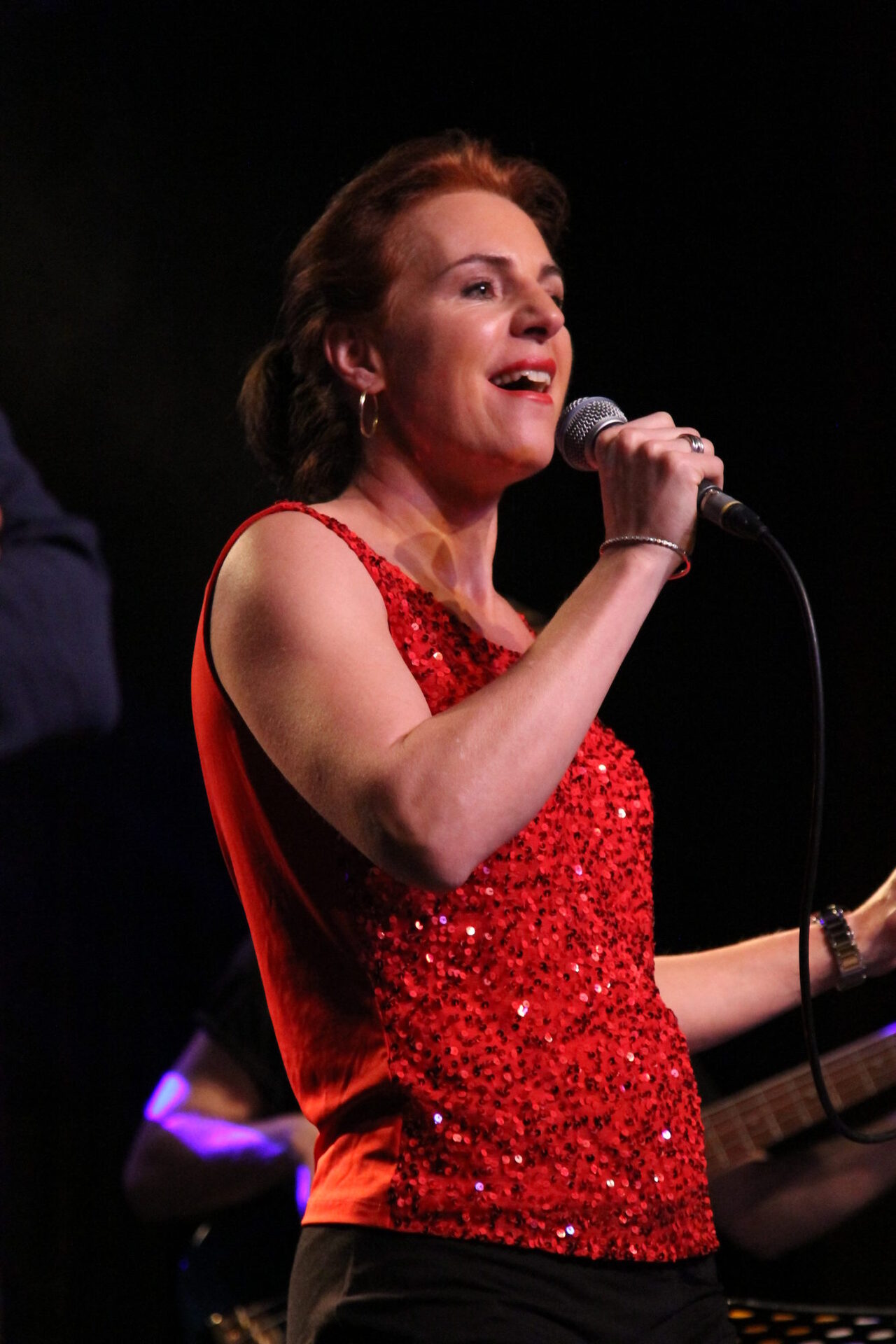
Our voice is the instrument we use every day when we speak and sing. It is part of our personality and we use it to express our feelings in a natural way. Singing creates a direct connection between body and soul.
Every voice is as unique as the person it comes from. And: singing is healthy. Anyone who sings feels "in tune".
Making music with the voice is a top priority at our music school, and you can start at any stage of life.
That's why we offer singing in various forms, styles, age groups and ensembles.
Lesson content:
- Getting to know your own voice
- Feeling comfortable and confident when singing, body awareness
- Good and organic breathing technique,
- Functional voice training, vocal balancing, articulation
- Developing your own abilities
- Teaching expression and stage presence, stage experience
- For pop and rock music: handling the microphone
- Individual forms of expression and "sounds"
Styles:
- Baroque
- classical music
- musical
- pop, rock
And then for those who are interested:
- Ear training
- Harmony and song analysis
- Improvisation, interpretation
- Support with songwriting
- Preparation for studio work
- University preparation
Ensemble possibilities:
- Jazz choir "Gentle Voices"
- Bands
Performance opportunities:
- Student concerts with various instrumentations
- Interdisciplinary music school concerts
- Band concerts
- Singer`s Night
- Christmas concerts
| Offered as: |
Individual lessons and group lessons for two or more voices BandCoaching |
| Location: | SZ-Lebenstedt |
| Date: | regularly once a week by arrangement |
| Teacher: |
Stefanie Wipprecht: Classical singing Uta Budzinski, Britta Rex, Alina Ludwig: Popular singing |
- Ensembles
The ensembles are at the heart of our music school. The individual ensemble subjects are an essential part of the holistic educational concept of our music school at all levels. The techniques and rules of ensemble playing must be learned and practiced in the same way as instrumental playing and singing itself. Only the ability to play together enables independent participation in active music-making. This is where communicative and social forces, which are part of the essence of music, become tangible, effective and learnable.
Continuous ensemble work therefore forms a coordinated unit with the instrumental and vocal lessons at the music school and is an outstanding feature of the music school's work.
Matchstick orchestra
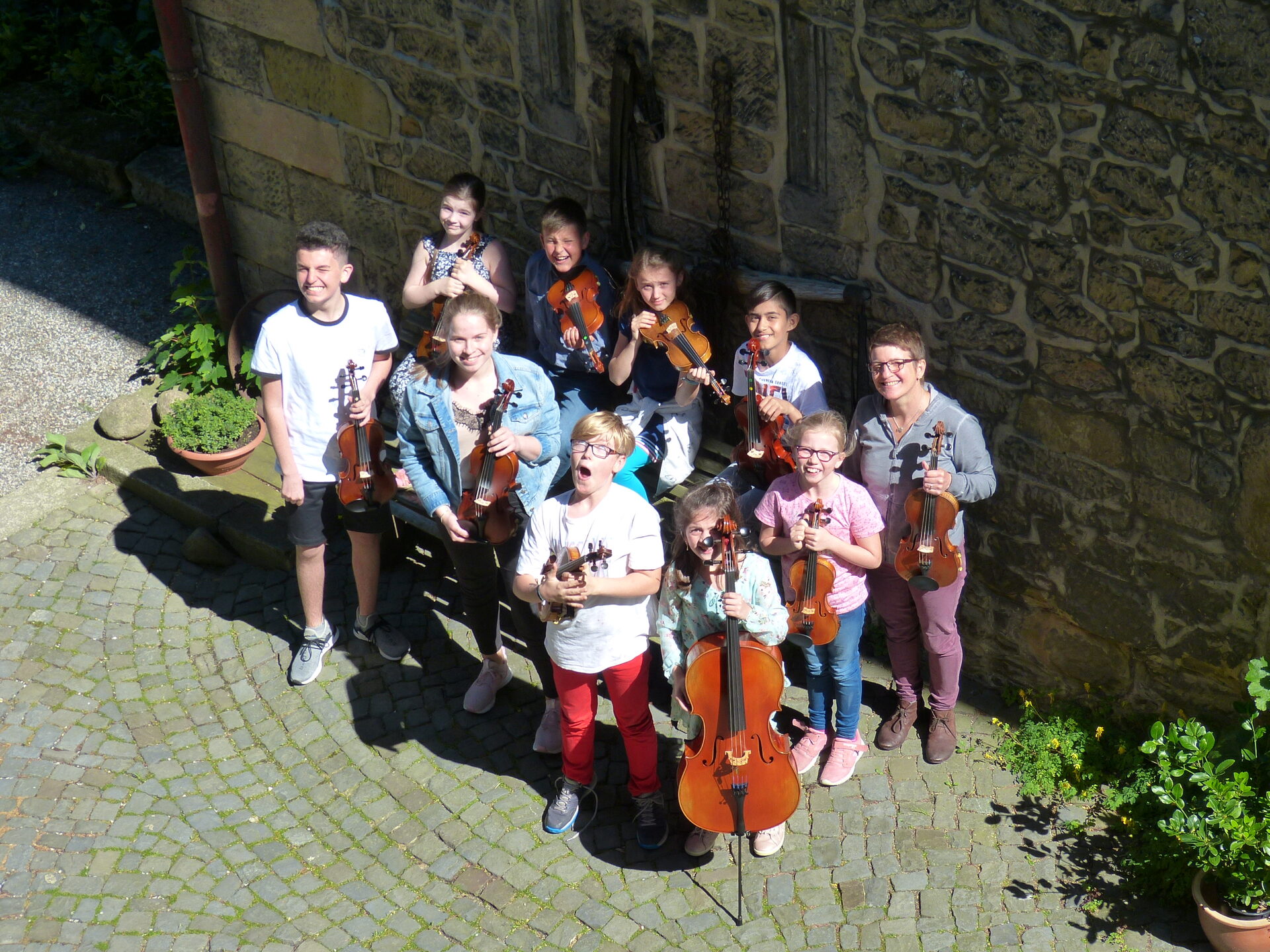
In January 2019, the Streichholzorchester, formerly known as the Zwergenorchester, was founded by the Salzgitter Music School. It currently consists of 10 violins and rehearses every Monday from 17:00-18:00 in the hall of the Alte Feuerwache in SZ-Lebenstedt under the direction of Anna Godesberg. All children who are learning a string instrument and have mastered at least the 1st fingering are welcome. The orchestra offers everyone the opportunity to gain their first experience of playing together, as this is not that easy. Everyone has to play at the same tempo, start correctly after a break and keep one eye on the conductor from time to time. The reward for all the hard work comes at the music school concerts. The diligent practicing has paid off when the pieces can be presented in top form at the concert and the audience applauds vigorously.
| Offered as: | Ensemble and supplementary subject |
| Venue: | SZ-Lebenstedt, hall of the Alte Feuerwache |
| Date: | Regularly on Mondays for 60 minutes |
| Costs: |
Free of charge for all students of the music school For guests 16,- € per month |
| Director: | Anna Godesberg |
| Contact: Anna Godesberg | aanna.godesberggmailcom esberg@gmail.com |
Chamber orchestra
The chamber orchestra is currently made up of musicians aged 10 to 22, but we are open to all adult players. Anyone who plays the violin, viola, cello, double bass, flute or clarinet is very welcome! We rehearse a specific program in rehearsal phases: everything from baroque to popular music is included. You can join at any time - ideally after concerts.
As a rule, we also meet once a year for rehearsal weekends at a beautiful location, where we work intensively on the pieces, discover the music and develop a common sound.
The rehearsal days are of course also filled with lots of free time and special activities.
If you are interested, you are welcome to come to a rehearsal on Mondays for a "taster" and get to know the orchestra and the conductors.
| Offered as: | Ensemble and supplementary subject |
| Location: | SZ-Lebenstedt, hall of the old fire station |
| Dates: | Mondays at 18:00 for 90 minutes |
| Costs: | Free of charge for all students of the music school For guests 16,- € per month |
| Contact: |
Anna Godesberg |
Conga group for adults
All interested adults of any age can take part.
The focus is on the basics of playing technique, learning popular and "traditional" rhythms, easy rhythm exercises - simple improvisations. Knowledge of sheet music is not required.
| Location: | SZ-Lebenstedt |
| Cost: | 37,00 € |
| Leader: | Ralf Heuer |
| Rehearsal time: | Monday or Friday, by arrangement |
| You can join at any time. |
Gentle Voices
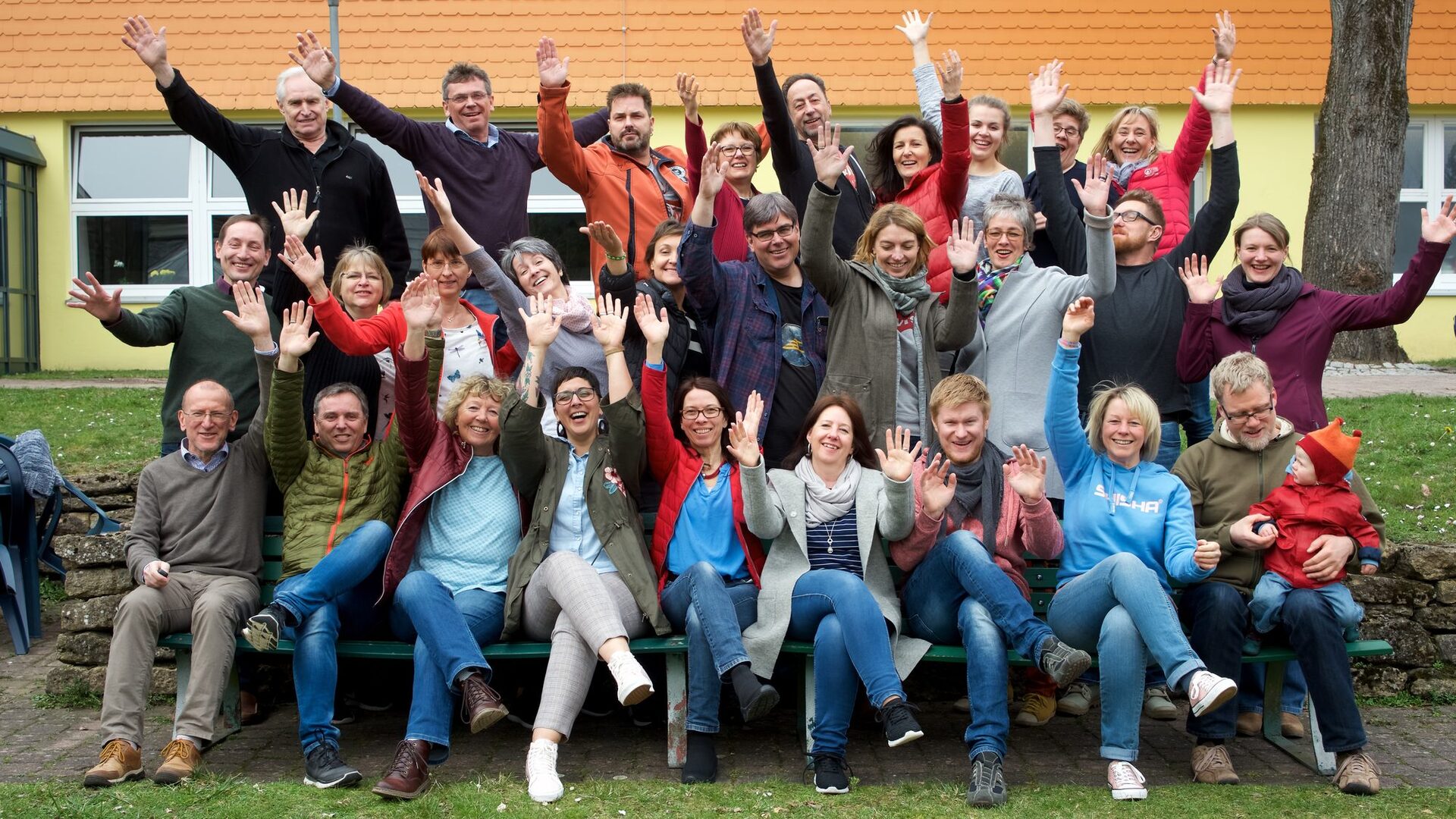
Gentle Voices, the jazz and pop choir of the Salzgitter music school, currently consists of 30 singers aged between 24 and 70. Under the direction of Britta Rex, the choir rehearses every Thursday at 8 pm in the hall of the Alte Feuerwache in Lebenstedt. The repertoire includes pop songs, jazz, African pieces and gospel music. Once a year, there is an intensive choir weekend at a beautiful location. There, the choir gets new input from guest lecturers and works on the existing program. The Gentle Voices can be seen at public concerts, e.g. in the fall in the Fürstensaal in Salder Castle, where a double concert with a guest choir traditionally takes place. In return, the GeVos then travel to the guests' city and sing a concert there. The choir has also been booked for private parties such as weddings.
If you are interested, you are welcome to come to a rehearsal on Thursdays to get to know the choir and the choirmaster.
| Offered as: | Ensemble and supplementary subject |
| Location: | SZ-Lebenstedt, hall of the Alte Feuerwache |
| Dates: | Every Thursday at 20:00 for 120 minutes |
| Costs: | Free of charge for all students of the music school For guests 16,- € per month |
| Contact: |
Britta Rex |
Recorder ensemble
The recorder ensemble also consists of members of different age groups. We play original music for recorder from the Middle Ages, Renaissance, Baroque and modern periods. We also integrate works requested by the ensemble members into our program. A suitable part is selected or arranged for each member.
The rehearsal atmosphere ranges from cheerful to concentrated. The result is a group that enjoys the music, plays away problems and goes home in a good mood.
Several times a year we perform in rooms with beautiful acoustics and offer both our existing and newly developed programs on various occasions. The ensemble is often asked to provide a musical backdrop to an event.
New members are always welcome. All instrument sizes of the recorder family are welcome.
| Offered as: | Ensemble and supplementary subject |
| Venue: | SZ-Bad, Kniestedter Gutshaus, Marienplatz 12a, Room 1 |
| Rehearsal time: | Fridays 18:00 - 19:30 |
| Costs: | Free of charge for all students of the music school For guests 16,- € per month |
| Contact: |
N.N. |
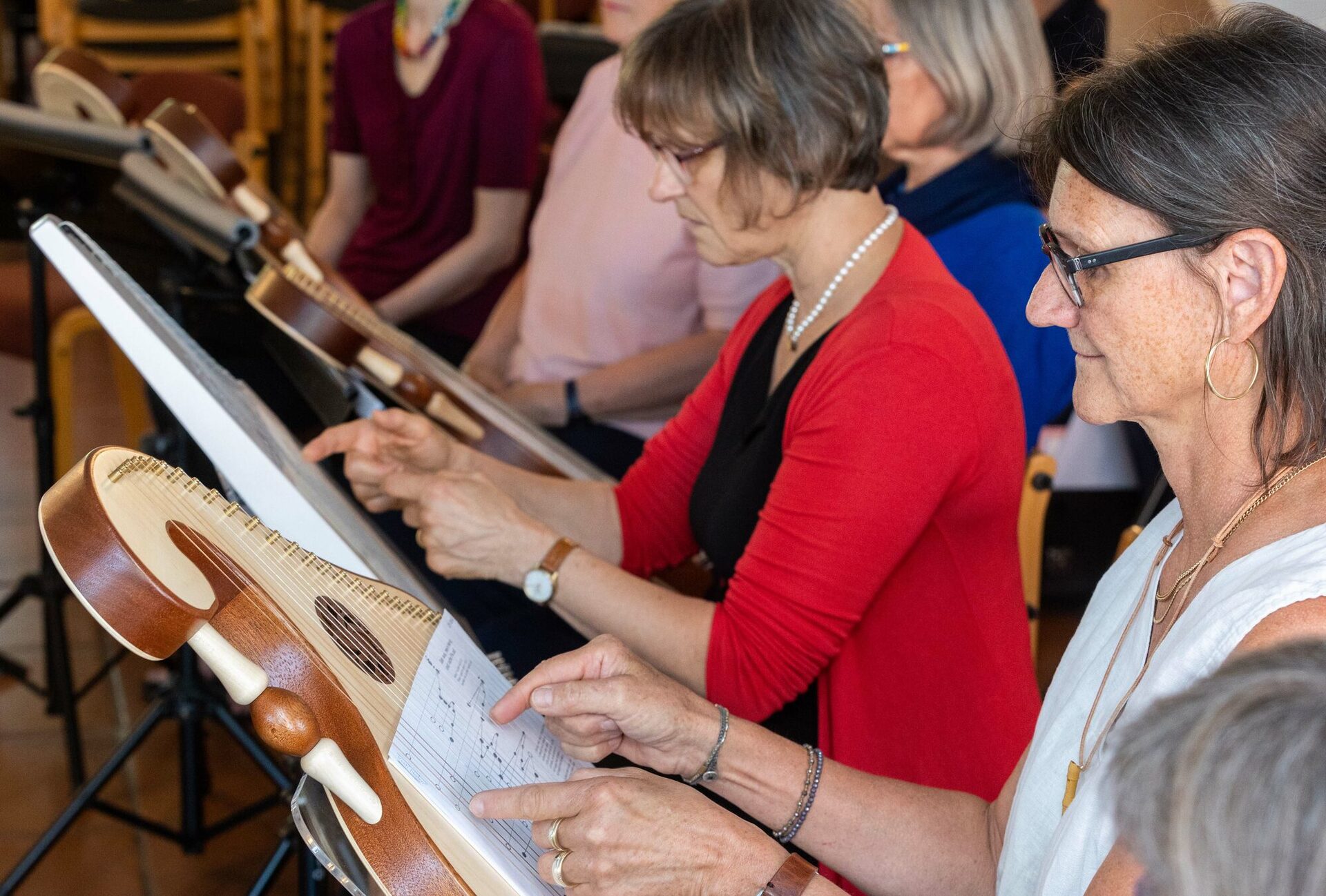
Table harp ensemble
The table harp ensemble meets regularly on Thursday mornings to make music together.
It is a group of senior citizens who make music together and get to know new pieces of music.
From folk songs to gospel, well-known melodies or challenging works, the ensemble plays colorful programs that are also presented in concerts.
On certain occasions, additional melody or accompanying instruments such as flutes, violins or cellos enrich the ensemble.
Anyone who has completed an advanced table harp course or has playing experience can join.
| Offered as: | Ensemble and supplementary subject |
| Venue: | SZ-Lebenstedt, hall of the Alte Feuerwache |
| Rehearsal time: | Thursdays 11 a.m. to 12 p.m. regularly |
| Costs: |
Free of charge for all students of the music school For guests 16 euros per month |
| Contact: |
Sabine Petter |
- Additional subjects
Study preparation - New training at the music school
Once a year, the entrance examination for the newly established SVA department (preparatory studies) takes place at the music school. Applicants must demonstrate their instrumental or vocal skills in front of a panel of experts chaired by an external expert (Hanover University of Music). After successfully passing the entrance examination - which also tests ear training - applicants are accepted into the SVA class. A comprehensive support program consisting of individual lessons in major and minor subjects, ensemble lessons as well as ear training, harmony, form theory, music history and audio samples is now on the SVA students' weekly schedule for one year. The intermediate exam is due before the summer vacation. Then it's on to the next round.
| Location: | SZ-Lebenstedt |
| Costs for external participants: | 16,00 € |
| Dates: | By arrangement |