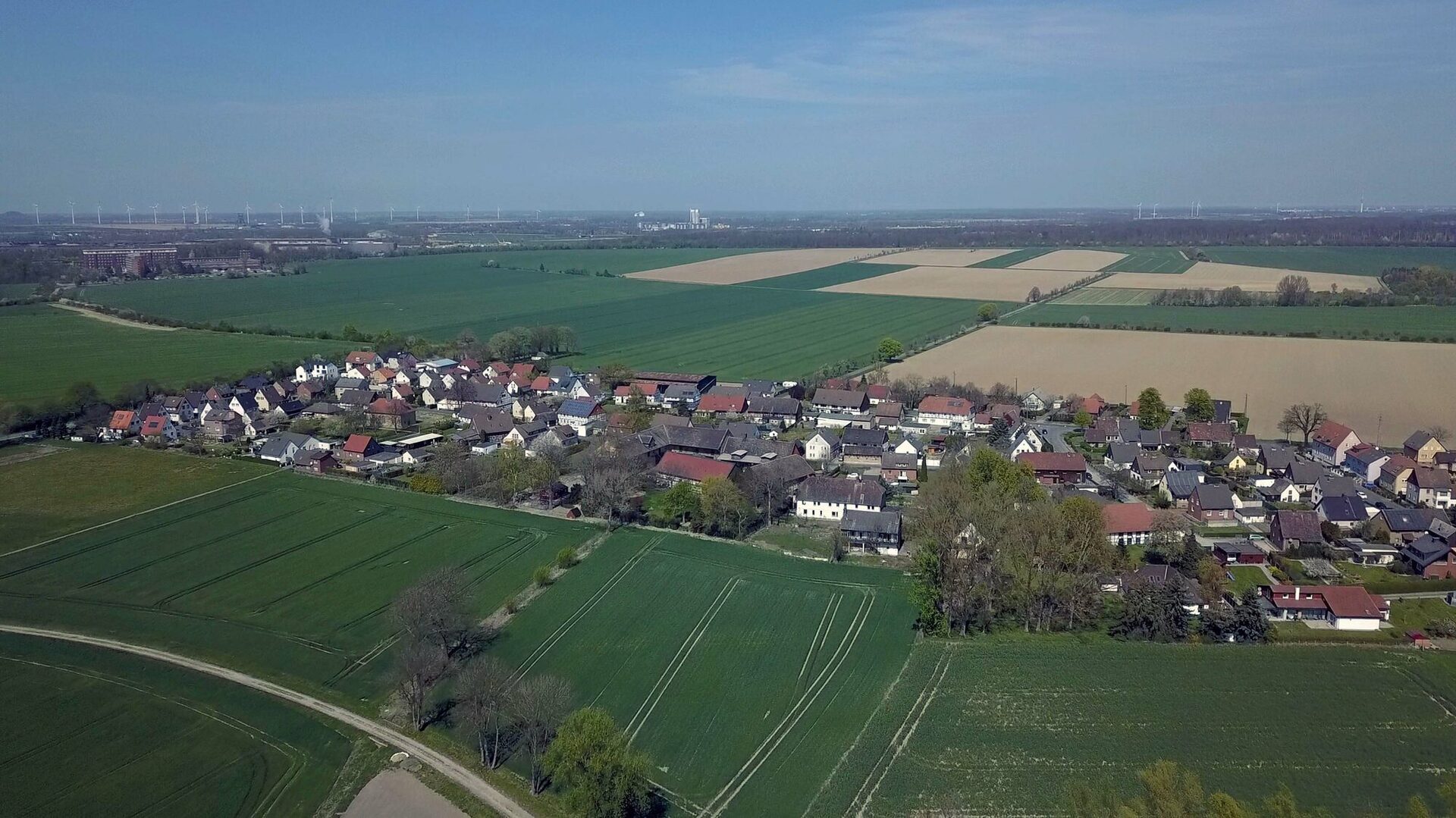
The location on the Brückenbach stream was of great importance to Drütte for a long time. The villagers had joint use rights to the stream, which meant they were allowed to build flax caves. Flax, which was widely grown in the region, was fermented in the water there until it could be processed into linen. Flax processing in Drütte was discontinued in the 18th century. However, the flax mill is still well preserved today.
In 1933, 220 people lived in the small farming village, which belonged to the district of Wolfenbüttel. When the Reichswerke Hermann Göring were founded in 1937, massive changes came to Drütte. Instead of farms, the townscape was soon dominated by barrack camps.
With the construction of the Reichswerke, thousands of workers came to the Salzgitter area, initially voluntarily, later increasingly as forced laborers, and had to be accommodated. The multi-storey Reichswerke administration building was built on the edge of the Drütter Feldmark. A hospital was also built, which was in operation until 1967.
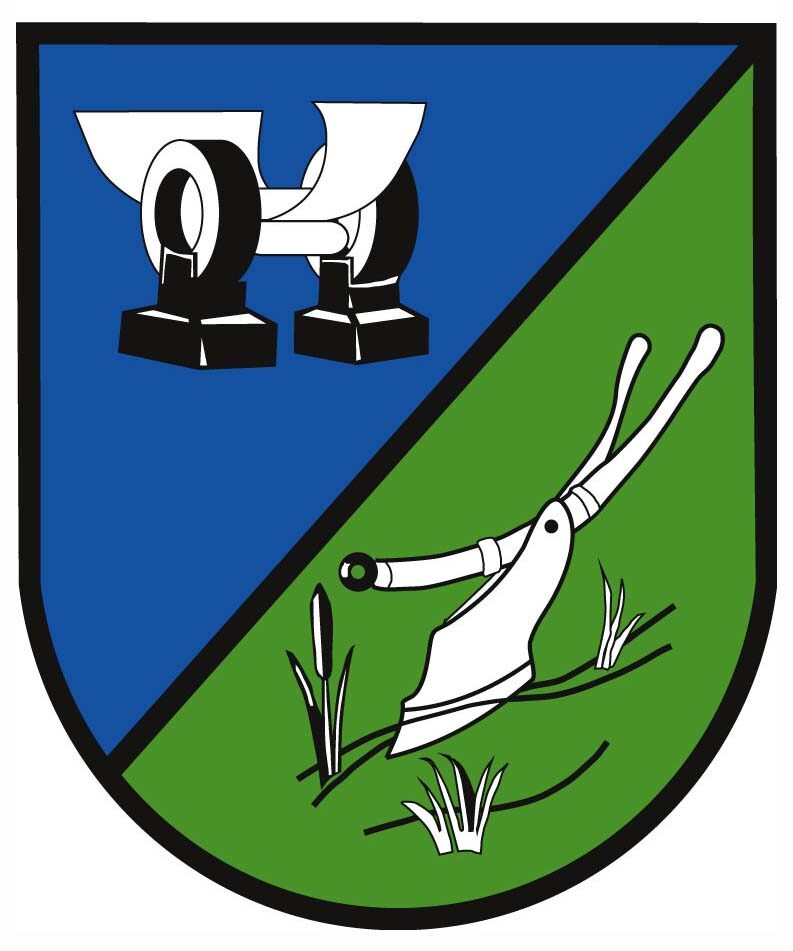
On April 1, 1942, Drütte was incorporated into the newly founded town of Watenstedt-Salzgitter.
In October 1942, the Salzgitter-Drütte subcamp was set up on the factory premises as a satellite camp of Neuengamme concentration camp. 250 concentration camp prisoners had to carry out the construction work. After completion, more than 3,000 prisoners were housed there. They had to make shell casings and grenade casings. As the British soldiers drew ever closer in April 1945, the SS evacuated the subcamps in the Salzgitter area in several trains. Hundreds of prisoners died during the transports. In 1994, a memorial was opened in the former accommodation rooms, which is run by the Arbeitskreis Stadtgeschichte e.V..
After 1945, numerous refugees came to the Salzgitter area, some of whom moved into the existing camps. In October 1946, Drütte already had 499 inhabitants and according to a census in December 1946, 551 people were living in camps.
Today, Drütte is home to the headquarters of Salzgitter AG with more than 24,000 employees worldwide. Drütte also has an airfield.
