

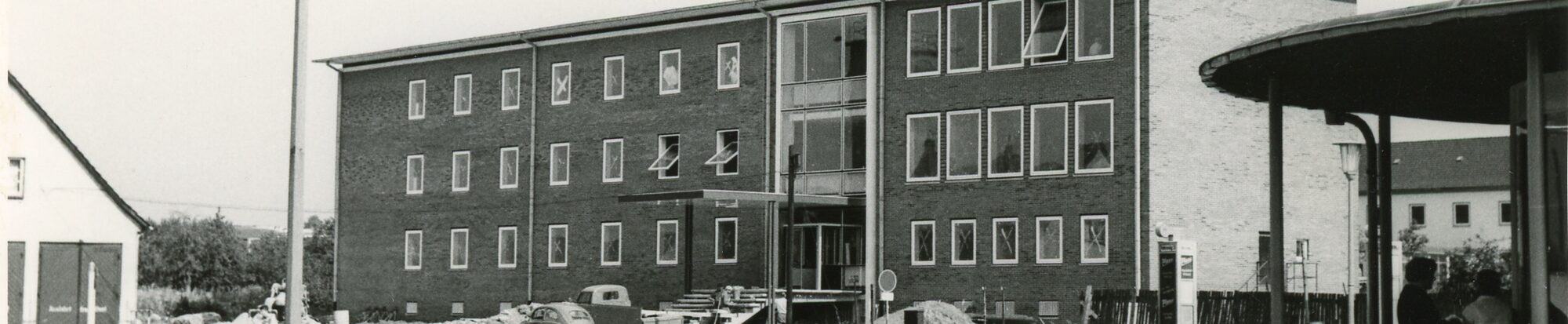

Together with its Thuringian twin town Gotha, Salzgitter is thus commemorating 20 years of German unity. Around 80 teenagers and young people from Gotha aged between 16 and 27 as well as pupils from the Salzgitter-Bad grammar school took part in the celebrations in Salzgitter-Bad.
They were addressed by the two Lord Mayors Frank Klingebiel and Knut Kreuch (Gotha) as well as honorary citizen Hermann Struck, who led the partnership negotiations with Gotha alongside former Mayor Dr. Hendrik Gröttrup. The speaker was the former spokesman of the Central Registration Office, Dr. Hans-Jürgen Grasemann.
In the presence of another honorary citizen, Rudolf Rückert, SPD member of the Bundestag Sigmar Gabriel, former member of the Bundestag Jochen-Konrad Fromme (CDU) and other representatives from the council and administration, Klingebiel confessed that although the registration office had not been able to help GDR citizens directly, it had registered unlawful acts. For them, it had been a "sign of hope", for the SED regime a "thorn in the side", which had been demonstrated in the negotiations with Gotha on the partnership agreement.
Struck confirmed the declared aim of the negotiating partners in 1988 on the part of Gotha and higher authorities to dissolve the registration office and to include a corresponding passage in the contract. The city of Salzgitter had successfully resisted this. Like many other German-German partnerships, the treaty had not initially facilitated broad interpersonal encounters. These were only made possible by the peaceful revolution and the opening of the Wall and the border.
Kreuch, born in 1966, did not forget to emphasize the role of the churches in the GDR, which had provided a certain degree of protection for the participants in the mass demonstrations in autumn 1989 even before the fall of the Wall. He affirmed that "the German people must never again be divided by walls and barbed wire." In terms of freedom, new goals must always be set, whether in Europe or for other nations in the world that are still divided by an almost impermeable border.
Since the Wall was built in 1961, the Central Registration Office of the state justice administrations has systematically compiled all available information on crimes and violations of human rights in the GDR and on the German-German border, explained its former spokesperson Dr. Grasemann. It had conducted preliminary investigations and secured evidence, but had never been able to bring charges - not even after 1989. But the registration office was a symbol in the GDR and may have had a moderating effect on actors in the state apparatus. She was able to gain deep insights into the GDR's penal system through conversations with around 34,000 released citizens.
The Big Band of the Salzgitter-Bad grammar school provided the musical backdrop for the ceremony, which was moderated by principal Stephan Speer. For the guests from Thuringia, there was also a city tour to prominent points in Salzgitter's contemporary history, such as the monument in the center of Salzgitter-Lebenstedt.
The Berlin Wall piece was purchased at auction by the Cultural Department at the beginning of the year and arrived in Salzgitter in June. A real estate company from Lünen in Westphalia had purchased it from the federal government. Its original location was on the corner of Spreebogen and Schiffbauerdamm/Reinhardtstraße. The wall section weighs 2.7 tons, is one metre wide and 370 centimetres high.