The geographical proximity to these two towns has shaped the history of the village: In the Middle Ages and early modern times, Thiede and the neighboring Steterburg Abbey were repeatedly plundered by troops, houses were set on fire and fields were devastated.
In the second half of the 19th century, industrialization fundamentally changed Thiede within a few decades: a sugar factory was built, several canning factories were established, a brickworks was built and the mining of potash by the later Thiederhall joint stock company began. The growing number of jobs in Thiede led to an increase in the population. Several dozen residential houses were built for the new workers and their families, which still characterize the image of Frankfurter Straße towards Braunschweig today, for example.
The transformation from a farming village to an industrial workers' village had already taken place in Thiede before 1900. However, the First World War (1914-1918) marked a turning point in Thiede's economic development. Today, only the street names Kalischachtweg, Thiederhall and am Gipsbruch tell of potash and gypsum mining.
In his Saxon History, Widukind von Corvey describes how the castellans of Stederburg Castle repelled an attack by the Hungarians in 938. Around 1000, Steterburg Abbey was established on the castle grounds, which shaped life in Steterburg for almost a millennium.
This changed with the founding of the Reichswerke on 15 July 1937. In February 1938, the construction of standardized house types in the style of a (garden city) settlement for the future workforce of the steelworks began in Steterburg. The first families moved into the apartments in December 1938.
On April 1, 1939, the once independent community of Steterburg became part of Thiede.
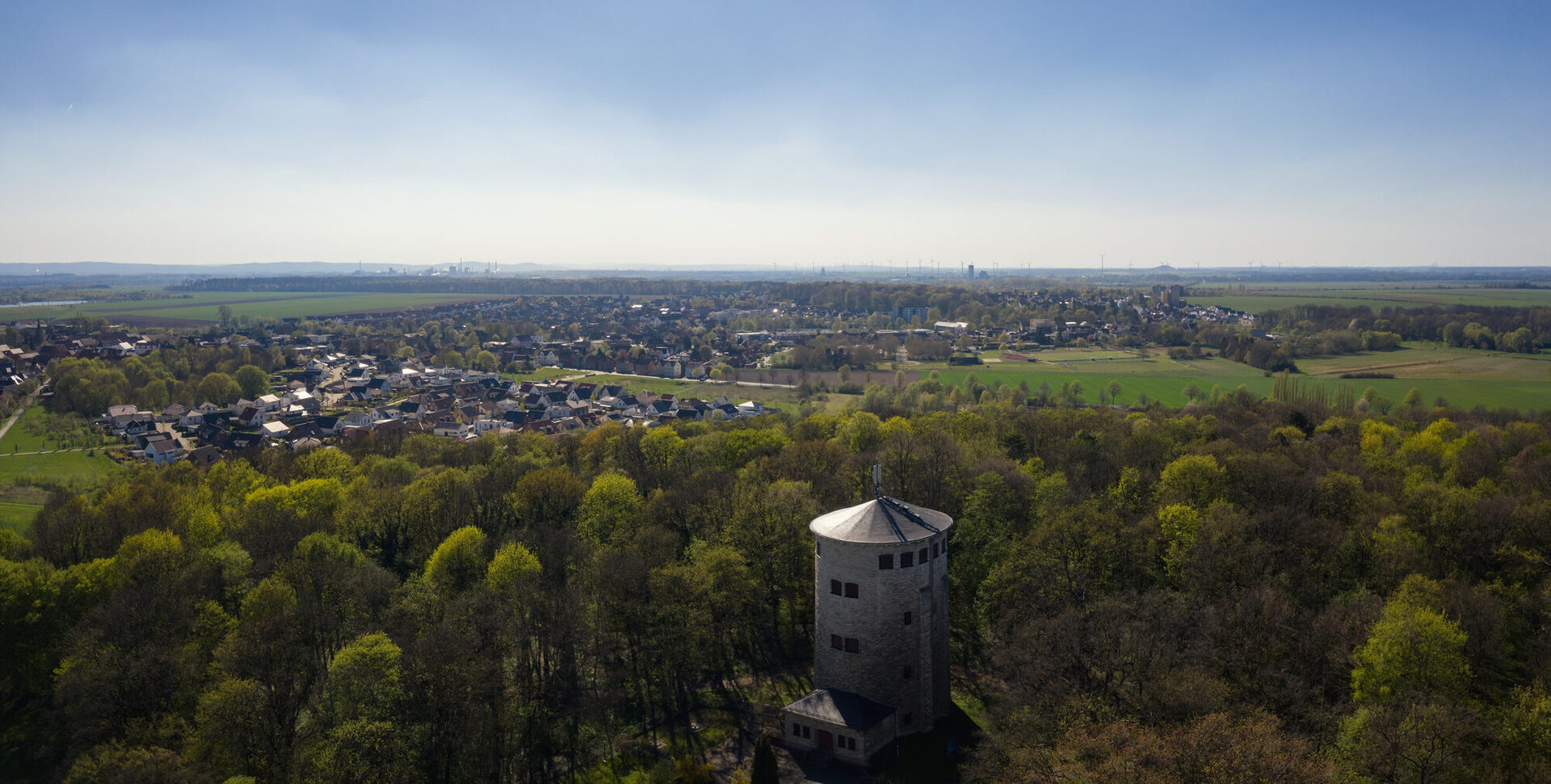
The convenient location of Thiede, which has access to two freeways, the new development areas that have been regularly built since the 1950s, as well as numerous clubs, several kindergartens, elementary school and secondary schools make the district particularly attractive as a place to live. Today, Thiede is the third largest district in Salzgitter with just under 11,000 inhabitants.
A new residential area is being built at the train station based on an innovative development plan that is closely linked to the city's climate protection concept.


