

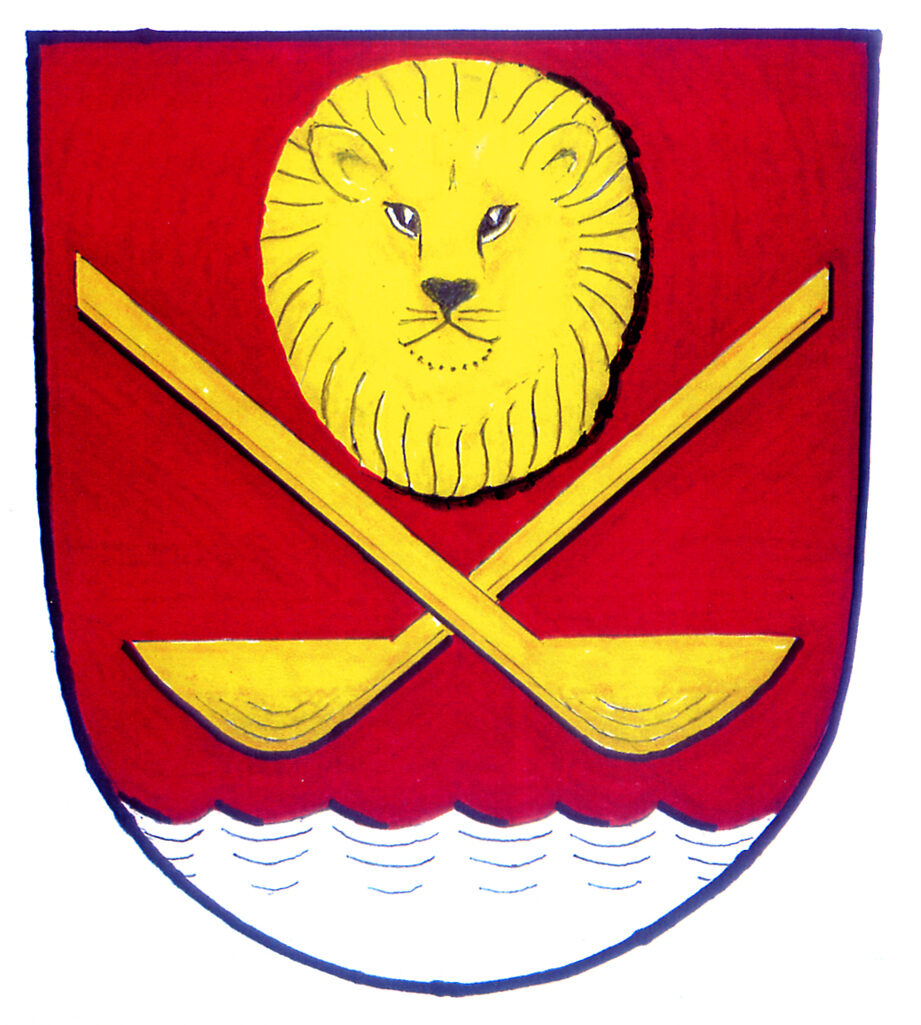
The first documentary mention of Lebenstedt dates back to 1129. However, settlements probably took place earlier, as indicated by the ending of the place name with "-stedt". This usually indicates a foundation in the 5th or 6th century.
Agriculture has shaped the lives of the inhabitants since the Middle Ages. A church stood in the center of the village, the origins of which can no longer be precisely determined; farms were grouped around it. The old church was demolished and St. Andrew's Church was consecrated on the same site in 1859.
A school building was erected in Lebenstedt as early as 1663. From the end of the 19th century, the community made efforts to build a new school; the old building had become too small for the increased number of children. The new school was opened in 1901.
The 20th century brought fundamental changes to the small village, which belonged to the district of Wolfenbüttel. In 1937, the Reichswerke Hermann Göring were founded and the location was chosen in the immediate vicinity of Lebenstedt. Lebenstedt had 540 inhabitants at the time. As land was needed for the construction of the Reichswerke and housing, farmers had to be resettled and/or received compensation.
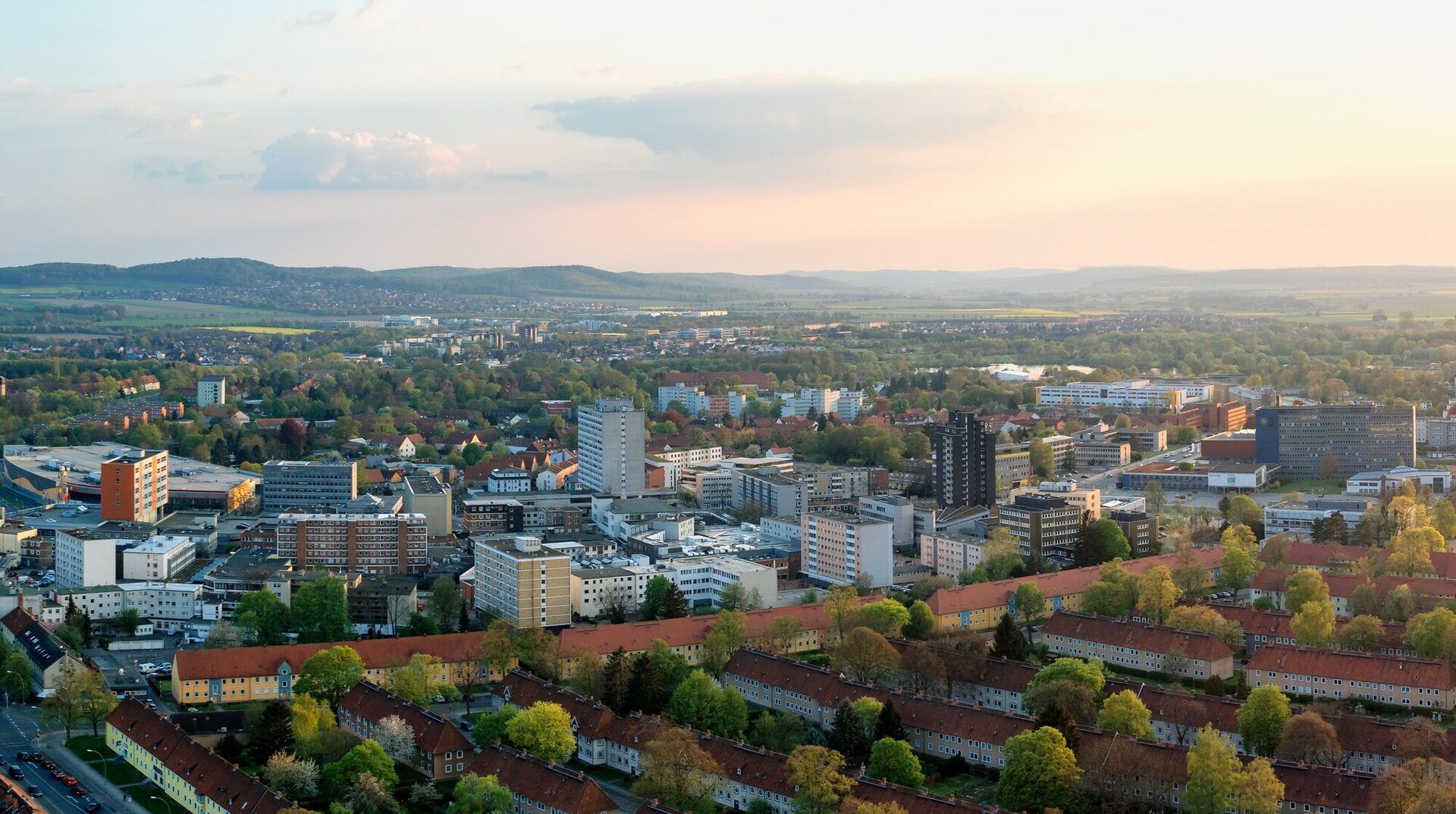
When construction of the Reichswerke began, thousands of people from Europe came voluntarily and later increasingly as forced laborers to the area that is now Salzgitter. The workers urgently needed housing. The Lebenstedt district was designated as the center of housing construction.
By the start of the war on September 1, 1939, 5,000 new apartments had been built. However, the planned large housing estate was only partially completed due to the events of the war. In 1942, the municipality of Lebenstedt was incorporated into the new town of Watenstedt-Salzgitter.
After the end of the war, thousands of refugees and displaced persons had to be accommodated in Salzgitter; by 1946, the population of the formerly tranquil village had risen to 23,000. There was a housing shortage. There was also a lack of schools, medical care and transport infrastructure as well as electricity, water and gas supplies.
The situation in Salzgitter came to a head in 1948 when the victorious powers decided to dismantle the factories that formed the economic basis of the town. In the end, the dismantling was averted thanks to the protests of the population. The factories were rebuilt and Salzgitter experienced an upswing.
The 1954 land use plan designated Lebenstedt as the center of Salzgitter. In the same year, Lebenstedt received a rail connection. From 1957, today's city center was developed with pedestrian zones. The town hall was completed in 1963. In 1964, the first construction phase of Fredenberg was begun as an extension to Lebenstedt. In addition to other administrative buildings, leisure and sports facilities soon enriched Lebenstedt, such as the city park, the indoor swimming pool and Salzgittersee.
The Federal Office for Radiation Protection, founded in 1989, is part of the portfolio of the Federal Ministry for the Environment, Nature Conservation, Nuclear Safety and Consumer Protection.
Since 2015, the city of Salzgitter has commemorated the end of the dismantling of the steelworks in 1951 with a memorial stele at the town hall in Lebenstedt.
Since 2020, a history and memorial plaque has commemorated the 96 dead who rest in the Old Cemetery.
Since 2021, a history and memorial plaque in the Old Cemetery has commemorated the life of Heinrich Oppermann and in particular his experiences in the Franco-Prussian War of 1870/71.


