
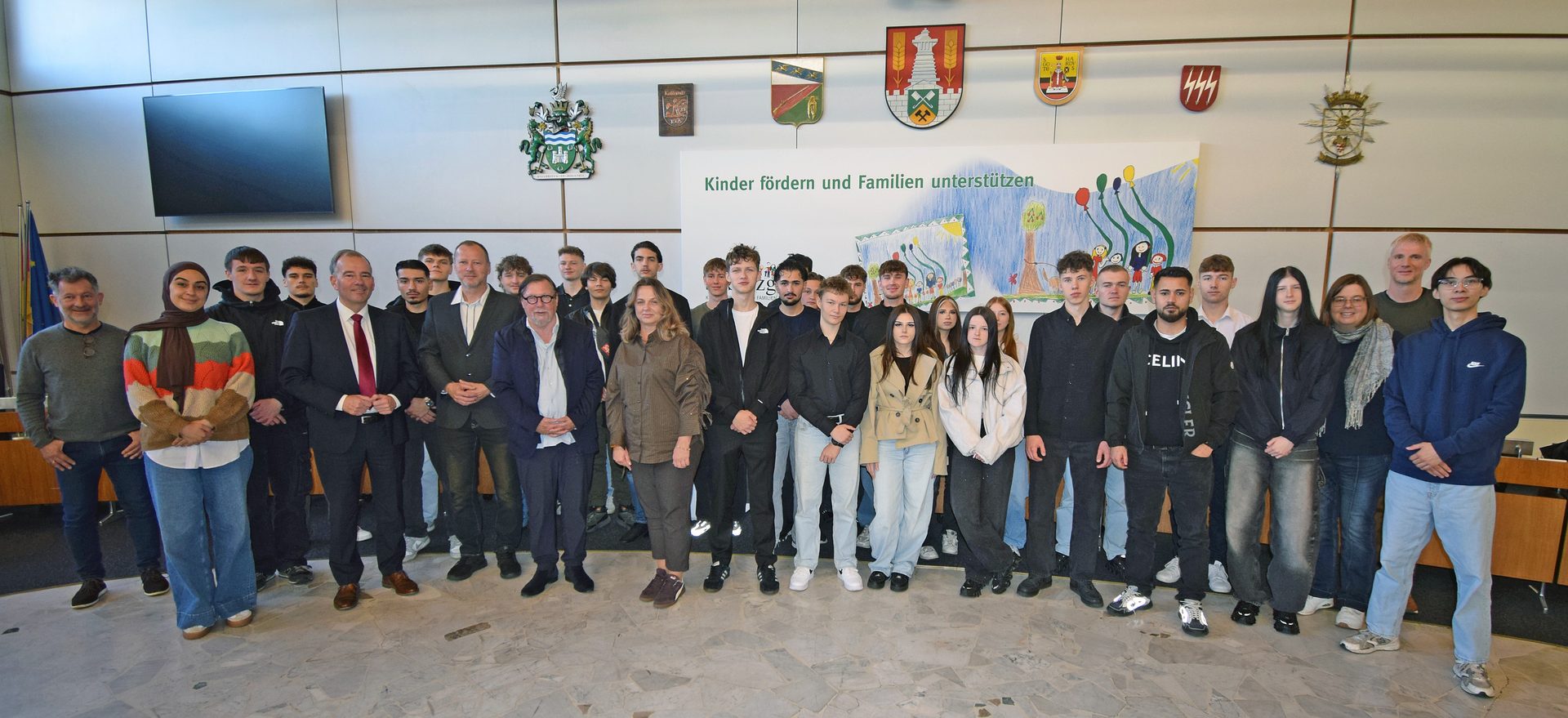
As part of an international youth exchange program, the young people had carried out restoration work at the Auschwitz Memorial (main camp and Birkenau). “I’m impressed by your dedication,” Striese said. “It’s great that there are young people like you who engage with our history in such a powerful and lasting way.”
During their stay there, the apprentices and the Polish vocational students assisted the memorial with conservation work. Among other things, they helped restore pots, clear paths of debris, and clean roof tiles. Through this work, the young people contributed to the preservation of the Auschwitz Memorial. Over the course of the twelve days, they exchanged stories about their different life experiences and cultural differences. The Auschwitz Youth Exchange Center, where they were staying, thus became a place of encounter.
The participants also had the opportunity to meet a Holocaust survivor. Janina Iwańska recounted the horrors she had experienced at the Auschwitz concentration camp. The trainees and students were deeply moved by her account. “Being there in person and hearing the survivors’ stories makes it clear that this isn’t just a thing of the past. There are still people who lived through it,” said one trainee, sharing her impressions. The young woman also spoke about an exhibition featuring portraits of prisoners, for which they had refurbished the picture frames. She described it with deep emotion: “We learned that the portraits were created when the prisoners drew each other, since they had no mirrors and no longer knew what they looked like.” She said this had shown her that when you look in the mirror in the morning, you should be mindful of what it does to you when you no longer know what you look like. A Polish student summed up the visit: “The knowledge I’ve gained here will stay with me for the rest of my life.”" He said he had learned a lot of new things about history that he otherwise would never have known. The young people were also impressed by the fact that, at the memorial sites, they were able to visit places that are not accessible to regular visitors—places that had a profound impact on them.
“It’s wonderful to see how this visit has changed the young people,” emphasized teacher Agnieszka Kotynska. She hopes the project will continue.
In his welcoming remarks, Christian Striese also gave the guests a glimpse into the dark past of the city of Salzgitter—from the construction of the Hermann-Göring Works in 1937 to the establishment of concentration camps and forced-labor camps within the city limits. “Around 4,000 people died during the construction of the Nazi arms manufacturing complex. They were worn down by the harsh working conditions, harassed by guards in the camps and concentration camp satellite camps, and executed by an inhumane system.” He emphasized that these victims have not been forgotten in Salzgitter. “We commemorate them at many locations throughout the city and on numerous occasions throughout the year.”
In attendance at the reception for the apprentices and students at Salzgitter City Hall were Ines Doberanzke-Milnikel and Christoph Heinemann from the Auschwitz Memorial Project; VW trainer Annemarie Heuschkel, teacher Agnieszka Kotynska, and teacher Andrzej Rodak from the partner school in Kety, as well as Christoph Heubner, Executive Vice President of the International Auschwitz Committee.
Heubner emphasized how important Striese’s insight into Salzgitter’s history and the reception at City Hall were for the young people: “Here they learn that politics doesn’t take place in the Bundestag, but right on their own doorstep.” He noted that the International Youth Meeting Center in Auschwitz, where the young people were staying, will celebrate its 40th anniversary next year. At the time, Lower Saxony had taken the lead among the federal states in establishing this meeting center. “That, too, is part of the state’s history,” he emphasized.
The group’s visit concluded with a debriefing session at the Volkswagen sites in Braunschweig and Berlin, where they reflected on their shared experiences at the two memorial sites. In addition to the reception at Salzgitter City Hall, the program included a tour of the Volkswagen plant in Salzgitter, as well as presentations on the history of Braunschweig and Salzgitter and political discussions.
Background Information on the Project
Since 1987, Volkswagen AG has been offering young trainees the opportunity to participate in “memorial site work” at Auschwitz as part of its international youth exchange programs. Memorial work has a long tradition within the Volkswagen Group and has been carried out in cooperation with the International Auschwitz Committee (IAK) since 2012.
Each year, approximately 110 German and Polish young people, 70 managers and foremen, and around 40 employees from various VW companies participate in the projects at the memorial site. To date, approximately 4,025 German and Polish apprentices, 908 managers and foremen, and about 700 individuals from Volkswagen and its subsidiaries—including members of the works council, management, and the executive board—have participated.
Volkswagen is thus one of the few major German corporations to confront its historical past in this way and to come to terms with its own corporate history.


