


Originally, Osterlinde was purely a farming settlement with the church at its center; the other buildings were grouped around it. Today, the church dedicated to St. George is located on a central hill in the village. Part of the church is a 1,000-year-old fortified tower. Once upon a time, the hill was also the place of judgment and the site of the Thing.
Until March 31, 1942, Osterlinde belonged to the district of Wolfenbüttel; on April 1, the village became a district of the newly founded town of Watenstedt-Salzgitter.
After the end of the Second World War, hundreds of refugees had to be accommodated in Osterlinde. While 368 people still lived in Osterlinde in 1939, the village already had 773 inhabitants in 1946. The existing school was no longer sufficient, so a wooden barrack was erected behind the school building, where a second teacher taught. There was a housing shortage and high unemployment. In the following years, the number of inhabitants in Osterlinde decreased again.
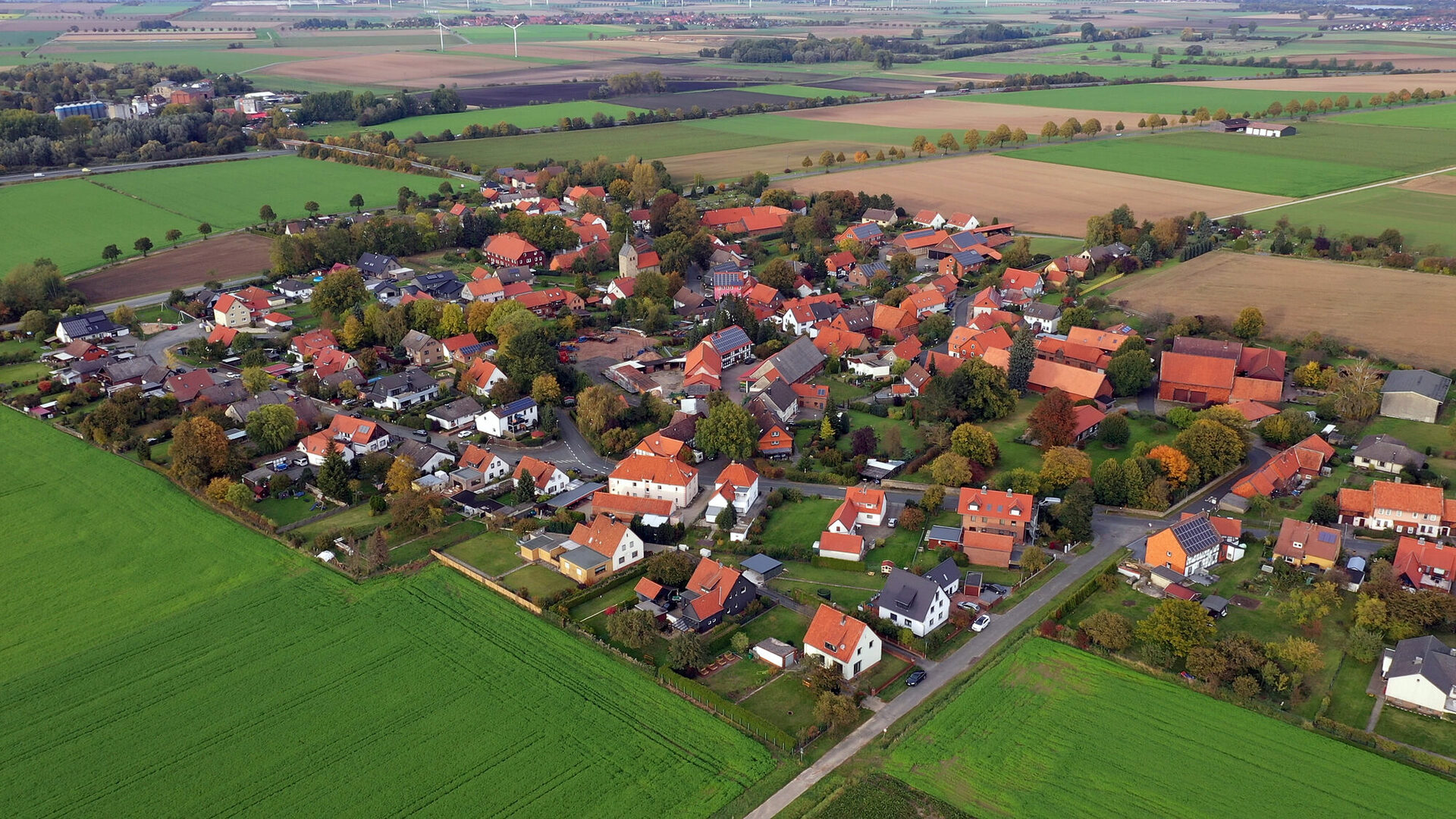
The village structure of Osterlinde changed particularly in the period after 1950. Many agricultural workers gave up their profession in favor of other employment. The number of farms decreased and the few existing farms cultivated more land.
The Osterlinder Bock windmill is worth mentioning. The existence of an Osterlinder mill in the Burgdorf district is documented as early as the 16th century. The mill, which still exists today, was probably first built in the Burgdorf area at the beginning of the 19th century, later moved to the Osterlinder Feldmark and managed by the Berking family. In 1972, the mill, now owned by the agricultural trading company Blume & Oppermann, was shut down.
The city of Salzgitter received the windmill as a gift, and in 1984 the mill took its place as a symbol of Lower Saxony at the Hanover Trade Fair. Today, the mill can be viewed on the grounds of the Salder Castle Municipal Museum.
Clubs characterize the social life in Osterlinde. These include the men's choral society, the volunteer fire department, the church choir, the citizens' association, the Protestant women's aid organization and the country women.

