

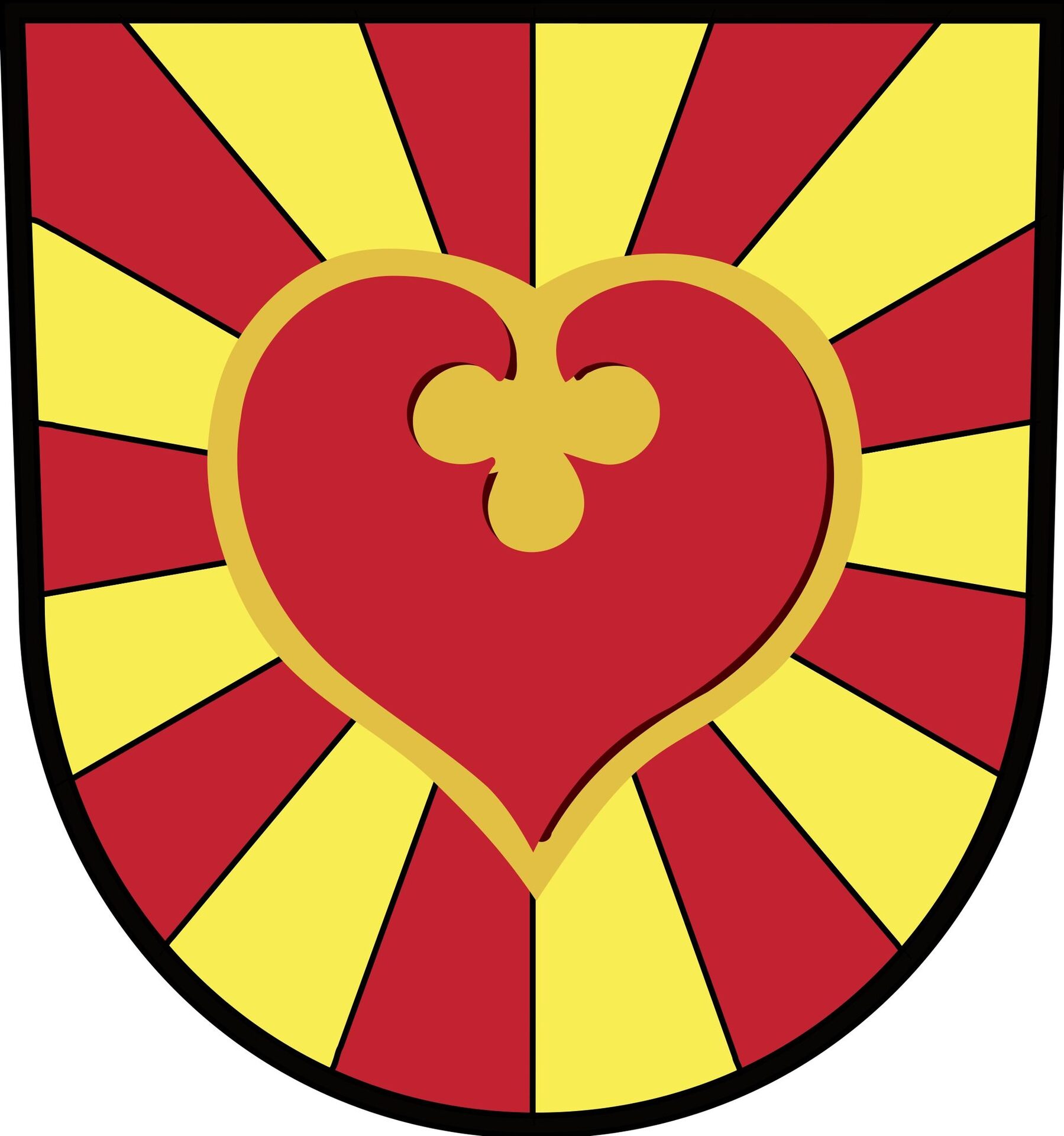
The protected geographical location between the once marshy Dummen Bruch, a few kilometers to the west, and the lowlands of the Aue river to the east of the village probably spared the people of Sauingen from plundering and quartering in the Middle Ages. However, during the Thirty Years' War (1618-1648), the inhabitants of Sauingen also suffered great hardship.
The war damage was so great that some rents had to be reduced or even suspended. During the siege of Wolfenbüttel in 1641, not only did the village's entire harvest go up in flames, but several farms were also devastated. According to the poll tax description of 1678, 132 taxable persons lived in Sauingen. Over the course of the following century, the population in Sauingen rose to just under 300 people and remained fairly stable into the 20th century.
The construction of the Reichswerke Hermann Göring from 1937 onwards changed the cultural landscape around Sauingen dramatically. A newly built connecting road to Lebenstedt, the so-called Betonstraße, led through the Sauingen Feldmark.
The construction of the branch canal cut the connections to neighboring Beddingen. A camp was built between Sauingen and Üfingen to house prisoners of war who had to perform forced labor to build up the water supply in the reconstruction area.
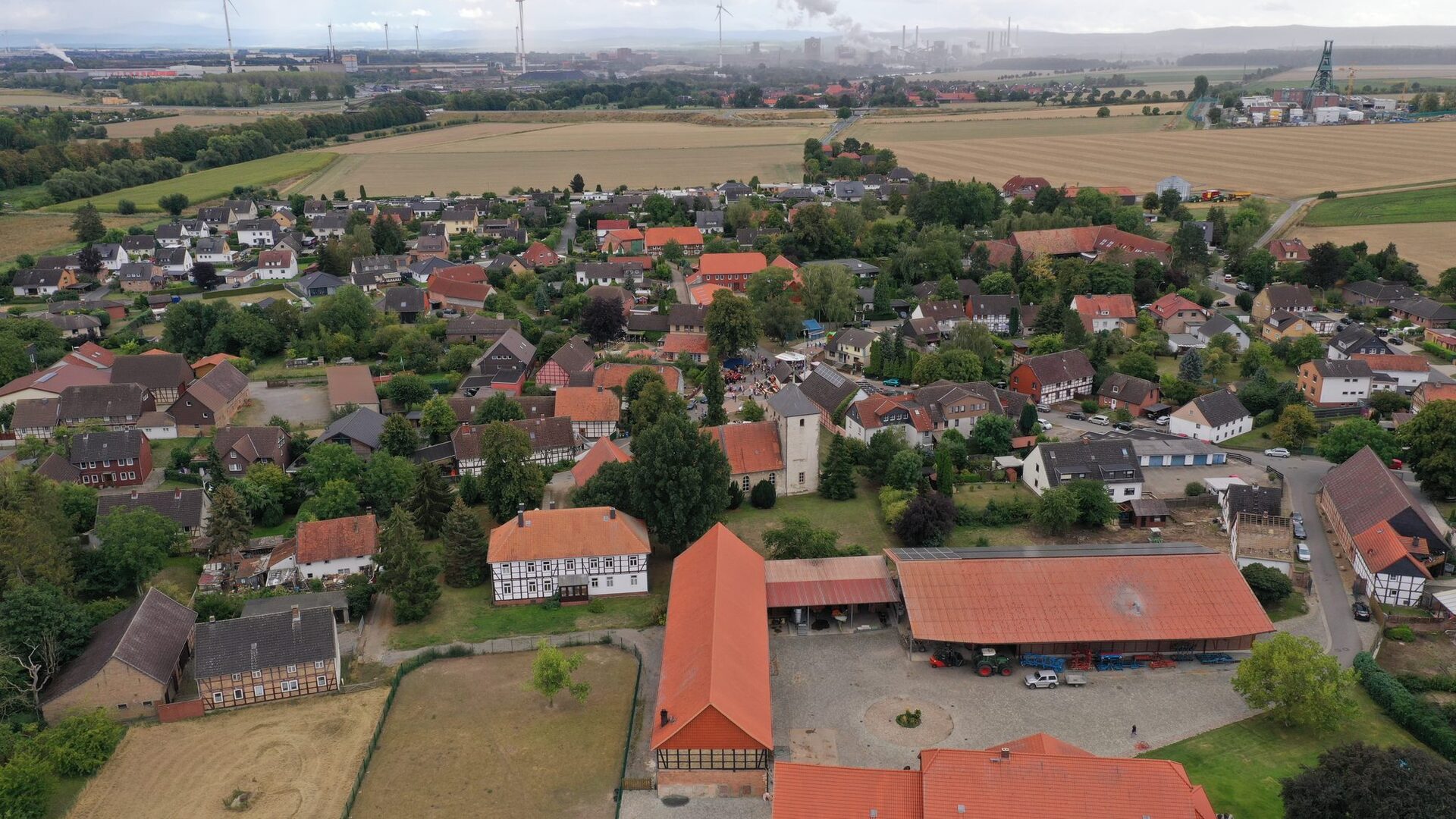
After the town of Watenstedt-Salzgitter was founded on April 1, 1942, Sauingen initially continued to belong to the district of Wolfenbüttel, but after the end of the war it faced similar challenges to the neighbouring districts of Watenstedt-Salzgitter: the population had almost doubled between 1933 and 1946 - in the first post-war years there was a lack of housing, food and jobs.
Sauingen is not only the smallest of the four canal villages, but together with Üfingen, it is also one of the two youngest districts in Salzgitter. The two districts, separated by the A 39 highway, have only belonged to the city of Salzgitter since the Lower Saxony territorial reform in 1974.
In 2022, 1,000 years after the district was first mentioned, the volunteer fire department, the shooting club, the church community, the field interest group and Sauingen's kindergarten association unceremoniously joined forces in a festival committee to celebrate this special anniversary with the 400 or so residents for a whole day.
